Gerard St. John: The Dutchman
Over the course of more than eighty years, I spent a lot of time in barbershops. That said, it is surprising how few barbershop locations I have frequented. Excluding my time in the Marine Corps and a few isolated instances over the years, I have dealt mainly with three barbers. The first of these was Lou Salvino. Salvino’s Barbershop was located on Cottman Avenue, right across the street from the Mayfair Movies.
There were two Salvino brothers, Lou and Joe. Lou had curly black hair and wore dark horn-rimmed glasses. He always had a smile on his face. Joe had a more distinguished appearance – he was thinner and he had neatly trimmed straight hair. Joe also had a more serious demeanor. If given the choice, I wanted Lou to cut my hair, particularly when I switched to a crew cut in college.
Usually, a visit to Salvino’s was a quiet occasion. I was not likely to know any of the other customers. Most of my friends frequented Sam’s Barbershop at the corner of Aldine Street and Rowland Avenue. Moreover, the Salvinos did not expect you to fill the air with sound. If you wanted to talk about something, they would talk about it. But if you wanted to keep quiet, they were okay with that too. I generally sat and listened to the chatter of the other customers.
One day when I was about eleven years old, a man came into the shop. He wore denim overalls and looked like he had just finished painting his basement. The man appeared to be about the same age as the Salvino brothers, which is to say, fortyish. The Salvinos seemed to know him but I had never seen him before. Lou was cutting my hair and Joe’s chair was open. The denim-clad man sat in Joe’s chair and, pretty soon, the two of them began to talk about baseball.
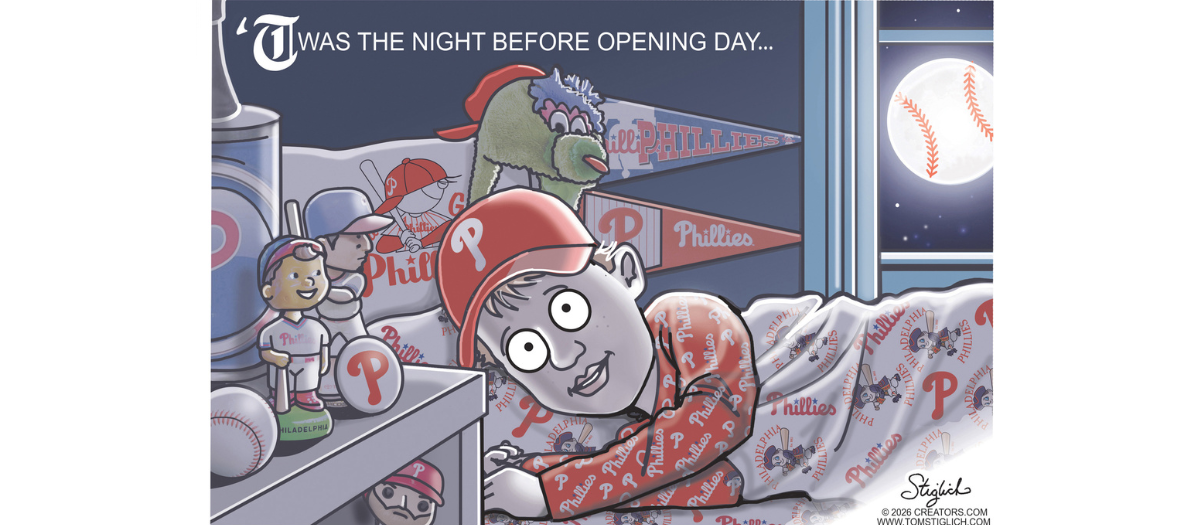
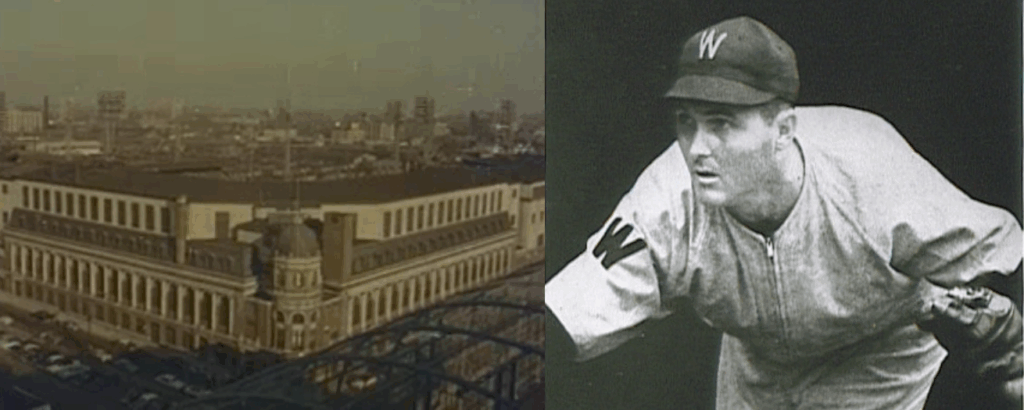
At first, I paid little attention to their conversation. They were talking about people who played twenty years ago. I was a present-day, dyed-in-the-wool Phillies fan, and my thoughts went drifting out toward Shibe Park.
By and large, Philadelphia’s favorite baseball team was Connie Mack’s Athletics. However, I tend to root for the underdog, and my team was the Phillies. As the Second World War came to an end, the Phillies began to sign some very effective players. Del Ennis, the Olney High School alum, was named the National League’s “Rookie of the Year” and was playing left field. Other outstanding players were in the team’s farm system and would soon be brought up to the major league.
In the meanwhile, two present-day Phillies pitchers began an incredible streak of winning both games in Sunday doubleheaders. Lynwood “Schoolboy” Rowe was a tall, powerful pitcher who could hit as well as he could pitch. Schoolie once led the league in pinch-hits. The other half of the Sunday doubleheader duo was Emil “Dutch” Leonard, who liked to throw knuckleballs, a tricky pitch that is half throw and half optical illusion.
I began to think about how I could scrape together the seventy cents or so that I would need to get out to Shibe Park and get a bleacher seat for the next day’s doubleheader.
Despite my daydreams, the conversation between Joe Salvino and his customer was hard to ignore. Joe asked questions about some of the legendary figures of baseball, people like Dizzy Dean, and the man responded as if he knew them personally. He also talked about some of the details of traveling with the Brooklyn Dodgers and the Washington Senators baseball clubs. I was fascinated. I was disappointed when Joe Salvino whipped the apron off the customer and signaled that the haircut was finished. As the man walked out the door, Joe waved and said, “Good luck tomorrow, Dutch!”
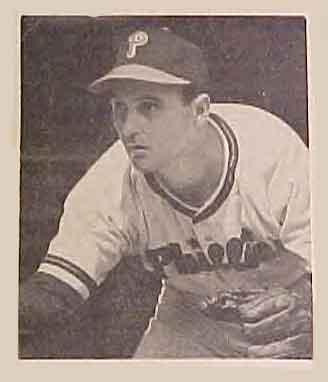
The following year, Dutch Leonard was traded to the Chicago Cubs for a first baseman named Eddie Waitkus, who figured in the Phillies 1950 National League pennant winning team. With the Chicago Cubs, Dutch became a relief pitcher. In one game against his old team, the Brooklyn Dodgers, Dutch came into the game with a one-run lead, the bases loaded and nobody out. The batters on deck were Jackie Robinson, Gil Hodges and Roy Campanella. Dutch retired the side without allowing a run.
He played 21 seasons in the major leagues, was selected for the all-star team on five occasions, and won a total of 191 games (with a 3.25 earned run average) even though playing for losing teams. Not bad for a frumpy old guy who wears denim overalls.
Gerry St. John is a retired lawyer who lives in the suburbs of Philadelphia. He was graduated from St. Joseph’s College and Temple University School of Law. Between these educational endeavors, he spent nearly four years in the United States Marine Corps, most of it in Camp Pendleton, California, and in the Far East during the Cuban Missile Crisis. For more than 45 years was a civil trial lawyer, and for nine years a member of the adjunct faculty at Saint Joseph’s University.