Ben Mannes: From SPLC to ActBlue, scrutiny grows over political fundraising networks
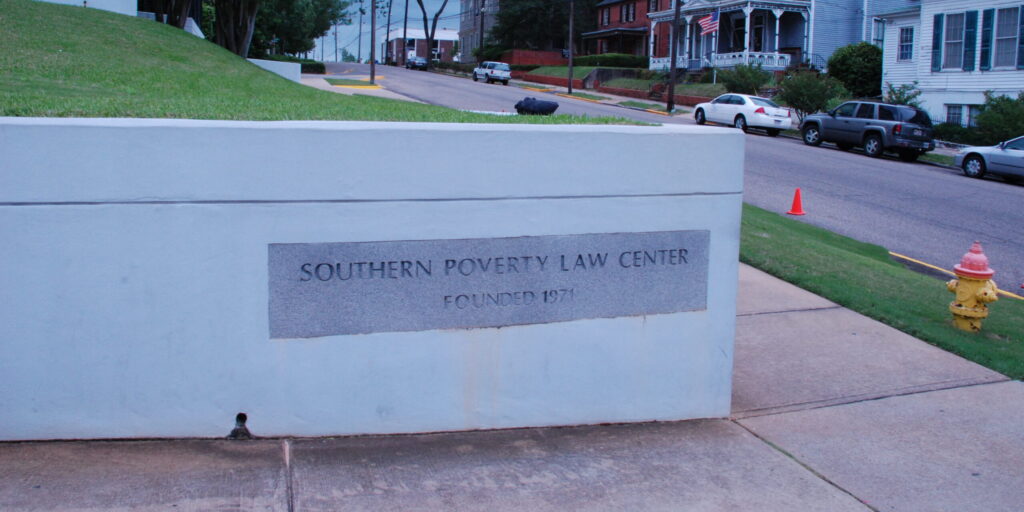
The Justice Department’s indictment of the Southern Poverty Law Center (SPLC) has intensified scrutiny of how nonprofit organizations raise money, move funds and describe their work to donors, while also reviving broader questions about the line between advocacy, political influence, and criminal conduct.
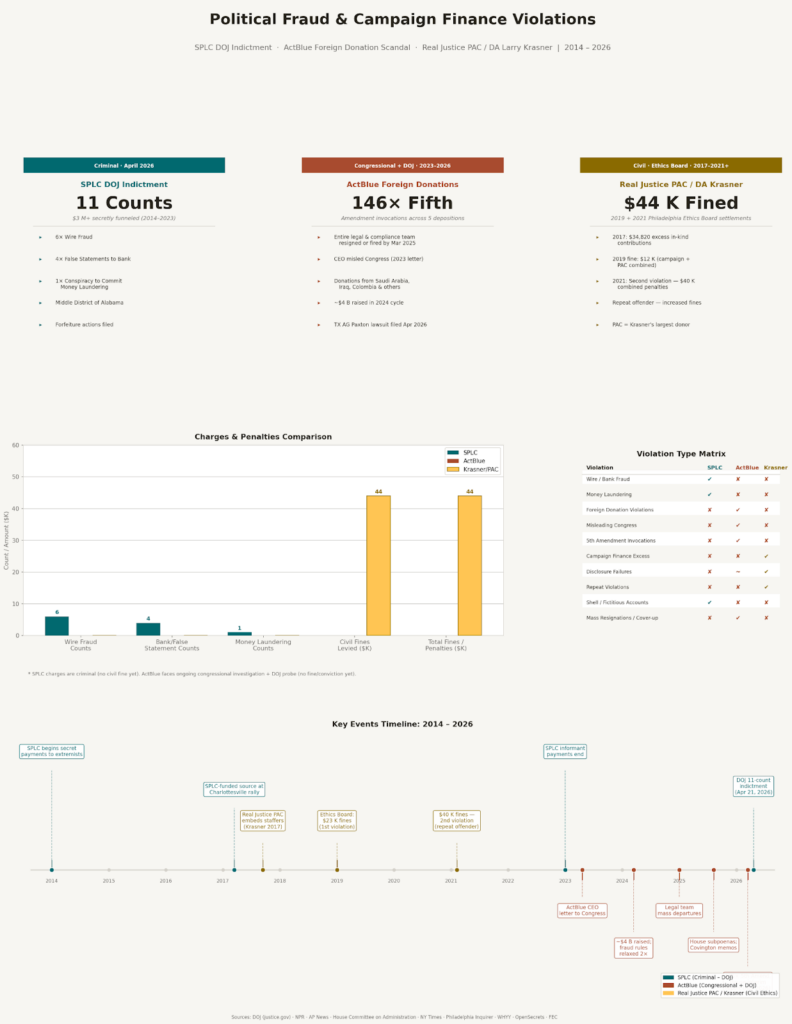
The indictment contains eleven counts, including wire fraud, false statements to a federally insured bank, and conspiracy to conceal money laundering, according to the DOJ’s April 20 press release. The DOJ says the SPLC secretly funneled more than $3 million in donated funds, between 2014 and 2023, to people associated with violent extremist groups while using fictitious entities and bank accounts to disguise the money’s path. SPLC has said it will vigorously defend itself, and the indictment itself is an allegation, not a conviction.
The core legal issue in a case like SPLC is whether donors were materially misled about how their money would be used, and whether false statements or concealment were used to move that money through financial institutions. That is different from ordinary nonprofit advocacy, where organizations may legally support causes, candidates, or issue campaigns within the limits of campaign finance and tax law. Allegations of “donor deception” become more serious when money is routed through shell entities, hidden accounts, or false descriptions that obstruct disclosure and banking compliance.
A nonprofit organization can legally advocate, fund community programs, or support related organizations, but it cannot lawfully misstate or omit what donor funds will do, conceal material facts from donors or banks, or use straw entities to hide the true source and destination of funds. Claims that a donor “thought” money was going to one purpose but it was quietly routed to another can constitute fraud only if the misrepresentation was material and intentional. Broader concerns about whether nonprofits influence politics through layered funding networks are often matters for campaign-finance regulators, tax authorities, state charities officials, and civil litigants unless the facts show a criminal scheme.
These concerns go beyond the SPLC and ActBlue, because they raise a basic question about nonprofit finance: when does the use of layered entities, intermediaries and related organizations become legitimate advocacy infrastructure, and when does it become concealment? In the nonprofit world, donors often give to a cause, a program or a public-interest mission; if the money is then routed through a chain of entities to a different destination, the legal analysis turns on what donors were told, what financial institutions were told and whether the mismatch was intentional.
That question has surfaced in other politically charged allegations centered in political fundraising in the battleground states of Pennsylvania and Michigan. These include allegations against the Democratic megadonor vehicle ActBlue. Last December, the Michigan Enjoyer covered the story of Linda Appling, a struggling 77-year old Lansing retiree who, according to ActBlue, made 8,738 donations to Democrats in key national elections outside her native Michigan totaling $82,000. When reporter Charlie LeDuff interviewed her on video, Appling claimed to have only made donations of under $100 to local candidates through ActBlue, and scoffed at the $82,000 as it was clear from the video that she could never have afforded to do so. The same story also covered $5.5M in small-dollar donations to embattled Secretary of State Jocelyn Benson’s gubernatorial campaign from unsuspecting octogenarians in Maryland, Arizona, and New York.
It’s also of note that before her appointment to the role of MI Secretary of State and current candidacy to replace Gretchen Whitmer as Governor, Benson worked for the SPLC.
“I think this reveals just how ghoulish the SPLC has been over the years. Funding the KKK and other racist groups in order to monetize them and justify their own existence.” said Jason Cabel Roe, a prominent Michigan political strategist. “Jocelyn Benson worked at SPLC earlier in her career, was on the board while this was happening. She certainly knew about it and should pay a political price for it.”
This pattern by ActBlue has triggered a lawsuit by Texas Attorney General Ken Paxton, who accused the fundraiser of unfair and deceptive practices as well as allowing fraudulent and foreign donations on their platform. These illicit donations may be the funds used to stretch Ms. Appling’s $100 into $82,000.
ActBlue’s suspicious donations have also triggered congressional hearings. A House committee report released this month said the Democratic fundraising platform had weakened fraud-prevention rules in 2024 and failed to stop illicit foreign donations, while also pointing to mass resignations in its legal and compliance ranks. Separate reporting has said ActBlue may have misled Congress about its handling of foreign donations, and Fox News reported lawmakers’ allegations that some small-dollar donations may have come from illegal foreign contributors. Those claims remain allegations and congressional findings, not criminal convictions, but they have widened concern about whether online fundraising platforms can reliably identify the true source of money that appears in election accounts.
The same theme appears here in Philadelphia, where reporting on District Attorney Larry Krasner raised questions about the interaction among campaign allies, nonprofit groups and public grants. One report revealed emails showing questionable coordination between numerous local prosecutors across the nation, to include Krasner, directly coordinating policy with PAC donors and the Wren Collective, and noted that Krasner and RealJustice PAC had previously been cited for campaign finance violations by providing staff, funds and campaign support to Krasner’s 2017 campaign.
Another story questioned whether Krasner’s violence-prevention grants were politically targeted and whether election-eve grant awards were sufficiently supervised. Again, these reports show how nonprofit and political networks can blur when advocacy groups, consultants, PACs and government officials share personnel, funding streams or strategic goals, which may be illicit and should probably be investigated by federal authorities.
The legal boundary is clearer in theory than in practice. Fraud generally requires a knowing material misrepresentation made to obtain money or property. Money laundering typically requires transactions designed to conceal the source, ownership or control of proceeds. Campaign-finance violations can involve conduit contributions, foreign donations, illegal coordination, or false reporting, depending on the jurisdiction and statute.
None of those theories is automatic just because a nonprofit is politically active — each requires proof of intent, structure and conduct.
That is why the SPLC and ActBlue cases are likely to become a reference point for lawyers, campaign watchdogs, and regulators. If prosecutors can prove the allegations, they may show that a nonprofit’s stated mission and its actual use of funds diverged so sharply that donors, banks and the public were effectively misled. If they cannot, the case could instead be remembered as a politically explosive attempt to criminalize advocacy.
The same caution applies to ActBlue and the Krasner-related coverage. The published allegations raise serious questions about compliance, transparency and the possibility that donors or taxpayers believed they were supporting one purpose while money was routed through another set of hands or entities. But the existence of a nonprofit or PAC network, standing alone, does not prove criminal wrongdoing. What matters is whether there was falsehood, concealment, coordination beyond the law, or a pattern of transactions that intentionally hid the real source and destination of money.
That leaves a final, unresolved legal question: if conduct like this were proven in an indictment, would it amount not only to fraud and money laundering, but also to an unfair or deceptive practice against donors who believed they were funding one cause while their money was diverted to another? The answer would depend on the exact facts and the law invoked, but the SPLC and ActBlue cases suggest prosecutors may be more willing to test those boundaries than they have been in the past.
Based in Philadelphia, A. Benjamin Mannes is a consultant and subject matter expert in security and criminal justice reform based on his own experiences on both sides of the criminal justice system. He is a corporate compliance executive who has served as a federal and municipal law enforcement officer, and as the former Director, Office of Investigations with the American Board of Internal Medicine. @PublicSafetySME