
John Rossi: My love affair with libraries and librarians
As a teacher for over fifty years, libraries and archives have been my second home. When I grew up in the years after WWII, there was no library in my neighborhood of Olney. While my family had a deep respect for education — one of my aunts had gone to college and even had a Master’s Degree — they kept few books in the house. The only titles I can remember were my copy of Don Winslow of the Navy and a well-thumbed copy of Forever Amber which was considered hot stuff in 1948.
There was a small book shelf set aside for my twenty-volume set of The Book of Knowledge which was purchased when I was eleven years old. In all honesty I must say that these volumes, full of history, art, literature, science etc. were responsible for much of my educational progress as I was a mediocre student in grammar school.
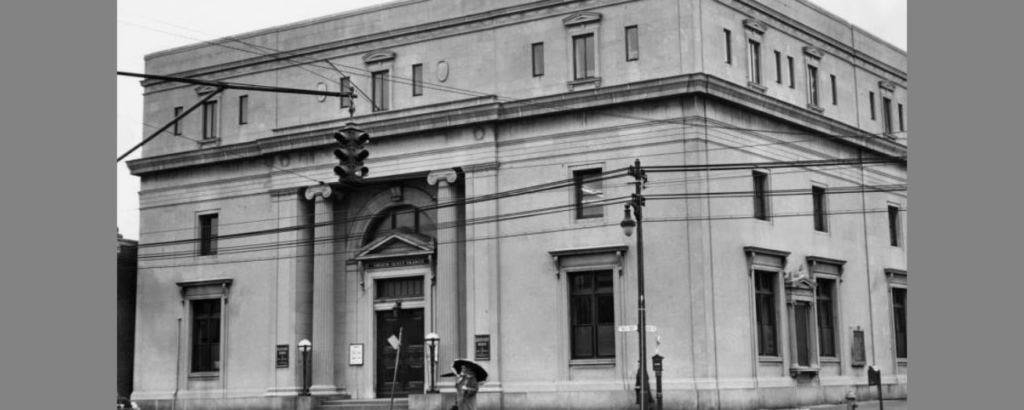
The first library in my Olney neighborhood opened in October 1948 at Fifth and Tabor Street, the site of a former bank, and was considered a big deal at the time. I was one of the first of my crowd to get a library card and was a constant visitor along with some of my intellectually stimulated chums.
Every Friday night without fail, after dinner my friends and I would stop off at the library to look at the latest magazines — Life was a particular favorite — check out a book or two before heading to Colney movie just a block north. Much as I enjoyed the library, I have to admit I was not particularly fond of the head librarian — a formidable woman who wore pince nez glasses and who had a low opinion of young kids. I avoided her because she wouldn’t let me check out certain books because I had a children’s card. Later I thought she should have been happy to see a thirteen- or fourteen-year-old wanting to read something challenging.
Shortly after the library opened one of my friends made a startling discovery. He stumbled upon a copy of American Camera, immediately informing us there were pictures of naked women, called ‘nudes.’ I can guarantee in those pre-pornography days, none of us had ever seen a naked woman — a painting perhaps, but not the real thing. Olney Library had now taken on another reason for our weekly visits. Unfortunately, Madam Librarian figured out what was happening and placed American Camera behind the desk. You had to ask to see it and none of my friends nor I had the nerve to do so.
From college through graduate school libraries and I were rarely separated. I learned quickly how valuable a librarian, especially a reference librarian, could be when you were doing research. At Notre Dame and Penn, I was blessed with a great group of librarians — I even briefly dated one and found as a group they were attractive young women.
At LaSalle College, now University, where I taught for over 50 years, I was blessed to have three outstanding reference librarians to work with: Georgette Most, Ellen Wall and Eithne Bearden. Without their help I never would have been able to do the scholarly research and publishing required of an academic. They unearthed obscure items for me, secured materials from libraries in the United States and England and, in many cases, found articles and essays that I wasn’t aware of.
All three were a delight to be around. Mrs. Most — I could never call her ‘Georgie’ as she asked — was from the Main Line and as deeply knowledgeable of English literature and history as any professor. She was also kind. I remember getting a call from her one day, telling me she had unearthed reviews of my first book that appeared in the American Historical Review and English Historical Review. I didn’t have the nerve to ask if they were positive. As an academic you were supposed to publish — the phrase used was “publish or perish” — and I was nervous.
Without asking she just said, “Don’t worry, you are alright.” When she retired, I truly missed her. As it turned out, I needn’t have worried.
Her two successors, Ellen and Eithne, were from the same mold. They would go out of their way to help and over the years I must have been a real bother but they never complained. Ellen and I shared an interest in baseball and film noir while Eithne and I were on the same page politically. So, during my twice a week visits to check out the latest journals, I would always stop for a chat.
Ellen Wall secured a collection of the greatest examples of film noir for an article I was working on and without which I couldn’t have finished. Eithne set up a way for me to access the sports section of The New York Times in my office for a book I was writing about baseball in the years after World War II.
Ellen left LaSalle to pursue a degree in medicine. Before I could miss her, Eithne arrived. When I was getting ready to retire Eithne also stepped down. In a way it was appropriate that we left together.
John P. Rossi is Professor Emeritus at La Salle University.
Dr. Rossi, I was one of your students at LaSalle and I too agree that the library and its staff there back in the 60’s helped me to be able to succeed at LaSalle setting the sage for continuing at Penn. I don’t think AI would be able to replicate the value folks like that created.
I have similar good memories of visiting my local library in Roxborough. It was an old, former A&P supermarket. I worked as a serviceman for PGW, starting around 1981. I used to visit those big, old Carnegie- built libraries, mainly because our trucks were not air conditioned, and those buildings were nice and cool.