Grace Kelly and the Irish connection
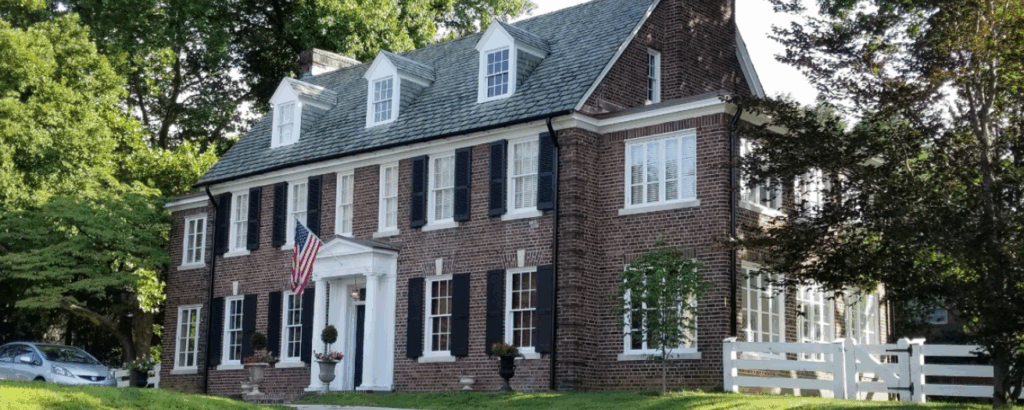
Several years ago I attended a Villanova University Irish Studies celebration at the Kelly House in East Falls. It was the first time I found myself inside the house. Until then I had only quickly glimpsed the exterior while riding with my great-aunt in her cream-colored Chevrolet Impala.
“This is where Princess Grace grew up,” she’d say, pointing to the house as we drove by.
Princess Grace was a big thing with my great-aunt. In 1976, when Philadelphia hosted the 41st International Eucharistic Congress of the Roman Catholic Church at the Cathedral of Saints Peter and Paul, she was there among the 2,000 worshipers. As luck would have it, at one point she found herself standing a couple feet behind Princess Grace who was attending with her family. My great-aunt wasted no time: she reached out and touched the Alfred Hitchcock legend on the shoulder.
“She immediately turned around to see who touched her,” my great-aunt said. “And she gave me an ice cold glare I will never forget.”
The old saying, one must never touch royalty, seemed to be true, even though diehard royal watchers always maintained that Monaco royalty was lower-shelf royalty and were perceived as such by the real royal family in Buckingham Palace. And Grace, after all, was the daughter of a bricklayer.
But lower shelf, upper shelf, what does it matter?
I was glad to be inside the still-intact (and still beautiful) prime example of Kelly brickwork. It was stunning.
That evening Irish literature aficionados of all ages gathered in celebration: Grad students, writers, college deans, two bona fide Kelly family relatives, Susan Kelly vonMedicus and John B. Kelly, III, as well as former Villanova professor of theology and religious studies, Rodger Van Allen.
The upbeat mood was contagious, outstripping the solemnities you might expect at an anniversary event featuring a symposium that focuses on Irish writing from a diasporic perspective.
At the reception following the afternoon panel discussion, live Irish music helped guests circulate and chat with one or all of the evening’s four presenters, James Silas Rogers, editor of the New Hibernia Review and Director of Irish Studies at the University of St. Thomas, who looked every bit the poet in his Irish Fisherman’s Crewneck sweater which had the added effect of making him look like Welsh poet, Dylan Thomas. Only, unlike Thomas, he was not drunk.
I recall a man named David Lloyd, a Welshman, Fulbright Scholar, professor of English at Le Moyne College in Syracuse, New York, and the author of ten books, who read about his Welsh roots while Dr. James J. Murphy, the son of two Irish immigrants who grew up in Brooklyn, went on to mesmerize the audience with his dry humored, over-the-top hilarious essay, “A Child’s Christmas in Brooklyn,” a story of the early Christmases he knew as a child with his immigrant parents.
The memoir brought Dr. Murphy close to tears several times but he was saved from the precipice of sorrow by his wife Kathy, effervescent as a cheerleader, who urged him on from the audience: “Go on. You can do it!” she said.
One man told the audience, “You might think that the Irish came off the boat and assimilated immediately,” he explained, adding that in Irish literature there’s “a sense of reticence and a great deal of silencing.” An example of this “silencing,” he said, could be found in the photographs one often sees in Irish history books.
“They tend to be all the same, something that’s due to the fact that if you’re Irish you should not call attention to yourself.” Rogers believes that respectability is an obsession with Irish Americans, and that on a deep level the Irish believe that they are not the same as other people.
I must agree with that statement. While walking around Penn’s Landing a couple of years ago with an acquaintance of Scottish descent we happened to pass the Irish Memorial. Now, I had never seen the Irish famine memorial up close so I paid attention when the Scottish gentleman pointed out the excesses of the overwrought, overdramatic sculpture: women clasping their loved ones in tears, women screaming, children in the middle of tantrums, men who looked as though they were about to expire. It was like a daytime soap opera frozen in stone. Then we walked to the nearby Scottish memorial. What a contrast! One saw instantly the self-disciplined stoic nature of the figures. Though one could detect pain in the face of the figures, it came across as controlled pain without the unworldly flamboyance of the rowdy Irish.
The six-bedroom Kelly house was built in 1928 by John B. Kelly. John and his wife Margaret raised six children in the home, which was sold by the family in 1973. The house had a number of owners after that, including a deranged cat woman who turned the home into a dangerous, feral animal farm.
In 2016, Albert II, Prince of Monaco, Princess Grace’s son, bought the house for $755,000 and had it remodeled to look like it did in the 1950s. Many of the original features can still be seen including the famous linen closet door with Grace’s height recorded over the years.
The following year, John B. Kelly, III, told CBS News that, “The whole house, from a brick construction point of view, is amazing, and there’s not a crack in it. He used this great mortar that doesn’t need repointing, and it’s almost a hundred years old.”
Guests were encouraged to take self-guided tours of the home. In the upstairs bedrooms there were freshly painted icons in the Byzantine tradition. This shocked me because I had always thought the Kellys were monochrome Irish Catholic. The icons were not part of the original Kelly family décor but were painted by Grace’s niece, Susan Kelly vonMedicus, an iconic writer (iconic artists are called “writers”) and teacher at the Center for Irish Studies and the Department of Theatre and Studio Art at Villanova University.
VonMedicus acted as the volunteer bartender during the event, along with her brother John B. Kelly, III or JB.
Old Kelly family films ran continuously on a wide screen TV in the Kelly House den. Featured were sunburned children playing leapfrog in the backyard, vintage 1950s cars and shots of the news media crowding the Kelly brick-walled den as Prince Rainier and Grace Kelly gave a television interview after the announcement of their engagement right there in the den. Ironically, the walls and some of the décor looked the same.
Adjacent to the den was the old “Kelly Tavern,” the bar that Jack Kelly built to offset the absurdities of Prohibition. The bar in those days was stocked with large kegs of beer. Kelly Tavern was alive with every strand of Irish imaginable: Blue eyes, redheads, gingers, black Irish, a smart smattering of over 65 white haired-gentlemen. Many chatted up Dr. Murphy (who showed them old photos of his family in front of a Christmas tree) while others asked Rogers questions about the New Hibernia Review.
As the lone reporter on the premises, I did a mental comparison of the predominantly Irish crowd to the mainly “English” crowds I had observed at English Speaking Union of Philadelphia receptions. The vibes were similar, yes, only with the Irish everything seems to move at a faster pace. The musicians playing Irish music near the Kelly family video screen helped to accelerate the tempo that at times reached a fever pitch.
The people at the English Speaking Union, however, were far less staid than I assumed they would be. There was nothing formal about the Christmas dinner I attended there. Food was even served on paper plates, alcohol (no champagne) served in plastic cups.
I had a long talk with Jack Kelly III, who at that time had an antique car parked outside the house on Midvale Avenue. I told him that he looked remarkably like his father, Jack Kelly, the former Olympic medal winner and City Councilman who died after jogging near Boat House Row (his body was found at 18th and Callowhill Street) and who used to date Philadelphia’s most famous transsexual, Rachel S. Harlow (born Richard Finocchi). We talked about Harlow and Jack Kelly III told me the family was very upset about the relationship.
Jack Kelly, in fact, claimed that he intended to marry Rachel, after his mother threatened to disinherit him; he ended the relationship.
The Kelly House houses the headquarters of the Prince Albert II Foundation as well as the Princess Grace Foundation USA.
Thom Nickels is a Philadelphia-based journalist/columnist and the 2005 recipient of the AIA Lewis Mumford Award for Architectural Journalism. He writes for City Journal, New York, and Frontpage Magazine. Thom Nickels is the author of fifteen books, including “Literary Philadelphia” and ”From Mother Divine to the Corner Swami: Religious Cults in Philadelphia.” His latest is “Death in Philadelphia: The Murder of Kimberly Ernest.” He is currently at work on “The Last Romanian Princess and Her World Legacy,” about the life of Princess Ileana of Romania.