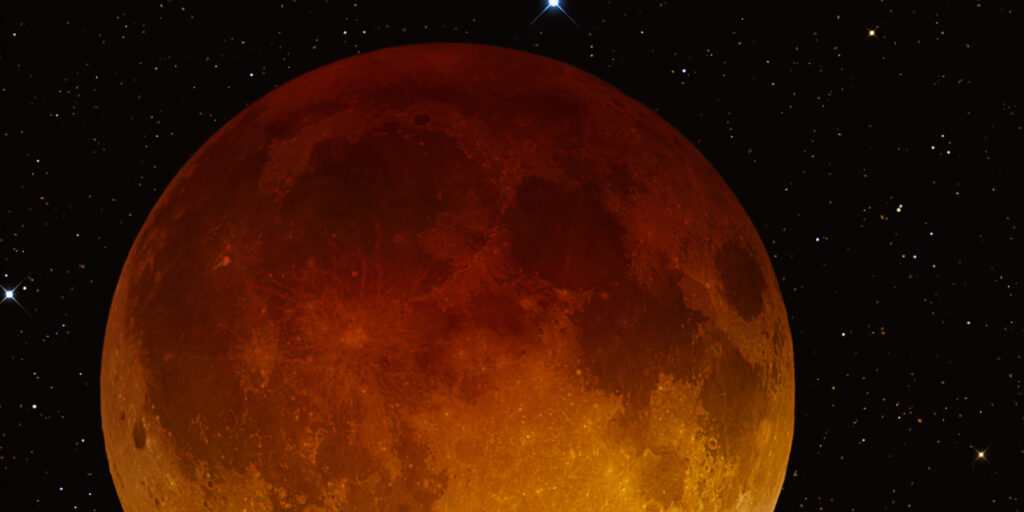
 Photo by Robert Jay GaBany via Wikimeida Commons
Michael Thomas Leibrandt: Good omen from the ‘blood moon’?
Here we are once again, Philadelphia. Get ready, it’s time for the big one — a total lunar eclipse known as the Blood Moon. And if you are one of those dedicated eclipse chasers, this one is pretty significant. We won’t see such a solar event in Philadelphia again until 2028. All the more reason to enjoy tomorrow morning’s total lunar eclipse even more. And judging by the history of our city, it could mean good things to come.
It is estimated by experts that the last total solar eclipse in the skies around Philadelphia was all the way back in 1478. If you don’t remember it, don’t feel bad: it actually pre-dated the construction of Philadelphia by nearly 200 years. For the native American population who was here long before Europeans, seeing a total lunar eclipse evoked a reaction of prayer and reflection, and diverse and many times fear. Many traditions of the time were a type of protection for the moon and to bring the atmosphere back into harmonic alignment.
But for Philadelphia — which is about to celebrate 250 years at the site of the beginning of our nation — total lunar eclipses haven’t just been significant in history. They’ve actually been a sign of good things to come. Very good things.
In 1680, settlers on the banks of the Schuylkill and Delaware Rivers around what is now Philadelphia witnessed a comet in the sky. Five years later, as Europeans flocked to William Penn’s Philadelphia marking a period of significant growth, a total lunar eclipse occurred in the skies above the city, lasting nearly 105 minutes in 1685.
Twenty-seven days after America declared its Independence from King George III and Great Britain, a total lunar eclipse appeared in the skies over Philadelphia on July 31, 1776. The city was still electrified by July’s celebrations and public readings of the Declaration of Independence — helping to fuel American spirit and not to abandon the struggle.
After a large British celebration in Philadelphia during its wartime occupation by the English during the month prior — General Howe’s 15,000 abandoned Philadelphia after nearly nine months of control. Six days later, as the last of Howe’s army vacated the city and General Washington’s Army was moving towards New Jersey, another total lunar eclipse could be seen in the skies above Philadelphia.
On January 31, 2018, a “Super Blue Blood Moon” — another total lunar eclipse — could faintly be detected above Philadelphia. It turns out, it should have been Kelly Green. Five days later, the Eagles won their first Lombardi Trophy in franchise history.
Michael Thomas Leibrandt lives and works in Abington Township, Pennsylvania.