
Thom Nickels: Don’t ban books — or flags
As a kid I was a Civil War buff and loved visiting an old burned out Civil War era chapel near my parents’ house in East Whiteland Township, Chester County.
This old stone chapel was set off by itself in a small clearing in the middle of a forest. Next to the chapel were two graves. Buried were two Civil War soldiers, both from the Union Army, with their names and dates of birth and death barely distinguishable on the quickly disintegrating grave stones.
These two long dead Union soldiers captured my imagination, especially since the area around the chapel was not an official cemetery.
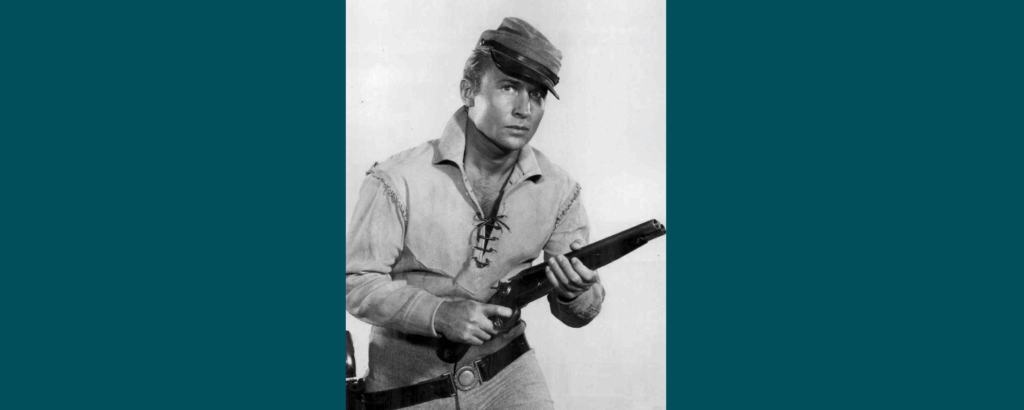
The Civil War was everywhere in the 1960s. There was even a popular half hour television show called The Rebel.
The Rebel starred Nick Adams, who happened to be a friend of actor James Dean’s. The Rebel was the story of a displaced ex-Confederate soldier, Johnny Yuma, who wandered from town to town after the defeat of Robert E. Lee. Displaced Johnny didn’t seem to have a job, but that may have been because he refused to take off his gray Confederate uniform which he seemed to wear on every show. Johnny Yuma would wander into a strange town; find a place to spend the night, and then have a number of adventures, many of them not pleasant because of his status as a Reb.
What made the story of Johnny Yuma so compelling for me was his incessant journal writing.
Throughout the half-hour drama the viewer saw him sitting under a tree or in a hotel room writing in his journal. At the end of the show he would gather his few personal belongings, hop on his horse and then head out into the wilderness, a lost soul and a loner without a home.
The Confederate flag played a big part in The Rebel. As a Yankee- identifying kid I had little respect for the Confederate flag. While Chester County, where I grew up, was hardly the south, in a few of the seedier sections of the county you could always find a Confederate flag or two. Some of them were painted on barns and a few of them could be found on pick up trucks. The message this sent to us then was that the lovers of this flag were bitter that the South had lost the war. Yet I found great irony in the fact that the people who brandished the Confederate flag were also the most vehemently patriotic Americans.
In the late Sixties these same Confederate flag bearers would go on to support the Vietnam War and many of them were adamant followers of the My Country Right or Wrong philosophy. There were bumper stickers then that read: America: Love it or Leave It.
Watching the Democratic National Convention on television as a boy I saw scores of Confederate flags on the convention floor.
In high school I had a Confederate-identifying friend, Ed, who hailed from North Carolina. Ed was a star wrestler and a major Don Juan with the girls but his hero of all time was Robert E. Lee. Ed had no time for Abe Lincoln and he’d often make jokes about Lincoln.
Much later in life when I visited the south, I saw that statues of Abe Lincoln were pretty much relegated to the backyards of buildings or they were placed in obscure places that seemed to suggest a second or third tier status.
Growing up, the Confederate flag represented ignorance and a ruinous southern redneck mentality. I didn’t like the flag and I couldn’t understand how it was allowed to fly over different southern state capitol buildings. I was a very “woke” twelve-year-old boy.
That all changed when the PC movement within the Democrat Party morphed into an ideological woke movement that sought to ban the Confederate flag.
That’s when I came to see that flag as a valuable part of our nation’s history. Banning it would be tantamount to banning a history of the Confederacy.
Can one have reservations about the Confederate flag without wishing to ban it from public display?
As a boy I used to canvass the neighborhood with a petition from my parish church which urged the banning of indecent movies. These were the days when Catholics had to abide by the Church’s list of condemned movies. Of course it makes no sense why the Church — or any Church — would want everybody in society — Jews, Protestants and atheists — to abide by its in-house Hollywood movie decency rules. The Pawnbroker, with Gene Hackman, was a big offender in those days because it was the first American mainstream film in which a woman bared her breasts. The Pawnbroker was condemned by the Catholic Church but in the eighth grade I went and saw it anyway.
Books like Henry Miller’s Tropic of Cancer, Ulysses by James Joyce, Candy by Terry Southern, and poems by Allen Ginsberg were also being banned. These were the days when Banned in Boston was known throughout the nation. In the early 1990s, I was on the receiving end of censorship when a 500-page book I wrote, The Boy on the Bicycle, was officially banned in Ireland.
Consider this: It was not the Confederate flag that flew over the nation’s capitol building when slavery was accepted as the American norm.
When Native Americans were pushed out of their land by the early colonists and western pioneers, it was not done under the auspices of the Confederate flag.
It was not a “Confederate state of mind” that forbade the teaching of German in the nation’s schools during World War I. Flags, after all, can be strangely multi-symbolic. They can represent different things to different people at different times in history. For Vietnam War protestors in the 1960s and 70s, the Stars and Stripes stood for genocide, imperialism and napalm while on the other side of the aisle it stood for freedom, democracy, and fighting Communism.
Each side had its own definition of the flag’s true symbol.
When Puritan preachers in New England held bibles aloft as they hung or burnt witches they saw the bible as a symbol of righteous punishment. Ditto for those who have used scripture to condone slavery, the total subjection of women or the persecution of gay people. But does this mean that the Bible should be banned as an instrument of hate?
When certain interpretative passages in the Koran lead some in the Muslim world to blow up buildings, does this mean that the Koran is evil and should be banned? Or is this the fault of those who interpret the book rather than the book itself?
And what about intellectuals who overdose on the writings of Nietzsche and who then commit suicide because, like Nietzsche, they came to the conclusion that life is meaningless and futile? Should Nietzsche’s writings be banned to save weak-willed intellectuals?
Should Hitler’s book, Mein Kampf, be banned for fears that impressionable youth might find evil inspiration in the text and then seek to create another Third Reich?
Because my mother’s youngest brother, at eighteen years of age, was captured, tortured, and killed by the Japanese in a South Pacific island during World War II, should I incorporate that tragedy into a hatred of the Japanese flag? Should I avoid Japanese restaurants?
Where does this sort of madness stop?
That’s why I say, don’t ban the Confederate flag but learn to see and value it as a part of our nation’s rich history.
Thom Nickels is a Philadelphia-based journalist/columnist and the 2005 recipient of the AIA Lewis Mumford Award for Architectural Journalism. He writes for City Journal, New York, and Frontpage Magazine. Thom Nickels is the author of fifteen books, including “Literary Philadelphia” and ”From Mother Divine to the Corner Swami: Religious Cults in Philadelphia.” His latest is “Death in Philadelphia: The Murder of Kimberly Ernest.” He is currently at work on “The Last Romanian Princess and Her World Legacy,” about the life of Princess Ileana of Romania.

Interesting article. I enjoyed it, as usual. You have an unique perspective on things.
The flags that are the most annoying are Old Glory depicted in black & white with a single bright blueline, or a redline (sometimes both) in them. Those black & white flags, that innocent fools fly “supporting” the police and firefighters, are actually so petty and small and seem designed intentionally to try and diminish the flag of the United States of America. They could simply fly the all inclusive flag of the United States of America. Conversely, it always brings a smile to my face seeing those LGBTQIA+ and other mafia-tyrant rainbow flags because they’re so stupid and humorous – and I like to think they are being flown to represent God’s covenant that He would never again allow a flood to destroy the earth.
Here is a non-sequitur regarding book bans, Mein Kampf, and evil tyrants: the word swastika is not used at all, anywhere, in that book or other literature from that evil and odious political party. No one in that political party used that term or word. It was specifically called hakenkreuz (broken cross) and it is beyond perplexing how the swastika became maligned by Western press. The word “swastika” comes from the Sanskrit term “svastika,” which means “well-being” or “good fortune.” It is derived from the roots “su,” meaning good, and “asti,” meaning to be or exist, reflecting its historical significance as a symbol of auspiciousness in various cultures. When books get banned… knowledge gets lost. In fact, every single idea should be allowed to be communicated, examined, and discussed…. among adults. And no one is actually “banning” books these days. There are worthy discussions about age-appropriate books in public spaces and schools. Those same rainbow-flood-covenant-flag bearers understand very well that children are impressionable; and thus they attack the children’s section of the public library very specifically with their political meetings. It is disgusting behavior by deviant bullies and should not be tolerated. The libraries themselves created the “children’s” section… why? Because they knew – and they should still know – we need certain public areas cordoned off to protect our the children, so they remain safe. And any political parties should be held in the adult sections of public spaces – to prevent people from harming our children. Very distinct ideas.
A thoughtful article and one that merits discussion. A couple of points however. First, it was Rod Steiger not Gene Hackman who starred in The Pawnbroker. Second, what most of us consider to be the flag of the Confederacy is actually not the national flag of the Confederate States of America. The official flag of the CSA has three stipes( two red and one white) and a blue canton in the upper corner with a circle of stars. This was the flag that was banned in the United States after the conclusion of the Civil War. The flag you are referring to is the battle flag of the Confederate Army. Since it was not banned after the Civil War it was the one that was most frequently flown.