Marc LeBlond: Shapiro’s JFK moment on school choice
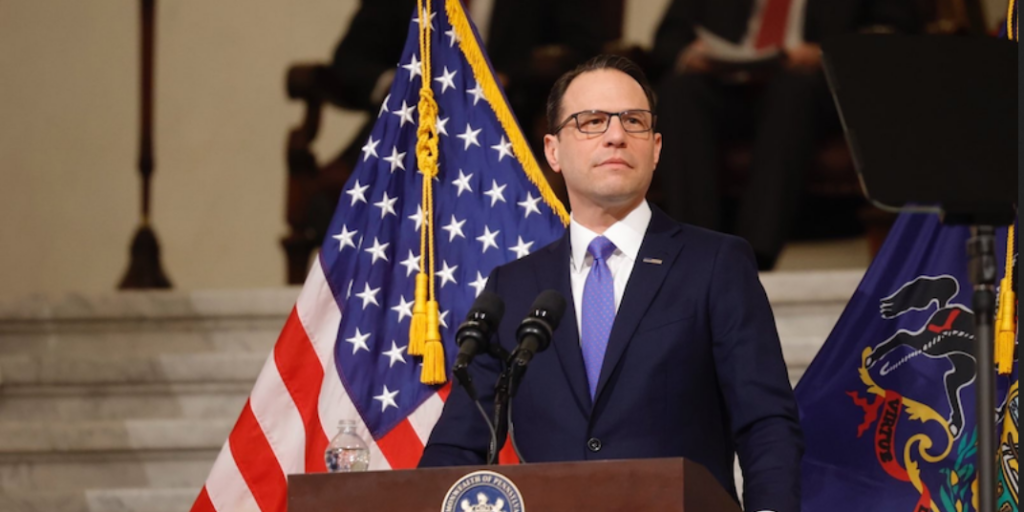
Pennsylvania Governor Josh Shapiro is facing a pivotal moment echoing one John Fitzgerald Kennedy faced nearly seven decades ago. JFK’s choice set him apart as a beloved, inspirational leader, and a fierce advocate for freedom. Gov. Shapiro has a parallel opportunity today to set himself apart as a leader in education freedom.
July 2, 1957—Washington, DC. Hours before the United States Senate would recess for the long Independence Day weekend, thick, sweltering air lapped like waves at the Capitol sandstone, edging inside. Inside the U.S. Senate chamber, heavy curtains absorbed what little breeze came through the high clerestory windows above the gallery. The primitive central air system hummed a low, steady whir, casting an occasional click or wheeze. The building’s pulse slowed as the day wore on. Most senators had left for the day. As tired aides fanned themselves with briefing folders, a young senator from Massachusetts stood.
John Fitzgerald Kennedy wasn’t yet a household name, but he carried himself with notable confidence. He stood to challenge consensus. France, our NATO ally, was waging a brutal colonial war in Algeria. The State Department kept its head down, as did most Democrats and Senate Majority Leader Lyndon Baines Johnson. But not Kennedy.
His voice, measured and unmistakably Boston, cut to the quick.
“The most powerful single force in the world today is neither Communism nor Capitalism, neither the H-bomb nor the guided missile — it is man’s eternal desire to be free and independent…We must support the rights of people everywhere to be free.”
It wasn’t showmanship. It was statesmanship. In that half-empty chamber, something landed. History, often disguised in quiet moments, took note. Because that’s what it looks like when a leader meets the moment, even at risk of great personal or political cost.
Sixty-five years later, then-gubernatorial candidate Shapiro planted his policy flag on the school choice issue, advocating to liberate students in low-income households from failing schools. He urged passage of Lifeline Scholarships and tax credit scholarship expansion because, “it’s what I believe.” In multiple sessions since 2022, House Majority Leader Matt Bradford of Montgomery County has blocked legislative school choice efforts.
Now-Governor Shapiro has publicly reiterated support for school choice while remaining passive as the Republican-led Senate and the Democrat-led House negotiate budget priorities. Meanwhile, students across Pennsylvania languish in schools that objectively miss the mark.
If Gov. Shapiro wants to be president, he must act presidentially on education.
Shapiro has shown flickers of POTUS potential. His speech in the wake of firefighter Corey Comperatore’s killing in Butler was universally inspiring. Shapiro’s support for giving low-income families alternatives to their assigned public school signaled moral clarity.
But the moment calls for more than signals. It demands leadership. In red states, school choice is expanding like wildfire. This year alone, Tennessee, Idaho, Wyoming, Indiana, Texas, South Carolina, and New Hampshire have passed or expanded school choice programs. Thirty-five states now have some form of private school choice, and with the passage of a $1 billion education savings account program (ESA) in Texas, more than half of American K-12 students have access to a school of their choice. We even have school choice at the federal level, as President Trump signed the nation’s first-ever federal school choice tax credit in the reconciliation bill on Independence Day.
Meanwhile, blue states stubbornly lag behind.
Recent polling from Ragnar Research Partners shows intense, bipartisan support for school choice among voters, with supermajority support among black and Hispanic voters. These constituencies — once assumed to be Democratic mainstays — are shifting. In 2022, Republican candidates made historic gains with working-class and minority voters, many of whom rank education freedom as a top issue.
Recognizing both political reality and the morality of prioritizing students and families, groups like Democrats for Education Reform (DFER) have made their position clear on the Pennsylvania education policy conversation, urging the party at large to embrace the opportunity and equity of education choice.
Establishment Democrats aren’t operating from today’s playbook. When it comes to education, they’re operating in the wrong century. As DFER rightly points out, by adhering to a one-size-fits-all educational model, the Democratic Party has lost the trust they once firmly held with parents and voters. The party must adapt on education or face irrelevance.
Governor Shapiro is fond of saying he’s “competitive as hell.” He doesn’t like to see Pennsylvania outdone by competing states. But consider Ohio and West Virginia, which together share 250 miles of Pennsylvania border. Each offers school choice to nearly all its families. We risk losing an economic prosperity contest as families flock to states with superior educational options.
Like Senator Kennedy in 1957, Governor Shapiro has the chance to lead on freedom. He can shepherd a deal between the Pennsylvania Senate and House that ensures families have access to the school that best fits their child. The 2028 race for the presidency will not be won by the meek, but by the bold.
Governor Shapiro, this is your moment. Seize it.
Marc LeBlond is Director of State Advocacy at American Federation for Children. He lives in Williamsport, Pennsylvania, with his wife and four school-age children.