Stephanie Catarino Wissman: Fast track federal permit reform so Pennsylvania can get back to building
We all know the value of affordable and reliable energy. From powering homes and businesses to supporting hundreds of thousands of good jobs for Pennsylvanians, energy means jobs, growth and opportunity. But demand for energy is surging fast.
America’s electricity demand is projected to increase 35 to 50 percent by 2040, driven in large part by new AI data centers.
In the PJM Interconnection, which includes Pennsylvania, 95 percent of new power demand through 2030 is expected to come from data centers, further straining a system that’s slow to bring new power sources online. Replacing retiring power sources, particularly reliable baseload power like natural gas, is essential to powering AI and keeping the lights on for American families.
A broken federal permitting system
The rapid rise of technology and the race for America’s future brings new urgency to fixing a broken, inefficient permitting system where projects are often stuck in red tape and buried in endless reviews, thus blocking the critical infrastructure needed to keep pace with demand.
Infrastructure project of all kinds – pipelines, power plants, transmission lines – even roads and bridges – face a myriad of federal approvals under a maze of outdated laws and regulations. Opponents regularly weaponize statutes like the National Environmental Policy Act (NEPA) and the Clean Water Act (CWA) to block development at every stage of permitting.
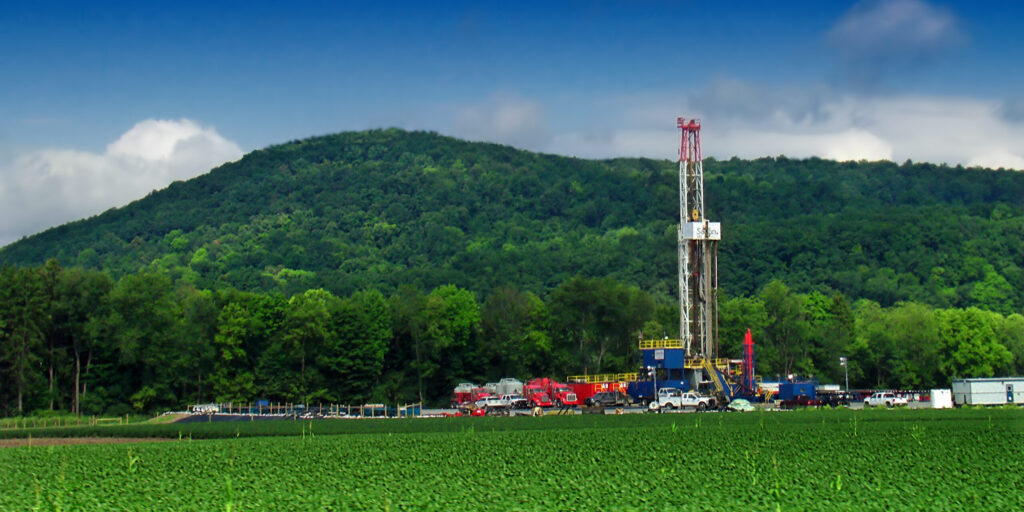
In natural gas-rich Pennsylvania and the Appalachia region, more takeaway capacity, including pipelines, is needed to move energy from the drilling field to consumers.
Major pipelines in the region, including PennEast, Constitution and Atlantic Coast, were cancelled after years of permitting delays and court challenges.
After nearly six years of lawsuits and delays, it took an act of Congress to help finish the 303-mile Mountain Valley Pipeline, which links Appalachian basin natural gas to markets in the Mid-Atlantic and Southeast.
When infrastructure lags behind demand, supply tightens. Building new infrastructure helps energy flow faster to consumers and could help keep costs affordable.
While the Trump administration has taken steps to stop harmful mandates and restrictive energy policies to help bolster American energy dominance, congressional action on permitting reform is urgently needed to unlock America’s potential and get back to building. Enacting commonsense deadlines and predictable permitting processes can help ensure projects are built in years, not decades.
Three key areas must be addressed: 1) set deadlines and enforce them, 2) stop lawsuits and start building and 3) enforce targeted reviews and swift decisions.
Pennsylvania stands ready to build
Energy-rich Pennsylvania can benefit from permitting reform. Sitting atop the Marcellus shale, the largest natural gas formation in the U.S., Pennsylvania is the second-largest natural gas producer in America.
Pennsylvania has the natural resources and skilled workforce to advance U.S. energy dominance and build a stronger economy. Permitting reform can help unleash Pennsylvania energy to support innovation while creating good jobs and helping to keep energy costs affordable for consumers.
Without permit reform, Pennsylvanians could face energy shortages, much like they do in California and New England, where policy roadblocks restrict energy access and infrastructure projects.
Pennsylvanians shouldn’t have to pay the price for permitting delays, with fewer reliable energy options, because Washington can’t fix a broken permitting system. This doesn’t mean cutting corners on safety or the environment – it means using common sense, establishing clear deadlines and keeping critical projects moving forward – not trapped in red tape and litigation.
Congress must act on durable reforms that help ensure Americans have access to affordable, reliable and secure energy for decades to come while helping to power U.S. technology and innovation.
It’s time to reform permitting and start building again in Pennsylvania and across America.
Stephanie Catarino Wissman is the executive director of American Petroleum Institute Pennsylvania based in Harrisburg.