Markets in everything
In last year’s election, the hunger for predictive information was higher than ever. We live in a closely divided land, and party control of the House, the Senate, and of course the White House has swung back and forth between the parties. Everyone — readers, reporters, editors, and pundits — was dying to know what would happen next.
At the same time, the traditional method of gauging public opinion — polling — had fallen on hard times. People used to have landlines and when the phone rang, you picked it up. But the smart phone has swept the field and we use it for everything except answering political questions from unknown numbers. Maybe it’s adaptation to a new technology. Maybe it’s the decline in trust that’s troubling so many other areas of modern life.
Either way, polling is more scattershot and less accurate than ever.
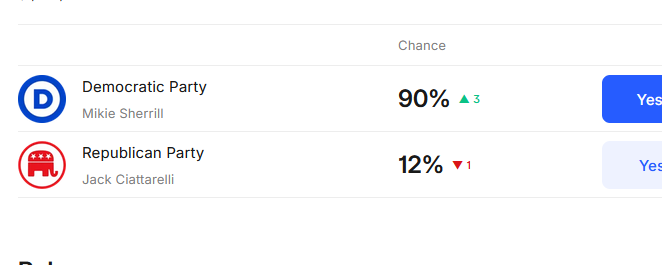
In 2024, many began to notice a new source of information: the political futures markets. Instead of tracking down people and asking them for whom they plan to vote, futures markets ask a slightly different question: who do you think will win. And because it is an investment, not idle speculation, the people giving their opinions have to put their money where their mouths are.
People might lie to pollsters, but few are willing to lose money on the proposition. A new tool of predictive journalism was born.
This year, Broad + Liberty and PoliticsPA will bring that new source of information to you through a partnership with Kalshi. Founded in 2021 and regulated by the federal government’s Commodities Futures Trading Commission, Kalshi offers you, the reader, a view of the markets that has proven far more accurately predictive than traditional polling or pundits’ prognostications.
“Predictions are hard,” Yogi Berra once said, “especially about the future.” No one will get them all right. But adding one more data source to our arsenal — one that proved very effective in the last election cycle — can only serve to improve the reporting around elections and other future events.
We hope you’ll find this data useful as a helpful guide to the often confusing landscape of voter sentiment.
Kyle Sammin is the managing editor of Broad + Liberty.