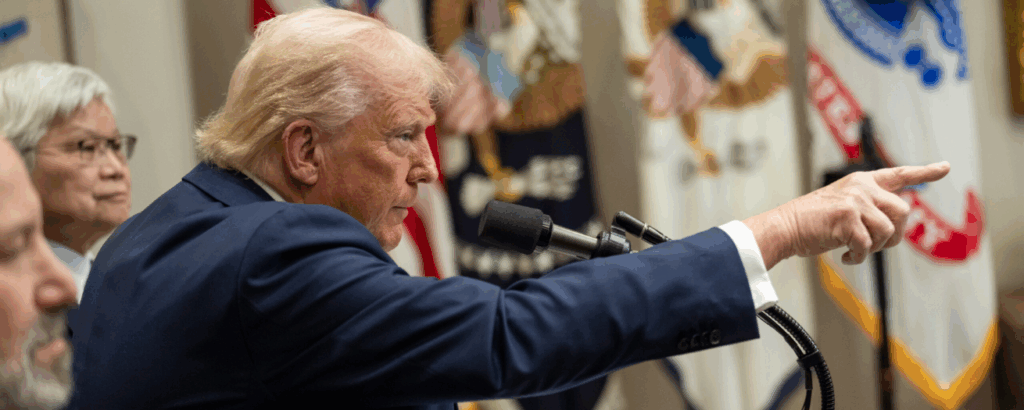
Trump signs order to end cashless bail
President Donald Trump is poised to sign an executive order ending cashless bail across the United States, a move that has ignited heated debate as cities continue to grapple with persistent spikes in violent crime and public safety concerns. For those of us with firsthand experience on both sides of the criminal justice system, the forthcoming order marks a pivotal moment — one that exposes deep philosophical divides in how communities balance individual liberties against the imperative of public safety.
Having served as a law enforcement officer and, later, been directly impacted by the system’s excesses under a Washington, DC gun control ordinance later deemed unconstitutional, I have developed a nuanced view of justice. My subsequent involvement in crafting policy for campaigns such as Beth Grossman’s challenge to Philadelphia District Attorney Larry Krasner and Lou Barletta’s gubernatorial bid in Pennsylvania fueled a determination to find middle ground between reform and responsible enforcement.
Trump’s order comes as progressive prosecutors and legislators — many supported by organizations linked to billionaire George Soros — have championed cashless bail policies, arguing they prevent poverty-based incarceration. In reality, as law enforcement and community advocates have warned, these policies have too often resulted in repeat offenders being swiftly released, only to commit new crimes. From New York to California, Illinois to Pennsylvania, data and lived experience suggest that the abolition of cash bail correlates with rising rates of violent incidents, theft, and drug-related offenses.
The executive order aims to reverse these policies, restoring judicial discretion to detain defendants deemed a threat to public safety. Proponents argue that this move is necessary to address what has become a “revolving door” for criminal activity. Critics, however — including governors and attorneys general in Democratic-led states — have already signaled their intent to challenge the order in courts, citing federalism concerns and longstanding opposition to intervention by Washington in local bail systems.
The Limits — and Promise — of Reform
My work in both Grossman’s and Barletta’s campaigns centered on developing a risk-based approach to criminal justice reform — neither carte blanche detention nor indiscriminate release, but tailored procedures to swiftly assess a suspect’s actual threat level. The goal: Make pretrial processes efficient, so non-dangerous individuals don’t languish behind bars awaiting trial and law enforcement can be on the streets and not spending half their time on paperwork and court, while truly dangerous offenders are kept off the streets. Such policy, rooted in data and pragmatic experience, stands in stark contrast to the ideologically driven reforms of Krasner and his bail abolitionist peers.
Equally important is a commitment to record reform — an apolitical strategy that gives formerly convicted individuals with clear evidence of rehabilitation a second chance at a clean slate. Rather than eternally stigmatizing people for mistakes of the past, record reform rewards progress and reintegration while maintaining safeguards for those who repeatedly endanger public safety. This nuanced stance bridges the divide between tough-on-crime rhetoric and the practical realities of human fallibility and redemption — a balance sorely missing in much of today’s criminal justice dialogue.
Left-wing criminal justice policies restricting judicial discretion on bail, policing, decarceration, and charging practices have fundamentally reshaped the legal landscape in cities such as Philadelphia, New York, Chicago, Baltimore, and Los Angeles over the past eight years. While the goal has often been to address systemic inequities and reduce mass incarceration, these policies have produced dangerous consequences that have compromised community safety and trust in the justice system.
Progressive bail reforms, particularly cashless bail, eliminate judges’ ability to set bail based solely on risk, forcing them instead to follow rigid guidelines. In New York, the 2019 bail law led to judges releasing repeat offenders even after violent crimes, severely limiting the tools available to keep dangerous suspects in custody.
It leads to a “revolving door” effect: offenders with multiple arrests, including for robbery and burglary, returned to the streets after their release without meaningful supervision. Similar patterns emerged in cities like Philadelphia and Chicago, where judicial discretion has been replaced with blanket policies that ignore individual risk factors.
Policy shifts aimed at limiting police discretion — often in response to high-profile incidents — have led to demoralization and reduced proactive enforcement. In Baltimore, the so-called “Ferguson Effect” saw police arrests plummet by nearly 30 percent in one year, while murders surged by over 50 percent. In Chicago, a lawsuit driven by the American Civil Liberties Union slashed police stops by 82 percent, and was correlated with a 58 percent spike in homicides. These anti-police policies, echoed in Los Angeles, DC, and New York, have made officers wary of engaging in necessary interventions, leaving communities more vulnerable to violent crime.
The movement towards reducing jail populations, often by releasing pretrial defendants in the midst of a cycle of criminality, has been embraced by progressive prosecutors and city councils. While some studies suggest that very targeted decarceration efforts haven’t universally led to higher rates of returns to custody, evidence from major cities highlights the limits of this approach when combined with weakened supervision and undercharging. In California, for example, mass decarceration under “realignment” was associated with a statistically significant rise in property crime, specifically motor vehicle theft, even as violent crime rates overall remained stable or dropped. These policies often fail to distinguish between nonviolent reformed offenders and habitual, high-risk individuals, resulting in preventable victimization.
Left-wing prosecutors in New York, Philadelphia, and Los Angeles have championed policies of routine undercharging, downgrading felonies to misdemeanors and declining to prosecute whole categories of crimes. In Manhattan, DA Alvin Bragg’s refusal to seek serious penalties — even for repeat offenders — has contributed to a 40 percent jump in violent crime in some precincts. Chicago and Los Angeles have seen similar results as prosecutors favor alternatives to incarceration, letting offenders avoid meaningful consequences and perpetuate cycles of violence.
In the wake of these reforms, America’s largest cities saw steep rises in repeat criminal activity, public disorder, and community resentment. Weak bail laws and charging policies embolden offenders, erode public trust, and create law enforcement bottlenecks where victims feel abandoned. While some studies assert that overall crime rates have not universally corresponded to decarceration, empirical trends in major urban centers show an undeniable connection between progressive legal interventions and disruptive surges in specific types of crime. While reform aimed at justice and rehabilitation remains critical, the approach must balance efficiency and community safety — or risk repeating the cycle of rising crime, eroding trust, and failing to protect the most vulnerable.
Legal Battles Ahead
The Trump administration is acutely aware that litigation will follow, particularly in states with entrenched bail reforms. Based on the reaction to Trump’s DOGE, border, and deportation reforms, it is safe to anticipate possible lawsuits in New York, California, Illinois, Pennsylvania, Massachusetts, and Maryland, states where progressive prosecutors and legislators have shifted bail policies sharply leftward in the past decade. The constitutional debate centers on the Tenth Amendment’s reservation of powers to the states, as well as the Eighth Amendment’s prohibition on excessive bail. Historically, federal intervention in bail law has been rare.
Yet the forceful federal stance has catalyzed a broader discussion about the human cost of failed policy, with police unions, victim advocates, and community groups pushing back against “catch and release” practices. Policymakers and reformers who have worked in the trenches, crafting strategies that prioritize both efficiency and accountability, have long doubted the wisdom of blanket cashless bail.
Trump’s executive order, while unlikely to survive intact in liberal-leaning states, is a strong symbolic rebuke to a wave of radical criminal justice experiments championed by Soros-backed officials, big-city mayors, and progressive legislatures. And for those of us who have witnessed the personal and societal consequences of policy extremes, this moment signals a possible pivot toward measured reform — where public safety is not sacrificed at the altar of ideological purity.
In this fraught atmosphere, advocates for risk-based reform and genuine second chances must continue to argue for smarter justice, putting practical efficiency and community safety back at the center of criminal justice debates. It is possible to chart a path forward — one that avoids the excesses of both mass incarceration and reckless bail elimination — while returning dignity and security to America’s cities.
As the legal wrangling commences and political lines harden, those of us drawn from experience rather than theory know the stakes could not be higher. Only a system built on procedural efficiency, real rehabilitation, and proportional accountability can restore order and hope to the communities most affected by crime and recidivism.
Based in Philadelphia, A. Benjamin Mannes is a consultant and expert witness in security, premises liability, and criminal justice reform based on his own experiences on both sides of the criminal justice system. He is a compliance executive who previously served in federal and municipal law enforcement, and as the former Director, Office of Investigations with the American Board of Internal Medicine. @PublicSafetySME