Guy Ciarrocchi: The Philadelphia School District rearranges school buildings on the Titanic
It’s enough to make you cry or scream — or both.
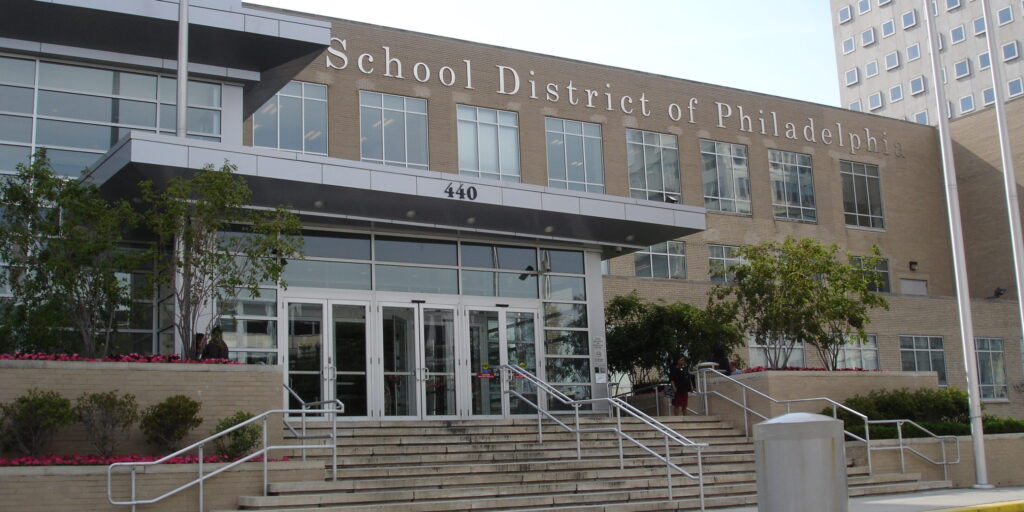
The adults are hard at work “re-arranging the deck chairs” at the Philadelphia School District, while most students aren’t learning — and attend schools that are violent.
Only 33 percent of Philadelphia School District elementary school students can read at grade level. Only 25 percent can do grade level math. The numbers are worse — more heartbreaking — for black and Hispanic students. Tragically for high school students, in many years, 15-25 percent do not graduate in four years—if at all.
Know, too, that those averages don’t tell the full picture. Why? Because within the district, there are 42 elite schools — magnet and special admission. Plus, there are the handful of “good” schools in and around areas like Center City for people who can afford to move in just to have their kids attend. A tragedy that invites some parents to lie about their address to rescue their children. (One example was a heart-breaking story recounted by now-Buildings Trades President, Ryan Boyer.)
A Carnegie Mellon analysis of government data suggests up to 74 percent of District schools qualify under the federal designation as “persistently violent.”
So, “understandably” the number one topic in the School District is…a “Facilities Master Plan” — a study of buildings. This plan was unveiled recently by the Superintendent, who just had his $347,000/year contract (with three percent annual raises) extended through the end of 2030 — for fear he might take his work elsewhere…ahem.
The Superintendent established a blue-ribbon panel of experts to discuss the best use of buildings. Which schools to close because they’re nearly empty or falling apart, which to consolidate, to remodel or give to the City for redevelopment. And…where to build new buildings.
Tragically, it’s re-arranging the deck chairs on the Titanic. The Superintendent is defending his plan in City Council — where they’ll ponder, pontificate and horse-trade votes for schools.
Parents will weigh in across the city — understandably voicing concern about their alma maters’ closing or being merged; about losing the proximity of their children walking to school, making new friends and meeting new teachers. Others understandably will talk about the buildings without working water fountains, sporadic heat or no air conditioning — so their children wear coats in February and sweat in June.
Then, after all the meetings, presumably sometime late this year, they’ll approve a plan. Then, they send out RFPs to begin the process. And maybe buildings will be consolidated or closed in 2027 or 2028…
Meanwhile, imagine being a mom of a 10-year-old boy. It’s year three of this superintendent’s “five-year plan” (each one of his predecessors also had “five-year plans”), and now it’s the “sales phase” of his multi-year facilities master plan. Your son attends a school that’s an academic failure and very likely deemed “persistently violent.” You’re unable to afford to move to a better public school — be it in Center City or the suburbs. Charter schools have a waiting list of over 20,000 students — because the School District limits enrollment and doesn’t allow new charters to open. You can’t even afford the local parochial school’s tuition ($5,700) — and so many parents sign up for education tax credit scholarships where for every 100 who get a scholarship over 80 are turned away because the money runs out of that politician-capped program.
You feel helplessly trapped.
I was a White House executive appointee at HUD (US Department of Housing and Urban Development). I served as an elected Township Supervisor, and a Planning Commissioner. My wife and I are parents.
Of course, I understand the need for a capital budget, facilities and maintenance plans—and student and teacher safety. And, saving money is responsible.
However, the District already spends about $24,000/student as part of the nearly $5 billion budget.
When the school district locked the students out of school from March 2020 until September 2021 (“due to Covid”—while charters and parochial schools were open), that was the time to use the nearly $2 billion in Covid aid given to the District that was directed for “health and safety.” Things like fixing the heat, installing A/C and removing asbestos and lead pipes — and closing crappy buildings.
What to do now? Rescue these children. Protect them from violence. Focus on reading and doing basic math. Maybe well enough to become pharmacists, scientists, engineers or doctors.
Instead, the District traps the kids — the poor and working class students. Not only does the District artificially cap the enrollment of charter schools and not allow new charters to open (to limit competition) but also, they spend millions of taxpayer dollars for lobbyists to work with the teacher’s union to fight against every voucher plan.
The District is fighting to keep kids in school buildings that their parents do not want them in, all while allegedly trying to save money by closing and consolidating buildings.
Lift the caps on charter schools. Support — don’t oppose — school choice in Harrisburg (like “Lifeline” scholarships). Tens of thousands of students will happily leave. It would be a win-win.
Then, the district can really save money and close dozens of buildings. Students transferring to charters and non-public schools will be safe, and learn. And, the district will have even more money per student for those choosing to stay.
Focus on students, not buildings.
The district can do all of that before the end of March — and they don’t even need a blue-ribbon panel.
Guy Ciarrocchi is a Senior Fellow with the Commonwealth Foundation. He writes for Broad + Liberty and RealClear Pennsylvania. Follow Guy at @PaSuburbsGuy.