
Seth Higgins: The Supreme Court promised a review of med-mal jurisdictional rules. It never happened.
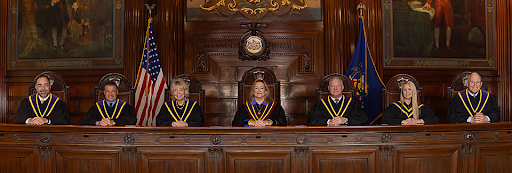
Last Thursday, the Pennsylvania Supreme Court released an order stating that the Civil Procedural Rules Committee, which advises the Court, did not have to reexamine the impact of the 2023 repeal of Rule 1006(a.1), outside the normal procedure of requesting a rules amendment. This came despite an earlier order stating that the Committee “shall reexamine” the 2022 rule amendments two years after their effective date.
The rule that was repealed previously limited the venue of medical malpractice lawsuits. Matters of civil procedure and venue usually do not garner much attention. This, however, was a monumental decision. The explanation for canceling this analysis offered by the Court is dubious, at best.
Before explaining how the Supreme Court arrived here, history is necessary.
Rule 1006(a.1) came about because of a healthcare crisis in Pennsylvania in the 1990s. The situation was partially caused by the ability of plaintiffs to file medical malpractice suits in counties outside of where the alleged harm occurred. This legal environment allowed trial lawyers to rush to plaintiff-friendly courtrooms and jury pools, particularly Philadelphia. As a result, medical malpractice premiums spiked.
Patients paid the price. Medical care became increasingly expensive. Some doctors left the state or retired earlier. For the doctors that remained, they adopted a defensive, litigation-sensitive approach to medicine.
In 2002, Harrisburg acted by passing the MCARE Act. Among other provisions, it limited medical malpractice lawsuits to the county where the cause of action occurred.
The Supreme Court blanched at the notion of the General Assembly dictating venue. Instead, the Court instituted Rule 1006(a.1) as a compromise. This allowed the Court to assert control over venue but followed the intent of MCARE by limiting where medical malpractice lawsuits could be filed.
This law had its desired effect. Within a couple of years, the number of medical malpractice lawsuits and the amount of jackpot verdicts declined significantly. This was especially notable in Philadelphia.
Then, in 2019, the Rules Committee recommended to the Supreme Court the rescission of Rule 1006(a.1). Why this became necessary is not clear. The Rules Committee operates in secrecy, so any guess is pure speculation.
Nonetheless, the announcement that Rule 1006(a.1) was to be revisited set off a flurry of activity as parties advocating for repeal lined up against those supporting the status quo.
In general, groups representing business interests, hospital systems, and doctors argued the repeal of Rule 1006(a.1) would precipitate another healthcare crisis. Patient advocates and trial lawyers asserted that Rule 1006(a.1) was an unfair limit on venue access that disadvantaged victims seeking justice.
After the respective sides made their arguments via a public comment period, a divided Rules Committee recommended the Court repeal Rule 1006(a.1), which the Court did in the summer of 2022. The repeal took effect in January 2023.
Contained in the order repealing Rule 1006(a.1) was a provision that suggested the Court might revisit this debate and possibly entertain reimplementing Rule 1006(a.1). In the order, the Court stated that the “Civil Procedural Rules Committee shall reexamine the 2022 rule amendments two years after their effective date.”
Those that supported Rule 1006(a.1) anticipated that two years of data would reveal a destabilizing medical malpractice landscape. Unlike when the Court announced it was considering the repeal of Rule 1006(a.1), though, the Court did not call for public comment, much less set a deadline for submitting it. Data outlining the effects of repeal, then, was less likely to be submitted directly to the Court for consideration.
This is why the Court order issued last week canceling the already overdue reexamination of Rule 1006(a.1) had an unusual explanation. The order stated that the Rules Committee “received commentary on behalf of medical professionals asserting that the impact of the 2022 amendments could not yet be determined, and that more time was needed to develop the necessary data.”
This statement is unconvincing.
The first issue with this statement is that the Court did not ask for public comment, as explained earlier. If the Court did, it is likely they would have received substantial input, since that occurred when the Rules Committee announced the potential repeal of Rule 1006(a.1). Also, when repeal was being considered, medical professionals submitted data forecasting the likely negative consequences of this decision. I find it surprising that these same groups would then submit inconclusive data.
Additionally, a letter was submitted by the Pennsylvania Coalition for Civil Justice Reform to the Rules Committee that analyzed the negative impacts of repeal. While this is the only letter that was submitted directly to the Committee that I know of, it conflicts with the justification put forth in the Rules Committee’s post-repeal report evaluating whether rescission of Rule 1006(a.1) was warranted.
Media reports, while not akin to formal public comment, have also provided evidence of the effects of repeal. According to Becker’s Hospital Review, Pennsylvania had more reported hospital closures in 2025 than any other state. The publication noted that healthcare leaders have pointed to mounting financial strain, including rising malpractice liability exposure following the repeal of Rule 1006(a.1), as one contributing factor.
Further eroding the Court’s assertion is data published by the American Medical Association that demonstrates Pennsylvania is experiencing some of the highest year-over-year increases to medical malpractice premiums in the country since the repeal of Rule 1006(a.1).
Lastly, in the fall of 2025, the President and CEO of the Hospital and Healthsystem Association of Pennsylvania–which represents hospitals and health systems in Harrisburg–testified to the Pennsylvania Senate that “Pennsylvania’s medical liability climate jeopardizes access to care.”
I am not sure what more the Supreme Court and the Civil Procedural Rules Committee want. But perhaps the Court and the Rules Committee know something that isn’t publicly available.
So I contacted the publicly listed email address for the Rules Committee. I also reached out to the Administrative Office of Pennsylvania Courts (AOPC), which is the administrative arm of Pennsylvania’s judicial branch. The general point of contact for the Rules Committee informed me by phone that the Rules Committee would not be commenting. On February 18, the AOPC declined my follow-up request for comment, stating that, “Matters discussed within the Rules Committees are confidential so we will not have any further information to provide related to the questions you’ve outlined.”
Later that same morning, I emailed thirteen of fifteen individual members of the Rules Committee (I could not find contact information for the two remaining members). By that evening, the Court issued its order canceling the reexamination. If that sequence is purely coincidental, it is a remarkable one.
Among the questions I submitted was whether the Court, the Rules Committee, or individual members of the Rules Committee had received comments since the repeal of Rule 1006(a.1). The relevance of that question only increased once the Court canceled the reexamination. My attempts at communication were either ignored or turned down.
Perhaps the Court and the Rules Committee received comments indicating there is a lack of evidence to understand the impact of repealing Rule 1006(a.1). Their lack of transparency, however, means the public has no way to assess this claim. Additionally, the evidence that is available points the other way.
The Supreme Court and the Civil Procedural Rules Committee may believe they are under no enforceable obligation to reexamine the consequential repeal of Rule 1006(a.1) or have a public accounting of how it reached its conclusions. Hiding behind a legal veil of secrecy, however, does not absolve either entity. The Rules Committee and the Court should have enough civic sense to grasp that decisions affecting the healthcare of the Commonwealth’s 13 million residents should not be kept behind closed doors. If they do not recognize this, the tremendous power of venue setting should be vested elsewhere.
Seth Higgins is a native of Saint Marys, Pennsylvania. He currently resides in Philadelphia.
The house of medicine is crumbling due to the increase burden of Malpractice premiums. My group has experienced a quadrupling of our premiums nd ar enow being forced to purchase an excess policy of 5 M making us a larger target and at a cost of over One MILLION dollars/year. Private physician groups will be going the way of the dinosaurs while corporate and private equity groups with large pockets will assume all the private physicians. As U stated Pa, has had a lot of hospital closures and there will be more guaranteed. The Supreme court doubled down on their apparent desire to crush private practice by making the malpractice climate a lottery. The legislature sits other hands playing partisan politics while access to care is beginning to be affected., The rumor is a large malpractice carrier will announce soon it will leave the state or at least severely curtail or stop their coverage for high risk specialties. This is will fuel the cascade of spiraling malp premiums that will lead to decrease access as practice and facilities close as happened previously in the lat 1990’s where specialty care in ortho, neurosurgery, Ob/gyn became limited as the physicians left the state due to high cost of Malpractice. It does seem like the legislators and courts dont believe history will repeat, my bet is they are wrong once again, Shame on them