

Candidate Marty Young pitches healthcare fix
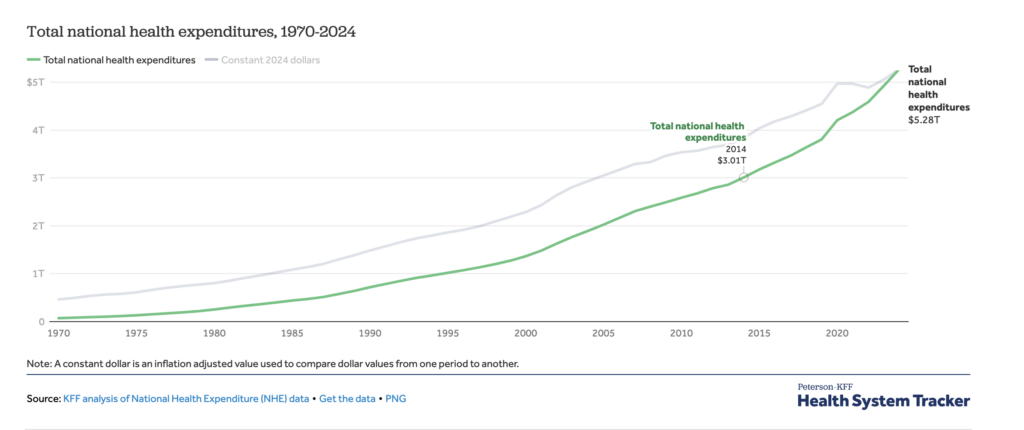
Although former President Obama tried to fix U.S. healthcare, many people believe it’s still a mess. And the costs for some escalated Jan. 1 since Congress failed to extend Biden-era Obamacare subsidies.
Enter Marty Young. A Republican, senior managing partner at M3 Partners and Army National Guard chaplain, Young is running for Congress and hopes to oust incumbent Democratic Rep. Chrissy Houlahan in PA-6, which includes Chester and part of Berks counties.
The West Point graduate believes he has a cure for America’s ailing healthcare system, his Young Americans Healthcare Plan (YAHP).
He held a town hall Sunday afternoon at the Chester County History Center, with a panel of three doctors — two physicians and a Ph.D.— to discuss their experiences.
Young’s Young Americans Healthcare system is based on what he experienced in the military. It expands the military’s TRICARE system to children and young people up to age 23 and pregnant women.
By enlarging the TRICARE system for these groups, it solves “a big part of our systemic healthcare problem: how to give kids, young adults, and expectant mothers,” health coverage.
The plan would not affect anyone else’s coverage.
TRICARE is “incredibly efficient because by law it is not subject to the Affordable Care,” said Young. “TRICARE was exempted from the ACA.”
He noted that in the last 25 years, healthcare premiums have gone up six percent on average every year. Healthcare premiums went up “more than double digits,” but Tricare increased by three percent for 2026.
Dr. Andrew Murphy, an allergy and immunology specialist, discussed the bureaucratic maze that health insurance has become, with huge “healthcare systems” making so much money they can claim naming rights to sports stadiums.
“Back in the day, hospitals were nonprofits,” he said. “They were expected to help the community.”
Meanwhile, two hospitals that served Chester County closed in the last five years. And doctors spend endless time filling out forms for insurers when they’d rather be treating patients.
“There’s a whole slew of codes that have to get filled out,” said Murphy. Insurance gatekeepers can “look at the chart and say it’s the wrong code. ‘We’re not paying for that,’” he said.
Insurers also restrict payments to certain medications that a physician might want to prescribe.
“We need to restore the heart of healthcare,” said Murphy. “Patient-centered care, to go from a system that profits from illness to one that invests in wellness.”
“Healthcare is the critical issue of our times,” said Dr. Raffi Terzian, a former emergency room physician and chair of the Republican Committee of Chester County. In the ER, he took care of whoever walked in, whether they were injured, had a heart attack or stroke, had influenza, or had a mental illness.
“The ER is very much a safety net,” he said. “They came in, and it was our job to make sure they were stabilized.”
“I did not care whether you were a white-collar professional or homeless,” said Terzian. “I was going to take care of you exactly the same way, provide you the highest level of care I could.”
But access to care is a big issue, he added. There’s a shortage of some specialties.
“I’m talking about making an appointment to see your doctor,” said Terzian. “It’s harder to be a physician than it used to be. You have to see a lot more patients, and you don’t get a whole lot of time to spend with them.”
“We have a very complicated, fragmented healthcare system, in a country where we spend eighteen percent of our GDP on healthcare,” he said.
Jennifer Jacobs, Ph.D., co-founder and CEO of the nonprofit Connect Our Kids, spoke about the dilemma of children in foster care with no one to advocate for them in the healthcare system, as well as problems for children who use Medicaid or CHIP, programs that cover about half of American children.
“Seventy to eighty percent of youth who enter foster care have significant mental health needs,” she said. “They’re prescribed medications for mental health at much higher rates than other children on Medicaid.”
When those need healthcare, “there is delay. Delays increase severity. Then there is crisis care. The cost of crisis care can be astounding.”
For example, a well-child doctor’s visit can cost $200, but an emergency visit costs more than $2,000. “And a short inpatient psychiatric hospitalization could be $20,000 or more.”
“This is not just a moral issue,” said Jacobs. “It’s a public cost issue.”
And when youngsters become “chronically disconnected,” meaning they don’t have close relationships in their lives, “can range from $500,000 to $1 million per youth,” from increased healthcare costs, justice system involvement, and lost tax revenue.
Young noted that nowadays American women are having 1.6 children, whereas the replacement rate is 2.2 children. “That’s a big problem,” he said. “The country can’t continue to grow and prosper with a birthrate like this.”
While not the only reason, healthcare costs can affect couples’ decisions about whether to have children or how many.
“Affordability is a real issue,” he said. “By attacking the cost of healthcare, we can also help families form.” There are about five million kids in the U.S. without health insurance.”
If his YAHP is adopted, he says, entrepreneurs will start new businesses, and employees will have to pay less for healthcare benefits.
YAHP “is fiscally conservative,” said Young. “It will save the government millions. And at the same time, will help level the playing field for many, many families across the United States.”
And YAHP would be able to ramp up quickly because the government has the data, the birth certificates, and Social Security numbers of potential YAHP clients.
In the private sector, Young identifies problems and fixes multi-million dollar systems.
Linda Stein is a Philadelphia-area journalist.
Houlahan will beat him by ~20 points.
Rebuilding the Republican Party in the collar counties is going to take more than just running some nobody for Congress every two years.
So am I reading this right…expand a government program to cover more people? That’s what Tricare is, right? A government funded health insurance program but adding more people? Why not just expand Medicare?
But really, I’m waiting for Trump’s plan. That was 2 weeks ago a while ago right? He should show the American people the concepts of his plan right away I think!