
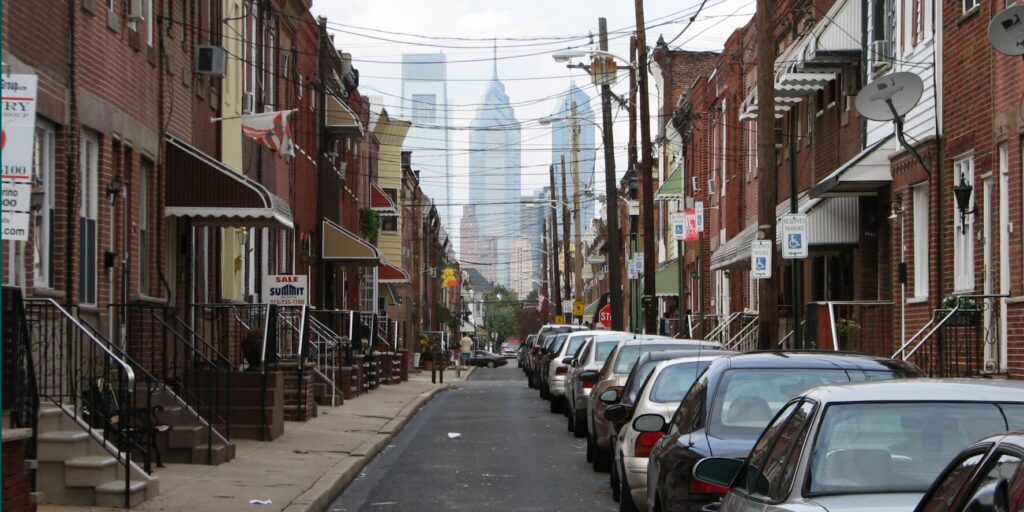
 Photo by chrisinphilly5448 via Flickr
Report: Philadelphia short $17,000 per taxpayer
(The Center Square) – Philadelphia carries the third-highest tax burden in the nation, meaning it’s short on its bills by roughly $17,000 per taxpayer.
Bested only by Chicago ($42,600) and New York City ($61,700), the latest data from Truth in Accounting shows that, despite a marginal improvement in 2024, Philadelphia could barely cover over half of its $20.1 billion spending.
The report calculated the city’s outstanding bills in 2024 at $20.1 billion, the most recent year for which data is available. Despite laws dictating that cities must balance budgets, Truth in Accounting points to common accounting tactics that mask the problem: counting loans as income, deferring payments and excluding the total cost of employee benefits.
The latter is especially insidious, according to the report, because retiree health care and pensions are among the largest expenses in city budgets – and chronically underfunded.
In Philadelphia, decades of underpaying and reliance on investment volatility have created an $8 billion pension liability that could require tax hikes and service cuts to balance.
The city isn’t technically an outlier. Pennsylvania itself is among what the organization calls a “sinkhole state,” where the government can’t afford to pay all its bills. The dilemma has driven a partisan wedge in every budget negotiation for the better part of 20 years, though lawmakers remain diametrically opposed on how to solve it.
Christen Smith is Pennsylvania editor for The Center Square newswire service and co-host of Pennsylvania in Focus, a weekly podcast on America’s Talking Network. Recognized by Editor and Publisher Magazine as one of the media industry’s “Top 25 Under 35” in 2024.
This article was republished with permission from The Center Square.


The city does not have enough taxpayers. The amount of cash business being performed in the city to avoid taxes is amazingly high.
Sadly, the individual taxpayers must now somehow compensate for failed economic strategies which have for decades led large businesses to downsize or leave ( often owing millions in city wage taxes ). Offshoring of manufacturing and an economy run by mega banks which contribute nothing to local communities have created an economic desert.