
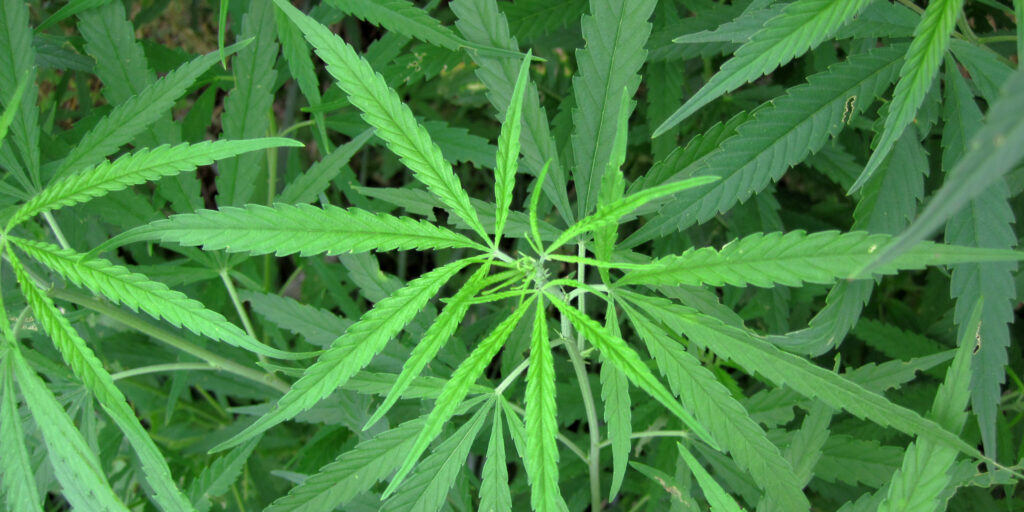
Dan Bartkowiak: Getting stuff wrong — Why Pennsylvania must reject Gov. Shapiro’s push for marijuana legalization
It’s terrifying to arrive home and be greeted by the smell of gas. My family and I returned from church one Sunday when, as I approached the front door, I was hit with the unmistakable rotten-egg odor. I immediately called for help, and thankfully, an emergency worker located the source and contained the leak before catastrophe struck.
Another potent smell has become all too common on city sidewalks and street corners, particularly in states experimenting with recreational marijuana sales. Anyone I know who has recently visited New York City says the same thing: the skunk smell of marijuana is everywhere.
Marijuana use is more than a nuisance. It is a growing public problem that communities can no longer ignore. Just as a gas leak demands swift action, this crisis calls for serious intervention, not merely because of the smell, but because of the health and safety consequences that follow once an addictive drug is commercialized and normalized.
The Crisis of Marijuana Commercialization
Marijuana is America’s most misunderstood drug. How else can we explain that marijuana use among pregnant women has tripled over the past two decades? Nearly one in six women now report using marijuana during pregnancy, despite clear evidence of harm and warnings from major medical organizations.
This trend is shocking, but also predictable. The marijuana industry has flourished in an environment that encourages genetically engineered, super-charged products to be marketed as medicine, portrayed as harmless, and promoted for nearly any ailment.
Many still view marijuana through an outdated lens, recalling low-potency use decades ago. Today, in large part the result of policy liberalization, dried flower marijuana can exceed 40 percent THC, while concentrates approach near-pure THC levels — an entirely unnatural and dangerous escalation.
There is nothing harmless about today’s marijuana, and the parallels to Big Tobacco are impossible to ignore. In the 1950s, tobacco companies marketed smoking as safe, even during pregnancy. Philip Morris ran the slogan “Born gentle,” implying that smoking enhanced the “pride of a new parent.” It took decades and countless deaths before the truth became undeniable.
The marijuana industry now follows the same playbook. Studies show dispensaries encouraging marijuana use during pregnancy to relieve morning sickness. “Born gentle” has simply been rebranded for the THC era, with babies and families once again paying the price.
The harm does not stop there. I recently visited a marijuana dispensary attached to a gas station in New York State. One room sold ordinary candy and cookies; the next sold THC-infused versions of the same products.
The counter resembled a church bake sale — Rice Krispies treats, brownies, peanut butter blossoms — each containing up to 400 milligrams of THC. That amount can induce psychosis and cause serious injury. For a child, it would almost certainly result in an emergency room visit.
The industry insists it does not market to children, yet sells THC-laced gummies and desserts mimicking familiar treats. Trulieve, a company that operates in PA and spent more than $100 million on a failed initiative in Florida pushing recreational use, offers flavored concentrates like Raspberry Rain, Lemon Scoop, and Mac and Cheese, with THC in the high 80 percent range.
These products are here in Pennsylvania under the label of “medical” marijuana.
Pennsylvania’s Problems
Increasing potency combined with lax oversight has led to more use by adults and children nationwide. Here in PA, the marijuana industry is pouring millions into lobbying efforts for full recreational legalization in hopes of cashing in on their addiction-for-profit scheme.
Governor Josh Shapiro has embraced this agenda to turn Pennsylvania into the Keystoned State. In 2019, he reversed his position from opposing to supporting commercialization, despite opposition from major health organizations and law enforcement groups.
In his recent budget remarks, Shapiro claims “everyone knows we need to get this done.” Yet notably absent from that conversation are addiction physicians, emergency room doctors, psychiatrists, pediatric specialists, and parents of children with marijuana use disorders, many of whom have warned that commercialization increases addiction and mental disorders like psychosis. When the medical community is sidelined, the policy is already compromised.
Everyone does not want to have their community forced to allow pot shops selling high-potency THC, regardless of local opposition. Yet that’s what the current proposals would do, prioritizing corporate profit over public health and safety.
This push is especially troubling given the governor’s repeated claim that nothing is more important than investing in children and expanding mental health care. How does expanding access to high-octane THC accomplish that?
In the same speech calling for more school-based mental health services, Governor Shapiro argued the state should rely on marijuana tax revenue — meaning increased use of an addictive substance. You cannot meaningfully address youth anxiety, psychosis, and addiction while expanding access to a product proven to worsen those conditions. Funding counselors to clean up damage caused by state-sanctioned drug sales is not compassion; it is policy malpractice.
Schools across Pennsylvania consistently report student mental health as their greatest challenge. Marijuana use disorders are on the rise, and we know that states with legalized recreational use have seen increases in emergency room visits, impaired driving, workplace drug positivity, and heavy addictive use.
We also must recognize that problems extend beyond recreational proposals. In 2019, anxiety disorders were added as a qualifying condition for marijuana use in Pennsylvania’s medical program. Our state’s unelected medical advisory board passed it by a 5-3 narrow vote, with non-medical professionals voting to put it through despite no substantial evidence and expert objections. Anxiety now accounts for the majority of marijuana certifications in the state.
High-volume “card mills” (doctors who simply write prescriptions — some by the hundreds or thousands) and widespread high-potency products in medical dispensaries resemble recreational use more than legitimate medicine. Additionally, intoxicating hemp-derived THC products exploit federal loopholes and flood gas stations and convenience stores, which is why Pennsylvania should align with federal regulation to ban them from the open market.
As The Wall Street Journal has asked amid rising traffic fatalities and public health harms: how much damage must be done before we reverse course?
It is also worth noting that Trulieve CEO Kim Rivers is a campaign donor to Governor Shapiro, raising legitimate questions about influence in Pennsylvania’s marijuana policy debate.
Getting This Right
Governor Shapiro claims his budget does not raise taxes, while pushing marijuana legalization to generate speculative revenue. Attempting to fund the government through addiction is simply a regressive tax by another name—one that falls hardest on struggling families and those most vulnerable to substance abuse.
Thus far, the Democrat-controlled Pennsylvania House and Governor Shapiro are driving reckless marijuana policies, while the Republican-controlled Senate has put on the brakes.
No, Governor Shapiro — simply “getting stuff done” is not the way forward. Getting the wrong things done — commercializing addiction, normalizing high-potency drugs, and financing government on human harm — is not progress. Pennsylvania deserves policies rooted in public health and the common good, not ones that leave our Commonwealth smelling like weed.
Dan Bartkowiak is the Chief Strategy Officer for Pennsylvania Family Institute.


The Prohibition of cannabis and Reefer Madness are only pushed and believed by a very small, lunatic-fringe minority of irrational looney-tune Holier Than Thou types that are on a never ending little personal moral-crusade and witch-hunt against relatively benign cannabis and it’s consumers. The rest of us sane, rational, normal Americans just laugh our butts off at and mock utterly desperate lying prohibitionists and their ridiculous Reefer-Madness-Rhetoric as the comedy show they truly are!
Legalize relatively benign cannabis federally now. What’s legal to possess and consume in over half of the populated areas of The United States should not make you a criminal in states still being governed by woefully ignorant prohibitionist politicians. Cannabis consumers in all states deserve and demand equal rights and protections under our laws that are currently afforded to the drinkers of far more dangerous and deadly, yet perfectly legal, widely accepted, endlessly advertised and even glorified as an All-American pastime, alcohol. Plain and simple! Legalize Nationwide Federally Now!
Cannabis should be absolutely just as legal and easy to obtain anywhere as alcohol currently is. No exceptions. It’s so easy: As legal and easy to obtain/use as alcohol currently is. Why hold relatively benign, often healing cannabis to any sort of irrational, stricter double standard than perfectly legal alcohol?
The “War on Cannabis” has been a complete and utter failure. It is the largest component of the broader yet equally unsuccessful “War on Drugs” that has cost our country over two trillion dollars.
Instead of The United States wasting Billions upon Billions more of our yearly tax dollars fighting a never ending “War on Cannabis”, lets generate Billions of dollars, and improve the deficit instead. It’s a no brainer.
The Prohibition of Cannabis has also ruined the lives of many of our loved ones. In numbers greater than any other nation, our loved ones are being sent to jail and are being given permanent criminal records. Especially, if they happen to be of the “wrong” skin color or they happen to be from the “wrong” neighborhood. Which ruin their chances of employment for the rest of their lives, and for what reason?
Cannabis is much safer to consume than alcohol. Yet do we lock people up for choosing to drink?
Let’s end this hypocrisy now!
The government should never attempt to legislate morality by creating victim-less cannabis “crimes” because it simply does not work and costs the taxpayers a fortune.
Cannabis Legalization Nationwide is an inevitable reality that’s approaching much sooner than prohibitionists think and there is nothing they can do to stop it!
Legalize Nationwide Federally Now! Support Each and Every Cannabis Legalization Initiative!
“Cannabis is 114 times safer than drinking alcohol”
“Cannabis may be even safer than previously thought, researchers say”
“Cannabis may be even safer than previously thought, researchers say New study: We should stop fighting Cannabis legalization and focus on alcohol and tobacco instead By Christopher Ingraham February 23
Compared with other recreational drugs — including alcohol — Cannabis may be even safer than previously thought. And researchers may be systematically underestimating risks associated with alcohol use.
Those are the top-line findings of recent research published in the journal Scientific Reports, a subsidiary of Nature. Researchers sought to quantify the risk of death associated with the use of a variety of commonly used substances. They found that at the level of individual use, alcohol was the deadliest substance, followed by heroin and cocaine.”
-Washington Post
“The report discovered that Cannabis is 114 times less deadly than alcohol. Researchers were able to determine this by comparing the lethal doses with the amount of typical use. Through this approach, Cannabis had the lowest mortality risk to users out of all the drugs they studied. In fact—because the numbers were crossed with typical daily use—Cannabis is the only drug that tested as “low risk.”
-Complex
This is the best article, ever, that Broad & Liberty has presented. EVER.
Legitimate criticism: “5-3 narrow vote” shows a cognitive bias. Same thing as writing: “62.5% – 37.5% narrow vote”; it comes across as zealous.
Otherwise, Dan Bartkowiak, you are a stud.
All of these pregnant women are getting high and people are pretending they don’t know why Autism is off the charts. Wild, sad, times.
Gov Keystoned-piro was instructed to legalize drugs. That is obvious. He a crumb-bum. Gov. Keystoned Crumb-Bum-Piro. What a shmuck.
Bartkowiak, you are a mensch. STUD MENSCH.
The Prohibition of cannabis and Reefer Madness are only pushed and believed by a very small, lunatic-fringe minority of irrational looney-tune Holier Than Thou types that are on a never ending little personal moral-crusade and witch-hunt against relatively benign cannabis and it’s consumers. The rest of us sane, rational, normal Americans just laugh our butts off at and mock utterly desperate lying prohibitionists and their ridiculous Reefer-Madness-Rhetoric as the comedy show they truly are!
If I were you and worried so much about “pregnant women” andd “saving all of us” adults from ourselves, well then, I’d begin with the deadliest drug. Which causes more birth defects, health issues, liver damage, broken homes, domestic violence, and traffic fatalities than all other drugs, combined. That most dangerous and deadly drug is alcohol.
Yet alcohol remains perfectly legal, widely accepted, endlessly advertised, even glorified as an All American pastime.
Why doesn’t the much more prevalent, far more widely abused, use of alcohol concern you much more than relatively benign cannabis?
Protesting the legality of booze should be your number one priority if you are truly so concerned about the “health of pregnant women” and “saving us all” from ourselves.
Fear of Cannabis Legalization Nationwide is unfounded. Not based on any science or fact whatsoever. So please prohibitionists, we beg you to give your scare tactics, “Conspiracy Theories” and “Doomsday Scenarios” over the inevitable Legalization of Cannabis Nationwide a rest. Nobody is buying them anymore these days. Okay?
Furthermore, if all prohibitionists get when they look into that nice, big and shiny crystal ball of theirs, while wondering about the future of cannabis legalization, is horror, doom, and despair, well then I suggest they return that thing as quickly as possible and reclaim the money they shelled out for it, since it’s obviously defective.
The prohibition of cannabis has not decreased the supply nor the demand for cannabis at all. Not one single iota, and it never will. Just a huge and complete waste of our tax dollars to continue criminalizing citizens for choosing a natural, non-toxic, relatively benign plant proven to be much safer than alcohol.
If prohibitionists are going to take it upon themselves to worry about “saving us all” from ourselves, then they need to start with the drug that causes more death and destruction than every other drug in the world COMBINED, which is alcohol!
Why do prohibitionists feel the continued need to vilify and demonize cannabis when they could more wisely focus their efforts on a real, proven killer, alcohol, which again causes more destruction, violence, and death than all other drugs, COMBINED?
Prohibitionists really should get their priorities straight and/or practice a little live and let live. They’ll live longer, happier, and healthier, with a lot less stress if they refrain from being bent on trying to control others through Draconian Cannabis Laws.
There is absolutely no doubt now that the majority of Americans want to completely legalize cannabis nationwide. Our numbers grow on a daily basis.
The prohibitionist view on cannabis is the viewpoint of a minority and rapidly shrinking percentage of Americans. It is based upon decades of lies and propaganda.
Each and every tired old lie they have propagated has been thoroughly proven false by both science and society.
Their tired old rhetoric no longer holds any validity. The vast majority of Americans have seen through the sham of cannabis prohibition in this day and age. The number of prohibitionists left shrinks on a daily basis.
With their credibility shattered, and their not so hidden agendas visible to a much wiser public, what’s left for a cannabis prohibitionist to do?
Maybe, just come to terms with the fact that Cannabis Legalization Nationwide is an inevitable reality that’s approaching much sooner than prohibitionists think, and there is nothing they can do to stop it!
Legalize Nationwide!…and Support All Cannabis Legalization Efforts!