
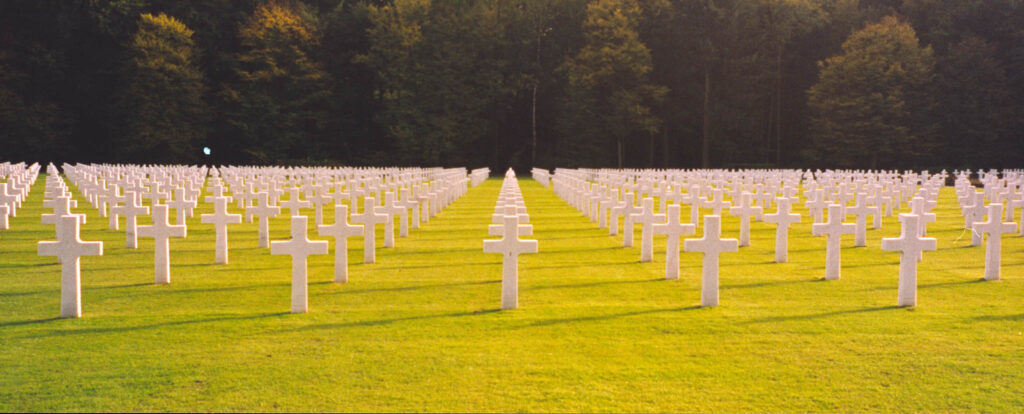
 Luxembourg American Cemetery, 2003. Photo by Cams Campbell via Flickr.
Seth Higgins: Reflections from a Pennsylvania veteran
In February of 2014, I received a dream assignment as a C-17 loadmaster in the Air Force.
I was assigned to one of two crews that were to rotate on-call duty for a month at Ramstein Air Base in Germany. The exact nature of our assignment was never disclosed, but our understanding was we were part of a response force should tragedy strike the Winter Olympics taking place in Sochi, Russia. While I spent 48 hours at a time staring at a phone in an on-base hotel room, the other 48 hours off duty allowed me and my fellow crew members to explore that corner of Europe.
During one of these periods, our crew took an impromptu trip to the Luxembourg American Cemetery, which is best known as the resting place of General George Patton, who died in a vehicle accident after the war. Thousands of other World War II veterans lie there, many of whom died during the Battle of the Bulge, including Medal of Honor recipient and Pennsylvanian Sergeant Day G. Turner.
Sergeant Turner is far from the only Pennsylvanian buried there. It seemed that cross after cross contained the names of Pennsylvania’s native sons. I was shocked when I stopped by the visitor center and saw a placard showing how many veterans were buried there by state. Pennsylvania has the largest number.
There are a few obvious explanations for this. In the 1940s, Pennsylvania was the second most populous state. Also, many veterans buried there belonged to Pennsylvania’s storied 28th Infantry Division, which suffered horrific casualties when it found itself as the first line of defense during Nazi Germany’s last major offensive of the war.
However, there is another reason that Pennsylvanians would likely overlook: Pennsylvania is bound together with our nation’s military history.
The Army, Navy, and Marine Corps were all born in Pennsylvania. Against dire odds, George Washington’s Continental Army survived the harrowing winter of 1777–1778 at Valley Forge. The largest military engagement ever fought in the Western Hemisphere occurred at Gettysburg, which turned the tide of the Civil War. The previously mentioned 28th Infantry Division, headquartered at Fort Indiantown Gap, is the oldest continuously serving division in the United States Army. The U.S. Army War College is in Carlisle, Pennsylvania. Lastly, President Eisenhower, who led the hallowed men and one woman I visited in Luxembourg, called Gettysburg home immediately before and after his presidency.
The living connection to this shared history is slipping away. I will celebrate this Veterans Day with approximately 700,000 Pennsylvanians and 55,000 Philadelphians who are fellow veterans, but our ranks are depleting.
For decades, the bulk of America’s veterans belonged to the draft era that ended in the early 1970s, but with each year this generation is passing. A study by the Pew Research Center found that, “In 1980, about eighteen percent of U.S. adults were veterans, but that share fell to six percent in 2022.”
This is especially stark in cities, particularly in the Northeast, like Philadelphia. While most veterans live in metro areas, a disproportionate share compared to the total population living in rural areas. At least a couple decades of enlistment trends reinforce this pattern; rural Americans are more likely to serve than their urban and suburban counterparts.
I’m always a bit struck when I come across a fellow veteran in the city. There simply aren’t many of us. At approximately 3.5 percent of the population, the veteran community in Philadelphia is small, and the veterans that live here tend to be from the older generations rather than among the young urban professional transplants like me.
This isn’t something to despair over or attempt to fix. Rather, it is simply something to recognize. While it is a topic for another day, I do not think veterans are served well by the modern trend to view them as victims or some special class. America is good at honoring and supporting most of its veterans without this, and special treatment and dignity don’t always go hand-in-hand.
Instead, the best way for everyday citizens to support our veterans is to simply endeavor to honor and recognize them for their contributions. This, after all, is the meaning of Veterans Day.
If you’re able to, listen to a story or two from a veteran in your life today. And if you’re not, please give some thought to the veterans of Philadelphia, Pennsylvania, and beyond. I doubt I’ll knowingly meet another veteran today, and that’s okay. Instead, I will take a moment to reflect on those hundreds of fellow veterans from Pennsylvania buried in that quiet little field, thousands of miles away.
Seth Higgins is a native of Saint Marys, Pennsylvania. He currently resides in Philadelphia.
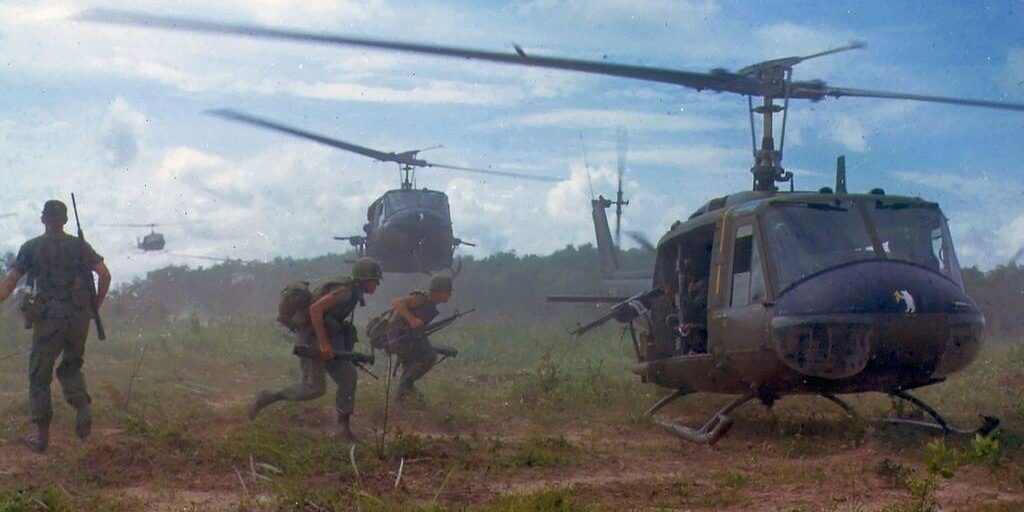
I am a Vietnam veteran from 1966-1967 (13 months with the 1st Cavalry (Airmobile) and I must relate that I was not welcomed home, without details, I was refused employment by a large corporation (they said they didn’t want trouble), ignored by my local unemployment office, later trying to use the G.I Bill, two homeowners refused to sell to me because “they couldn’t support the war.” Totally ignored by both the VFW and The American Legion. I did not come out of my shell hiding my service until the early 2000s. I was part of a program run by Vietnam Veterans of America where I volunteered to communicate and answer questions via email from students who emailed them to a central site and distributed to us volunteers. That lead to going to schools to provide insights into my experiences in Vietnam (along with other vets). It is very fulfilling although I am finding that each generation is becoming harder to relate to as their life experiences are becoming too remote from Vietnam to relate to. The shocking thing is the history being taught (supposedly due to time pressures) the texts have mostly 1 or 2 pages on WWII, A sentence or two on the Korean War and Vietnam only a sentence, if mentioned at all. The tragedy here is that if we do not know our reasons for war, we lose cohesion as a nation, if we do not know our past, we lose any reason to protect its future.