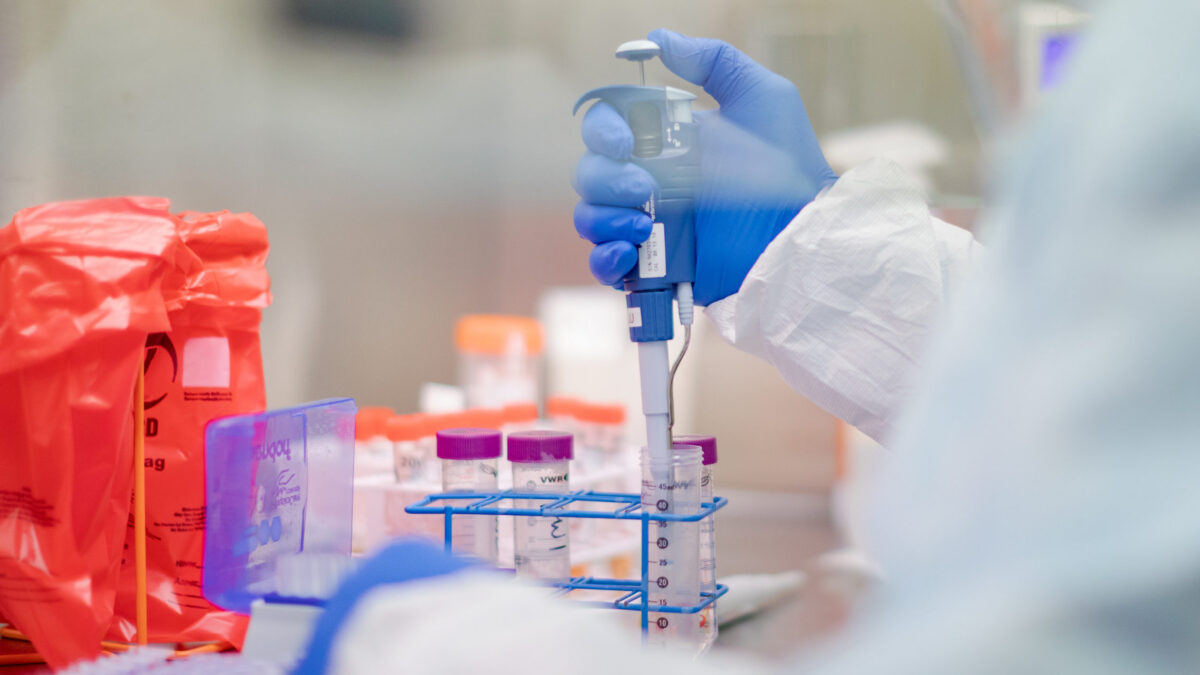
 Photo by Daniel Foster via Flickr
Becky Corbin: Cancer is cancer. Pennsylvanians must prioritize early screening.
As a trained chemist and a former member of the Pennsylvania House of Representatives from Chester County, I’ve always viewed cancer through the lens of data: survival rates, risk factors, treatment timelines, and prevention guidelines. But just knowing the data can never prepare you for hearing those words, “You have cancer.”
Now, that same data feels deeply personal to me. As I complete the final stages of breast cancer treatment, these numbers represent my family and me. I am a data point that represents, above all else, the critical importance of early diagnosis. I am going to beat breast cancer, and I’m going to beat it because medical innovation enables us to catch deadly diseases early.
This is exactly the call to action of Breast Cancer Awareness Month. It’s a reminder that early detection is not just a medical recommendation – it is a lifeline.
And while we’ve made major advances over the years in early detection for breast cancer – nearly 80 percent of women in the U.S. are now up to date on annual or biannual mammograms – we still have a long way to go in preventive care for other types of cancers.
Colorectal cancer, one of the most treatable forms of the disease, still remains the third-leading cause of cancer-related deaths in the U.S. despite the fact that when detected early, the five-year survival rate is about 91 percent.
Here in Pennsylvania, the national crisis takes a new statewide shape. Each year, nearly 6,900 Pennsylvanians are diagnosed with colorectal cancer, and more than 2,600 lose their lives to it. Meaning, about 34 percent of Pennsylvanians diagnosed will ultimately die from the disease – a heartbreaking figure for a cancer that is often preventable.
Now, more than ever, we need to bridge the gap in cancer screening and accessibility. Early detection can truly save lives, and no one should miss that chance simply because a test feels out of reach.
Thankfully, there’s a new alternative that’s making screening easier than ever. The Shield test is an FDA-approved blood test that detects colorectal cancer without the discomfort or preparation that keeps so many people from utilizing traditional screening offerings. Shield is covered by Medicare and the U.S. Department of Veterans Affairs Community Care Network and can be done with a simple blood draw right at your local clinic.
In our rural counties, where access to specialists and screening facilities remains limited, blood-based screening options are a game-changer for preventive care.
When screenings are uncomfortable or inaccessible, people don’t get them done, but blood-based options will bring critical care to the rural communities that need them most because they can be administered by any local physician, require no prep, and work around methods that can be viewed as invasive and uncomfortable, and can keep Pennsylvanians away from testing.
This means that early detection is finally within reach for more Pennsylvanians, especially those in rural or underserved areas who have too often been left behind.
Now, during Breast Cancer Awareness month, join me not only in sporting the pink ribbon, but in advocating for the advancement of all screenings for ALL types of cancers, so that life-saving cancer prevention care is accessible to everyone, no matter where they live.
Becky Corbin is a current breast cancer fighter and a former state representative in Chester County, Pennsylvania.