
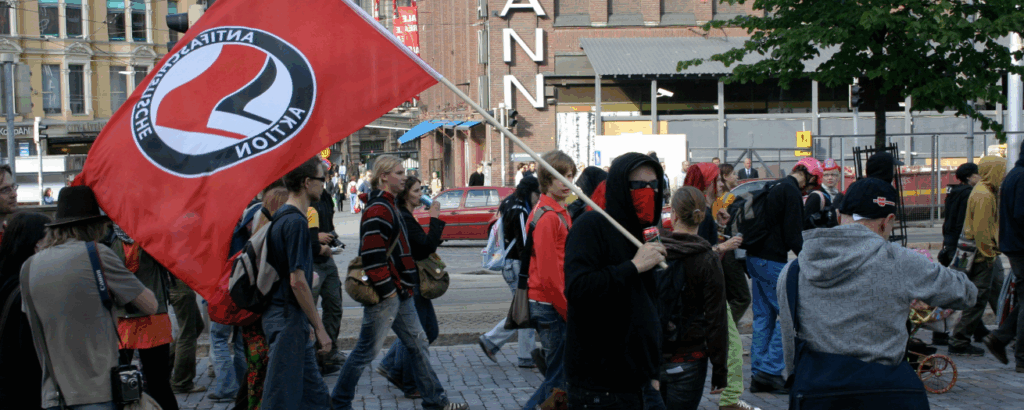
 Photo by Darren Webb via Flickr
Kirk’s assassination is a public safety wake-up call
Last week’s assassination of Charlie Kirk has thrust our nation’s changing public safety and mental health norms into the spotlight, highlighting mounting concerns about the intersection of social media, changing behavioral thresholds, and the disturbing rise of political violence. Experts say these trends reflect deeper shifts in the American psyche and public safety infrastructure, beginning around 2008, when evolving views on mental health and self-expression were magnified by new technology and political paradigms.
The shooting at Utah Valley University, where during an outdoor address Kirk was killed by Tyler Robinson underscores vulnerabilities inherent in security protocols for political figures at public events. Law enforcement officials acknowledged that current security plans — often focused on immediate physical threats — are insufficient against long-range attacks and increasingly complex motives. The campus, staffed by six officers and private security, could not prevent a calculated attack that left thousands in shock and forced further review of security strategies for high-profile speakers. Secret Service and local authorities are scaling up protections for public officials, with Kirk’s funeral itself being treated as an “all hands on deck” test for federal and state security agencies.
This escalation reflects a country where violent incidents targeting public officials have risen, with Kirk’s murder joining the list of politically fueled attacks, such as two attempted assassinations of President Trump, and an uptick in violent demonstrations and school shootings. The normalization of political violence has created an environment in which threats, intimidation, and even assassination attempts are no longer shocking aberrations, but troublingly routine.
Since 2008, mental health norms have fundamentally changed in the United States. With legislation expanded access to mental health care and reduced barriers, making mental illness an “essential health service”, treatment for common disorders like anxiety and depression became mainstream, often managed in primary care settings. Stigma toward mental illness reduced, with more Americans acknowledging these conditions within themselves and others.
Yet, as social norms shifted, behaviors previously deemed disturbing, such as political extremism, transgenderism, racial polarization, and a loss of public civility have increased. Behaviors that normally have prompted parental or even official intervention in generations past, have become accepted, and sometimes celebrated as “self-expression” in today’s society. Platforms like social media enabled fringe and intersectional groups to galvanize collective identities around behaviors once classified as abnormal, correlating not only to increased social isolation but to declining real-world interaction. Studies consistently link heavy social media engagement to loneliness, indicating that digital forums may fuel, rather than relieve, feelings of alienation in a self-reinforcing feedback loop despite the appearance of online community.
The “coalition of the oppressed,” notably advanced during Obama’s campaign, fostered a drive for recognition of ever-narrower identity groups. In practice, this expanded not just visibility but legitimacy for behaviors diverging from previous social and clinical consensus. What once would be considered warning signs, listed in the DSM-5 as requiring counseling or intervention, are now frequently overlooked or reframed as authentic selfhood, amplified through online echo chambers and political movements.
The surge of social media since 2008 has fundamentally recast American discourse. Once, a diversity of opinions was valued, and disagreement sparked debate. Today, digital platforms cultivate ideological silos where dangerous, one-sided beliefs are reinforced. Within these highly curated spaces, the opposing view is frequently demonized and equated with efforts to erase or “exterminate” dissenters.
This shift coincides with an era of heightened polarization, intensifying the perception that mere disagreement justifies extreme response. Experts in political violence warn that these conditions create a “dangerous powder keg,” where unchecked psychological distress mutates into violence, often given tacit approval or celebration online. The same climate fosters violent protests, school shootings, and assassination attempts — outcomes of an unchecked, algorithm-driven race to the most extreme or isolated corners of debate.
The confluence of normalized disturbing behavior, social media-enforced isolation, and political movements valorizing fringe identities corresponds to a documented rise in violence. ACLED and other organizations track sharp increases in violent protests following highly visible inciting events, while federal deployment to subdue unrest is now routine. The emotional toll and altered public life are felt throughout the political sphere as officials reconsider their safety in the
Charlie Kirk’s assassination represents a grim intersection of transformed mental health norms, technology-driven isolation, and the perverse celebration of behaviors that once warranted intervention. As American society retreats further into curated digital enclaves, warning signs often go unaddressed, compounding conditions that fuel violence. Public safety professionals and mental health experts alike warn that without a recalibration of cultural norms and strategic engagement, the powder keg may only grow more unstable.
The nation faces not only the challenge of protecting its leaders, but also of healing a rift driven by neglected mental health, distorted digital incentives, and a perilous redefinition of societal boundaries.
Based in Philadelphia, A. Benjamin Mannes is a consultant and subject matter expert in security and criminal justice reform based on his own experiences on both sides of the criminal justice system. He is a corporate compliance executive who has served as a federal and municipal law enforcement officer, and as the former Director, Office of Investigations with the American Board of Internal Medicine. @PublicSafetySME

More fear-driven total nonsense. Has it occurred to anyone that the very practice of shooter drills in schools is the primary reason there are more school shootings? Associations between news coverage of suicide and increases in suicidal behavior have been well documented for teenagers. The correlation between widespread, irrational, school shooter drills and an uptick in incidents specifically from teens seems worthy of study.
I agree that social media has spawned much of this violence, but there is more: The failure of education to expose our
children to lessons in appropriate behavior, acceptable norms, and, in many cases an understanding of human life itself.
(I often have encouraged parents to take their young children hunting; it exposes them to life and death of a deer, or duck,
or pheasant and a reverence for the need to take their lives for our sustenance—and its history). There is a noticeable absence
of kids learning not just American history, but world history, government, ethics, and MORALITY! George Washington, in his
farewell address at Fraunces Tavern in New York, said you cannot have a successful Republic without morality, and you cannot
have morality without religion. I can go on, but we have suffered through assassinations of JFK, RFK, Martin luther King, James Garfield, William McKinley, Malcom X, Lincoln, and a host of others, but our values and freedoms have remained steadfast and a beacon around the world. Vile speech is not victimless, but the first amendment has its limitations and advantages. Let’s not panic.
The article effectively links normalized political extremism and mental health shifts to rising violence, raising critical concerns about societal direction and the impact of online echo chambers.
It is actually devoid of perspective regarding historical norms, and incidents as a percentage among population.
The earliest recorded school shooting in the United States occurred on July 26, 1764, during Pontiac’s Rebellion, when 11 were murdered. As a percentage of population it was… dare I say… historical.
Since 9/11/2001 it has become easier to notice our tyrannical, big-brother government, and the FBI is a significant part of the problem. And now we are 37 trillion in debt, plus. Anyone with followers can’t criticize a specific government: Israel (not the people), which sits halfway across the globe yet convinced the U.S. to kill perhaps up to 1mm civilians in Iraq for weapons of “mass destruction” that actually were not even there. Israel has nuke tech after stealing it from the United States. Writing that, despite it being absolutely true, is considered “racist” or “antisemitic” for some ridiculous reason by people that actually consider themselves to be serious.
President Trump is utterly compromised by the current Prime Minister of Israel. And his buffoon FBI Director, during an actual press conference, said: “Lastly, to my friend Charlie Kirk, rest now, brother. We have the watch, and I’ll see you in Valhalla.”
Good grief… that is an actual quote from the current FBI Director. Now, if either Charlie Kirk or the FBI Director were believers in Ragnarok, and believed they’ll march out to fight in aid of Odin against the jotnar, maybe that would have been appropriate. It was actually, at best, a very juvenile thing to say from the FBI.
How indeed do you measure and prove that violent incidents targeting public officials have risen? Because the FBI is talking about Valhalla and it doesn’t seem like a serious institution that can provide serious data about that claim.