
Gerrymandering can’t last forever
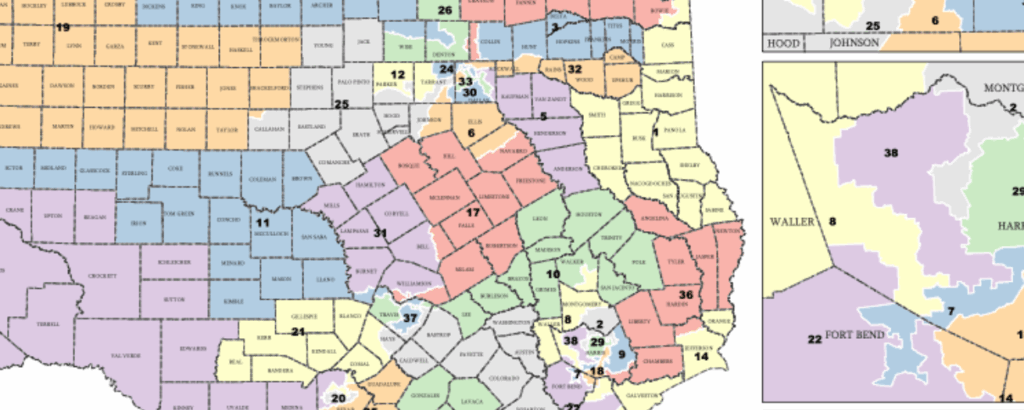
Gerrymandering has been much in the news lately, with Texas Republicans hoping to eke out extra election wins, and California determined to do the same for Democrats. Since both states are already heavily gerrymandered, the latest redistricting is nothing new, but just a matter of degree.
Historically, the Democrats were the undisputed wizards of the gerrymander. Starting with the first recorded use, in Massachusetts in 1812. Interestingly, the party at the time was called “Democratic-Republicans” before they stuck only with the first term. It is fitting that the party once used both terms, because since the Republicans more recently learned to mess with voting districts, both major parties are guilty of its use.
The common explanation given in the news media portrays the gerrymander as a subterfuge that benefits only one or the other major party. This is done by painstakingly carving out districts that maximize the voting power of a party while diminishing another.
Here is a commonly used chart that explains the basic idea:
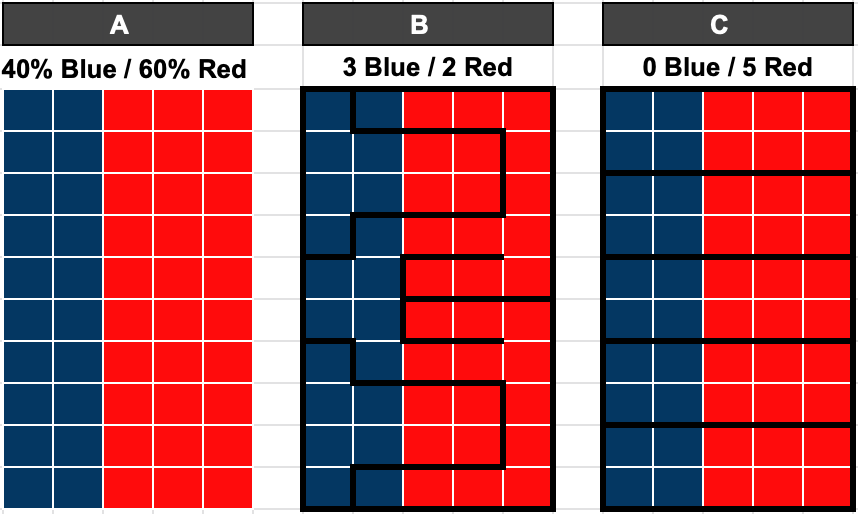
The first part of the chart shows that we would expect 40 percent of a vote outcome for blue and 60 percent for red. But by carving up districts in various ways, we can change the outcome 60 percent blue or 100 percent red. (Some deviation is hard to avoid as soon as voting districts are created.)
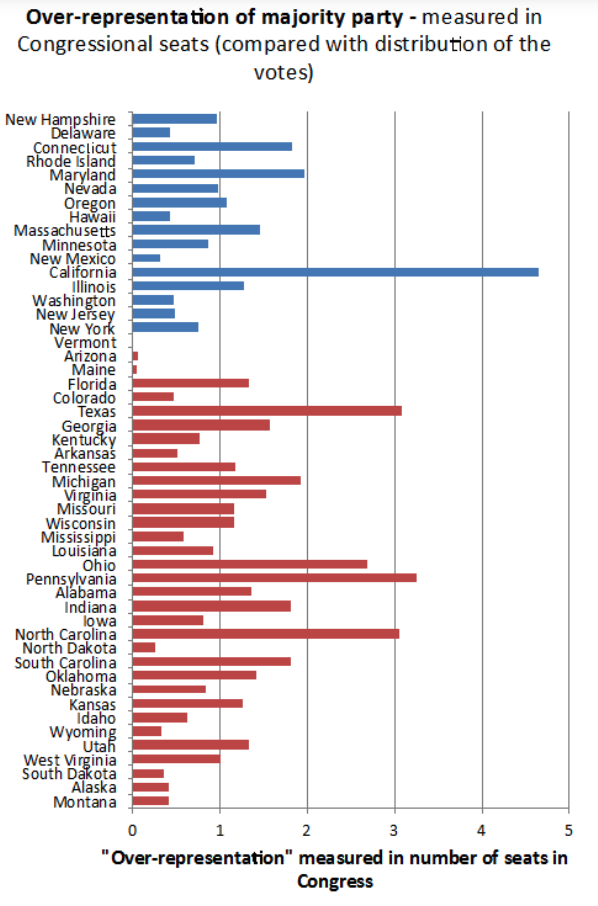
This means that the larger the election, the less affect redistricting has. Conversely, gerrymanders can have a tremendous influence on the outcome of state elections. Using redistricting, a party can wind up with more seats than the registered voter base would predict. This allows a party to control a state house, for example, although they have fewer party members in the state. This chart from the Brookings Institute shows how state parties have achieved over-representation.
The US generally employs a ‘winner-take-all’ approach to elections, which makes the gerrymander effective. Other countries often use representative systems that allow a small party to have a voice in government. Germany, for example, uses a parliamentary system that winds up with many different parties in power at the same time.
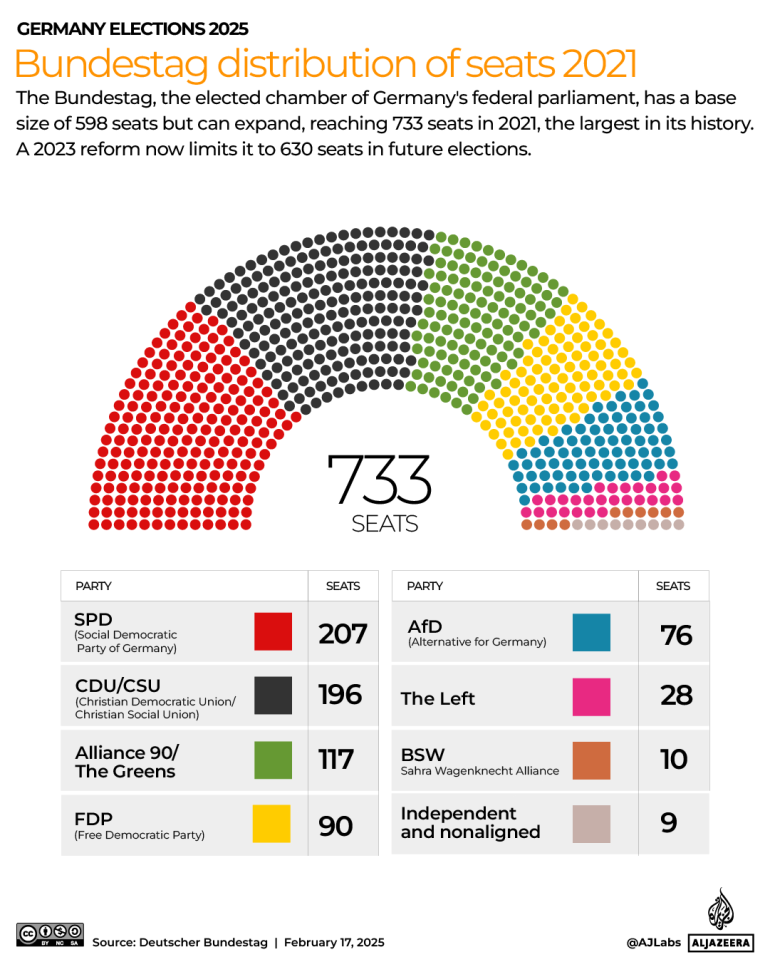
Compare that to the US congress, when one representative, Justin Amash, was temporarily a member of the Libertarian Party.
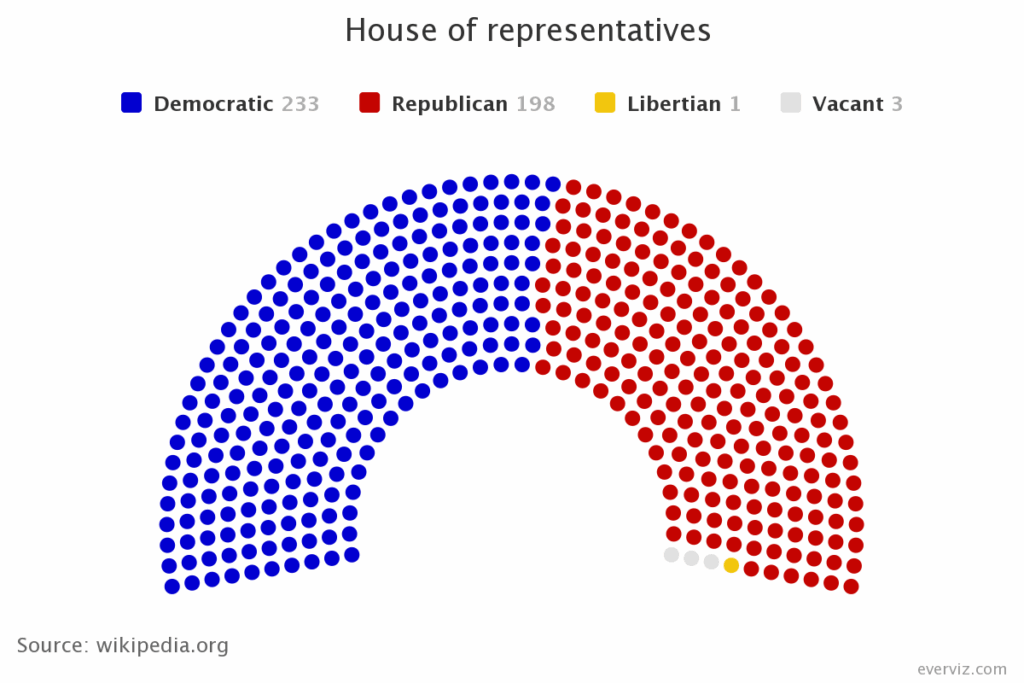
While the German version represents a greater variety of voices, the system can become unwieldy, with back-room negotiations to form alliances to effect legislation.
Both Republicans and Democrats whine about gerrymandering, if it appears to benefit the opposing party. But the practice actually benefits both of them, the Democratic-Republicans. Because this system does two important things:
1 – It keeps power in the hands of major parties while removing the effectiveness of independent voters.
2 – It allows both Democrats and Republicans to rely on safe district power.
Pennsylvania is a prime example of a state where both major parties claim to detest gerrymanders, while agreeing to maintain a certain status quo.
Here we see Pennsylvania laid out in Red Republican and Blue Democrat general districts.
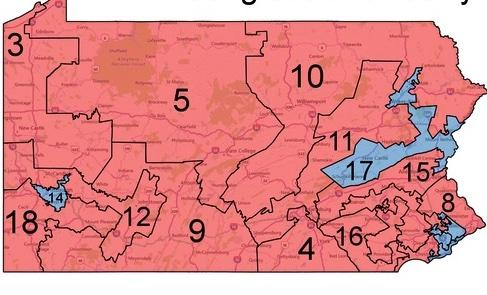
This result of gerrymandering allows the Democrats to control the powerful voting populations of Philadelphia and Pittsburgh, while ceding control of the rest of the state to Republicans. Generally, this allowed the Republicans to own the Pennsylvania house, while allowing the Democrats to win national elections.
Pundit James Carville once disdainfully described Pennsylvania as being made of Philadelphia and Pittsburgh, with Alabama in between. In other words, if you are not a member of my party, you are worthless (and that presumably goes for independents as well).
But independent voters may be the answer to the sad practice of gerrymandering. It has become increasingly clear that despite the occasional protests (we will leave the state so you cannot take a vote! At least, until we all come back…) both major parties delight in using the gerrymander. Historically, redistricting worked because nearly all Americans were registered as one of two parties.
Lately this dynamic has begun to undergo a radical change. Of the three major voter blocks, Democrat, Republican, and Independent, the major parties have lost ground.
Let’s correct that. The major parties have begun to plummet. The Democrats are now the smallest voting bloc of roughly 27 percent of registered voters, while Republicans are slightly larger at about 28 percent. This means over 40 percent of voters are independents.
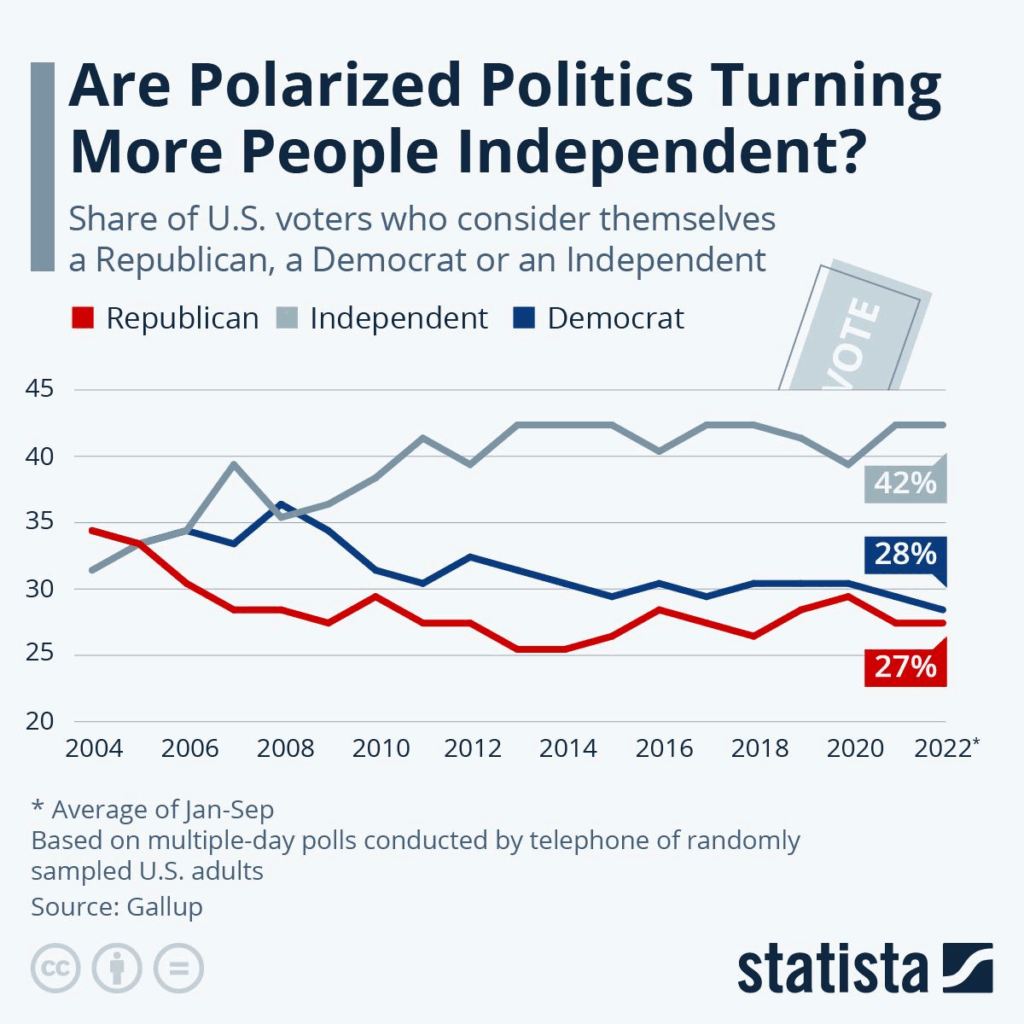
The rapid rise of the independent voter means that standard attempts at gerrymandering will have increasingly less effect on the outcome of elections. The last presidential contest was a case in point, with both major parties being shocked by outcomes they could not predict. This is due to the fact that they insist on viewing elections only as a two-party race. Years of insuring that no third party could gain power made the major parties secure and lazy. All they had to do was ‘get out the vote’ of their party, and winning was assured.
But when your party cannot even claim a third of the voters, the math no longer supports your schemes. The last thing the parties ever imagined was the rise of a voting block that thought independently, making them both smarter and unpredictable. To win votes now, you need to earn it.
And that’s going to be a fitting end to a despicable practice.
Liz Terwilliger and Stephen Wahrhaftig are co-founders of the Pennsylvania-based advocate organization, Reform Congress.

Interesting article – but why did the authors use outdated maps? For instance, the 17th district shown was the old one, which had been anchored in Northeast Pennsylvania. It was modified to become the 9th district, and the old 12th district likewise became the 17th, for the 2018 elections and representation thereafter until the current map which changes both, was ordered on February 23, 2022 by the PA Supreme Court.