
Why invoking January 6th doesn’t work
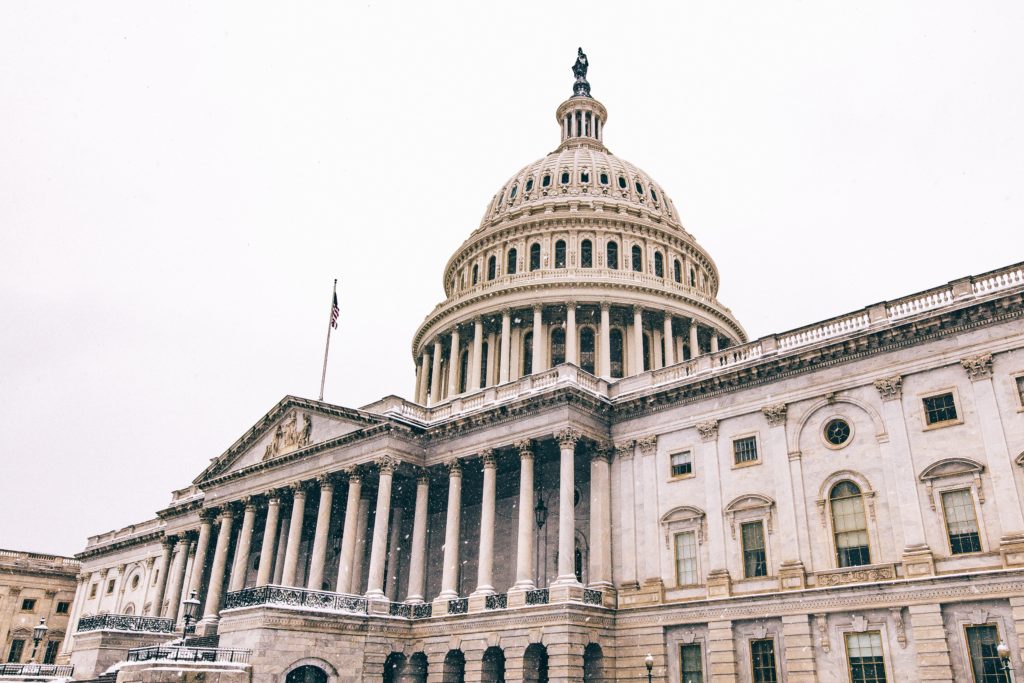
As the Trump administration makes headway on campaign promises on crime and immigration, Democratic pundits have again invoked the U.S. Capitol riot on January 6, 2021, in an attempt to shift the narrative. Democrats, particularly their leaders, have continually used the chaos of that day, in which one person died, as a rhetorical club to counter Republican policies on crime and immigration. By painting President Trump and his supporters as “insurrectionists,” Democratic figures argue that the moral authority to govern rests with those who “protect democracy.” Yet, this strategy is beginning to show its limits, marred by selective outrage, historical amnesia, and political hypocrisy.
In the immediate aftermath of January 6th, Democratic officials — including then-Speaker Nancy Pelosi and Vice President Kamala Harris — lauded law enforcement and invoked the event as a symbol of the threat Donald Trump supposedly posed to American democracy. Harris, on the event’s anniversary, extolled the heroism of the Capitol and DC police forces, linking the incident to the virtues of law and order.
But when faced with Republicans’ crime and immigration crackdowns, most recently President Trump’s deployment of troops and law enforcement in cities like Washington, D.C., and Los Angeles, many Democrats reversed course, instead amplifying condemnation and characterizing these actions as “authoritarian” or dictatorial. California Governor Gavin Newsom and Los Angeles Mayor Karen Bass, among others, accused Trump of creating chaos and militarizing urban centers. Yet, outside the context of January 6 and Republican policy actions, these same leaders have frequently supported or downplayed unrest ignited by Democratic-leaning activists.
Despite Democrats’ fervent denouncements of the January 6 protesters, they conspicuously avoid mentioning previous acts of extreme violence at the Capitol perpetrated by left-wing radicals of whom have been embraced within powerful Democratic circles, up to and including two popular Presidents.
Susan Rosenberg, for instance, was involved with the May 19th Communist Organization, a far-left group that bombed the U.S. Capitol in 1983. Arrested in 1984 with a cache of weapons and explosives, Rosenberg received a 58-year prison sentence. On his last day in office, President Bill Clinton commuted her sentence. Far from being sidelined after her release, Rosenberg went on to become vice-chair of the influential nonprofit Thousand Currents, which bankrolled groups like Black Lives Matter. Her presence and impact in the nonprofit sector mark a dramatic transformation from fugitive to left-wing establishment figure.
Similarly, Oscar López Rivera, a suspected leader of the Puerto Rican nationalist group Fuerzas Armadas de Liberación Nacional Puertorriqueña (FALN), was serving a 55-year sentence for seditious conspiracy and efforts to overthrow the U.S. government, among other charges. FALN carried out more than 130 bomb attacks in the United States between 1974 and 1983. President Barack Obama commuted Rivera’s sentence in 2017, a move celebrated by many in the Democratic Party. López Rivera, whose organization committed the 1954 Capitol machine gun attack, was embraced by political figures as a symbol of resistance rather than terrorism.
The charge of hypocrisy becomes more compelling when compared to Democratic responses to the violent riots that occurred nationwide, six months before January 6th, following the death of George Floyd. Protests and riots erupted in major cities, resulting in at least nineteen deaths and billions of dollars in property damage, far exceeding the human and financial costs associated with January 6. Democratic leaders predominantly supported these demonstrations, framing them as expressions of legitimate grief and justified anger, even when violence spiraled beyond control.
In a telling contrast, while one death at the Capitol on January 6th remains central to Democrats’ rhetoric about Republican lawlessness, the lives lost and property destroyed six months earlier rarely receive equal attention. Such discrepancies reinforce accusations that the party’s outrage is more political than principled.
Crime, particularly violent crime, is a dominant concern among American voters, especially in urban centers. Washington, D.C., a city of 61 square miles (29 percent of which are federal institutions) with over 20 law enforcement agencies, reported 187 murders last year. This high homicide rate, coupled with ongoing public disorder and concerns about immigration enforcement, has prompted President Trump to take aggressive measures. His deployment of federal resources in both D.C. and Los Angeles amid surging riots and immigration-related unrest has forced Democrats to grapple once again with the issue of law and order.
Polling indicates these moves have gained traction with voters, suggesting that despite vigorous efforts to shift the narrative toward January 6th, concerns about violent crime and immigration trump abstract claims of insurrection. Trump’s positions, focused on tangible security measures, are resonating broadly, even among constituencies that traditionally lean Democratic.
The manufactured outrage over January 6th, contrasted with muted or supportive reactions to rioting in the wake of George Floyd’s death, has exposed a strategic flaw in Democratic messaging. Invoking January 6th as the ultimate crime against democracy may play well within politically engaged circles but is losing efficacy among ordinary voters whose top priorities concern immediate safety and economic stability.
By ignoring past violence executed by actors now accepted or even celebrated within their ranks, and by refusing to apply equal standards to all forms of political chaos, Democratic leaders risk diminishing their credibility. At the same time, Trump’s willingness to act on crime and immigration — however controversial — has positioned Republicans as solutions-oriented on the issues voters care about most.
As the 2028 elections approach, the lesson from the electorate is clear: Rehashing January 6th won’t work as a substitute for addressing today’s urgent problems. American voters seek accountability, consistency, and real answers—not just manufactured outrage and selective indignation.
Based in Philadelphia, A. Benjamin Mannes is a consultant and expert witness in security, premises liability, and criminal justice reform based on his own experiences on both sides of the criminal justice system. He is a compliance executive who previously served in federal and municipal law enforcement, and as the former Director, Office of Investigations with the American Board of Internal Medicine. @PublicSafetySME



Not only is the outrage manufactured and inorganic, as per usual, but the entire J6 FEDsurrection was mostly manufactured as well. Security denied, Ray Epp$, pipe bombers, etc. When Kash gets to the bottom of it, they’ll lose another talking point.
It should be noted that the death referred to in the article was that of Ashli Babbitt an Air Force veteran who along with others was trying to force her way into the Capitol building. She was unarmed and presented no immediate threat to the police but died from a gunshot by Capitol Police Officer Lt. Michael Byrd. Ashli was the only person deliberately killed on January 6. Her killer was a black male police officer who shot an unarmed white female veteran who presented no threat to Lt. Byrd. Her estate subsequently sued the government alleging that Officer Byrd, who was not in uniform, failed to de-escalate the situation and did not give her any warnings or commands before opening fire at close range. It also alleges negligence on the part of Capitol Police.