

Matt Meyers: Don’t lock out opportunity — TRIO cuts are class warfare on college dreams
At Pennsylvania Institute of Technology, a small, mission-driven college outside Philadelphia, nearly two-thirds of our students are first-generation college-goers. Most are adults juggling work, caregiving and financial pressures. They don’t arrive with legacy or wealth. They come with grit — and often without a roadmap.
That’s where TRIO comes in. Our federally funded Student Support Services (SSS) program provides academic coaching, mentoring and guidance that help students persist and graduate. Without TRIO, many of our students wouldn’t earn their degrees. Some wouldn’t even apply.
Now, TRIO is on the chopping block. The House-passed federal budget proposes eliminating all TRIO programs, cutting $1.2 billion from one of the country’s most effective college success efforts. This includes SSS, which supports students across more than 1,000 colleges and universities.
Let’s be clear: this isn’t budget discipline. It’s door-slamming.
TRIO programs were created in the 1960s, decades before modern diversity, equity and inclusion frameworks. Their purpose was, and still is, to expand opportunity for low-income students, first-generation college-goers, and students with disabilities. The administration’s crusade against DEI is well documented. But targeting TRIO, a program grounded in economic mobility rather than ideology, adds a troubling layer. This is no longer just a war on DEI. It is a war on the poor.
At Pennsylvania Institute of Technology (P.I.T.) in Delaware County, just ten miles shy of Philadelphia, we see TRIO’s impact every day. Felicia Blue, a single mother and recent graduate, came to us with determination and uncertainty. TRIO gave her the structure and support she needed to stay on track. Today, she is making a difference in the healthcare field and breaking a generational cycle.
Felicia is not alone. TRIO students at P.I.T. graduate at rates above 70 percent, far beyond the national average for similar populations. Nationally, SSS participants are 47 percent more likely to complete an associate degree or transfer, and eighteen percent more likely to earn a bachelor’s degree compared to peers without the program.
Eliminating TRIO would reduce graduation rates, shrink the skilled workforce and undermine efforts to improve student loan repayment. These cuts are counterproductive. TRIO is one of the clearest examples of a strong return on investment for federal student aid. It helps ensure that Pell Grants and subsidized loans result in degrees and career pathways, not dropout and debt.
So why cut it? The proposed budget claims it will “refocus on academics and not fund woke ideologies.” But there is nothing ideological about a low-income student needing tutoring, or a first-generation nursing student needing help navigating clinical placement. These supports are not distractions. They are the foundation that makes academic success possible.
This isn’t a partisan issue. Senator Susan Collins of Maine, a Republican and co-chair of the bipartisan TRIO Caucus, has called the proposed elimination “shortsighted” and pointed to the countless students whose lives have been transformed through TRIO.
TRIO currently supports more than 880,000 students. For many institutions, especially community colleges, Historically Black Colleges and Universities (HBCUs), Hispanic-Serving Institutions (HSI), and career-focused colleges like ours, it is the only structured support system helping high-risk students stay in school and succeed.
When just fifteen percent of students from the lowest-income families earn a college degree — compared to 62 percent of their wealthier peers — eliminating the programs designed to close that gap sends a clear message. If you weren’t born into the right zip code or bank account, your dreams are disposable.
We cannot let that message stand.
TRIO programs are not luxuries, they are ladders. Pulling them away now, in a time of economic uncertainty and workforce shortages, is choosing to abandon potential rather than cultivate it. Congress must reject these cuts and recommit to educational access for all.
Our students don’t need special treatment, they need a fair chance. TRIO gives them that. We should be expanding these programs, not eliminating them.
Matt Meyers is the President of the Pennsylvania Institute of Technology, a career-focused non-profit college in Upper Providence, Pennsylvania, about a mile shy of Media in Delaware County.
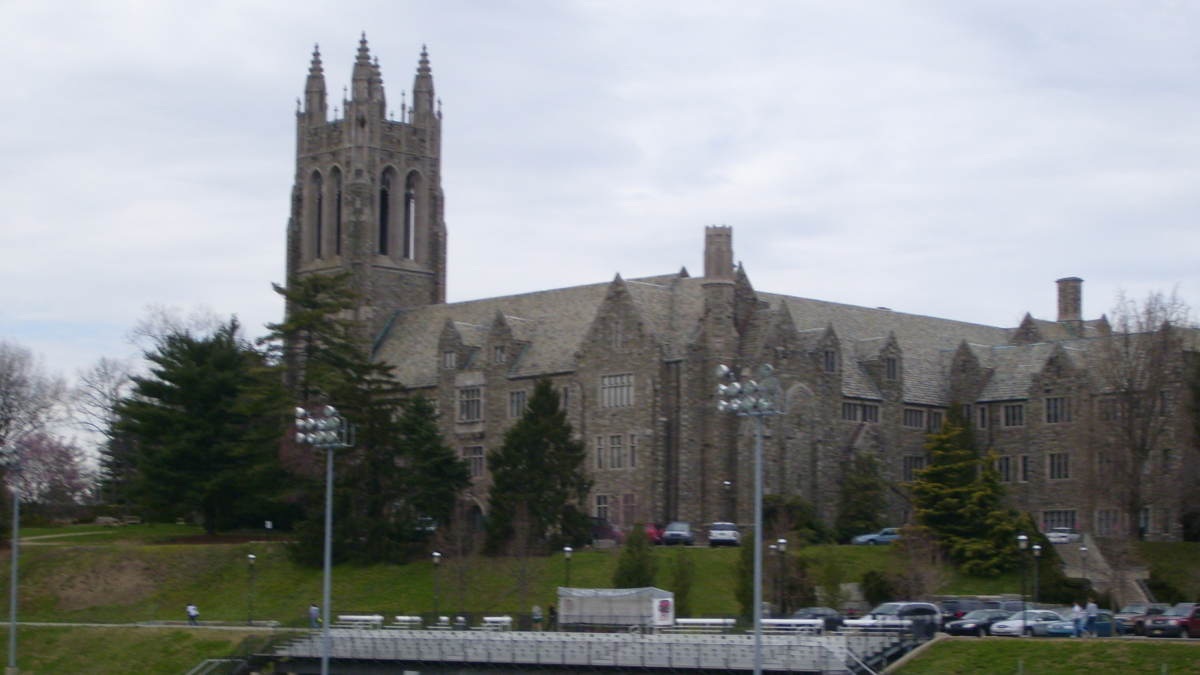


From P.I.T website: Pennsylvania Institute of Technology’s Mission is to empower students to achieve success by offering a personalized approach to learning that promotes career advancement, transfer opportunities, and individual growth. By fostering an inclusive environment, P.I.T. encourages, supports, and celebrates diversity.
Diversity and Inclusion statement:
The College’s commitment to creating a culture of inclusion that supports diverse voices has grown our population significantly. The College has created a safe environment for all students by embracing and honoring differences.
Student Characteristics
Gender
Male:10.91%
Female:89.09%
Race/Ethnicity
African American:62.83%
Asian/Pacific:0.61%
Hispanic:2.61%
Native American:0.61%
White:18.43%
Other:14.90%
Total Minority:66.67%
Sooo… where’s the diversity Matt? 90% women with 67% minority with 62% black? Rough census tells us that the national population is about 72% white and 13% black. It looks like someone has their thumb on the scale here.
You also offer a Bachelor’s in Cannabis Business an Horticulture studies.
Are these the programs that taxpayers should be funding? Touting Susan RINO Collins as a bipartisan entity isn’t helping your case.
Since student loans are nearly impossible to discharge, lenders face minimal risk, encouraging them to issue loans freely. This easy access to credit fuels demand for higher education, allowing colleges to raise tuition without immediate pushback from market forces.
From 1980 to 2020, college tuition rose over 1200%, far outpacing inflation (about 300%) or wages (about 400%). The availability of federal and private loans, backed by non-dischargeability, enables colleges to charge higher prices, knowing students can borrow to cover costs.
A 2017 Federal Reserve study found that a $1 increase in student loan availability leads to a 60-cent increase in tuition, a phenomenon called the Bennett Hypothesis.
Without bankruptcy as a check, students may overborrow for degrees with uncertain returns, and colleges have less incentive to control costs or prioritize high-value programs.
How does TRIO work? What is the cost per student at PIT? How much did PIT receive in the last academic year and how many students accessed it? Some statistics would be helpful in the discussion.
Per internet search, tuition at PIT is about $15k / yr, plus course fees and books. Annual Report FY 2024 states revenue of $13.9MM with expenses of $11.4MM. It also reports a $6MM Campus Expansion that will expand their marketing program, student lounge and a banquet facility, and a Nursing Lab Acute Care mock up space. I’d like to see salaries of admin, teachers and board members.