An interview with Jason Richey, Part 1
This is the first of a two-part interview. The second part will run on Monday, April 13.
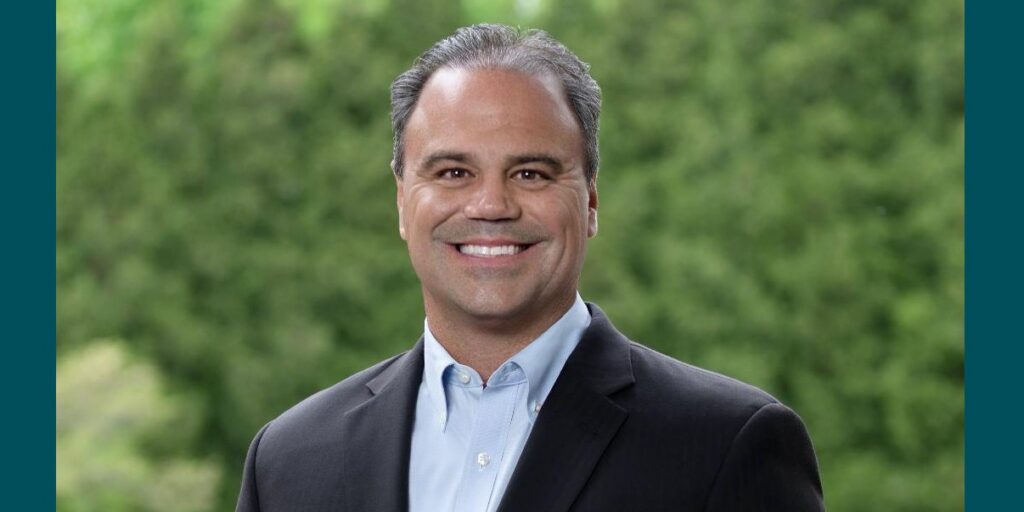
A year ago, I interviewed Jason Richey after he became chairman of the Allegheny County GOP. He has continued his ascent within Pennsylvania’s Republican Party after securing the party’s endorsement for lieutenant governor. Since then, he has been campaigning alongside state Treasurer Stacey Garrity, who received the party’s endorsement in her run for governor.
The Republican primary field for governor and lieutenant governor remains largely clear, meaning Garrity and Richey are expected to secure the nomination this May, setting up what will likely be a tough election against incumbent Governor Josh Shapiro and Lt. Gov. Austin Davis.
Richey, an attorney based in Pittsburgh who was born and raised in Allegheny County, is a relative newcomer to politics despite his rapid rise. He leveraged his 2022 run for governor, where he dropped out shortly before the primary, into a growing role within Pennsylvania’s GOP.
Our last conversation was focused on electoral politics given his role as county chairman. This time around, our conversation was largely policy focused. Still, given that he is running for statewide office, politics could not be entirely avoided, so we addressed that first.
Seth Higgins: Jason, thanks for joining me. I can’t believe it’s already been more than a year since we last spoke.
Jason Richey: Yeah, that’s true. I can’t believe it’s been four years since I ran for governor.
Seth Higgins: Last time we spoke, you had just taken over as chairman of the Allegheny County GOP. This time, you’re back on the ballot. So let’s start there: how did you end up running for lieutenant governor? Was this something that was on your radar?
Jason Richey: No, this was absolutely not on my radar. It wasn’t a job I was seeking.
About 40 days ago, I got a call from the Philadelphia Inquirer asking if I was on the short list for lieutenant governor. That was the first I’d heard of it. A few days later, Stacey Garrity called me and talked through the importance of the race — not just campaigning together, but governing together. That really appealed to me.
After that, a number of donors reached out, and then Senator McCormick called and encouraged me to run. At that point, I stepped back and thought about what’s at stake.
A lot of the reasons I ran for governor are still true. Pennsylvania is ranked 41st overall by U.S. News & World Report. We’re one of the most heavily taxed states. Seven out of ten eighth graders aren’t proficient in reading or math.
Given our resources and geography, that’s unacceptable — we should be thriving.
So, I decided to run. If we bring conservative economic principles to bear, we can improve people’s lives. And on a personal level, my wife and I want our three sons — and eventually our grandkids — to live here in Pennsylvania. That matters to us.
Seth Higgins: Midterm elections are typically difficult for the party that holds the White House, and early indicators suggest that may hold true again. At the same time, Governor Josh Shapiro maintains relatively strong approval ratings.
How do you and Treasurer Garrity plan to overcome that?
Jason Richey: A few things.
First, Stacey Garrity is the top vote-getter in Pennsylvania history. She knows how to energize the base and turn out voters.
Second, the voter registration gap has narrowed significantly. The last time I checked, it was around 45,000. When Tom Corbett won, that gap was close to a million. So, the environment is very different.
We also have a strong candidate at the top of the ticket. Stacey has been one of the best treasurers we’ve had and understands how to win statewide.
I think if we can get out our base and then bring the Shapiro record to bear — this guy has been a complete failure. He has no substantive legislative accomplishments. He’s not focused on the people of Pennsylvania.
That creates a different dynamic than a typical midterm. Voters are being asked to re-elect someone who does not intend to serve a full term.
By contrast, Stacey and I are not career politicians. We’ve had success in the private sector, and in Stacey’s case, in the military as well. Stacey would also be the first female governor in Pennsylvania history
Our focus is simple: improving the lives of Pennsylvanians.
Seth Higgins: I want to pivot to policy. Affordability has become a central issue in recent elections, particularly in Pennsylvania given rising electricity rates.
In my view, increasing supply by building new generation is the best long-term solution — but that takes years, if not decades.
Given that limitation, how would you and Treasurer Garrity work to lower electricity costs in the near term?
Jason Richey: I agree — affordability is the central issue, and our entire campaign is going to be focused on it. If I’m not part of an administration that makes things more affordable, I won’t run again.
First, we need to understand how we got here. Neither Governor Shapiro nor Governor Wolf took meaningful action to bring new electric generation online. At the same time, policies like RGGI (Regional Greenhouse Gas Initiative) and continued support for carbon taxes discouraged new investment.
Meanwhile, coal-fired power plants shut down, Three Mile Island closed, and there was no replacement generation brought online. That’s why electricity prices are rising.
What we want to do is unleash Pennsylvania’s natural gas potential. We have more natural gas in Pennsylvania than Saudi Arabia has oil.
On day one, we would bring together the private sector to develop a plan. That includes increasing drilling in an environmentally responsible way and building the infrastructure to move that gas — particularly to Philadelphia, where we could develop LNG export capacity.
An LNG facility would allow us to export Pennsylvania natural gas globally, including to places like New England that still import energy. That also ties into reviving shipbuilding capacity in Philadelphia, because we would need tankers to transport that gas.
Over a five-year period, we estimate that this approach would generate about $5 billion in new revenue and create roughly 250,000 jobs.
That revenue would allow us to reduce school taxes, lower income taxes, and eliminate the inheritance tax — or so-called death tax — over five years.
And importantly, markets respond quickly. Once supply expansion is underway, prices adjust. So even before projects are fully completed, you would begin to see downward pressure on energy costs.
Seth Higgins: Let’s shift to fiscal policy.
Since Governor Shapiro took office, General Fund expenditures have increased from roughly $42.8 billion in FY 2022–23 to about $47.6 billion in FY 2024–25, while revenues have grown more modestly — from about $43 billion to $45.5 billion.
That gap raises concerns about long-term fiscal stability.
What policies would you support to either reduce spending or increase revenue?
Jason Richey: The energy plan I just outlined is a major part of the answer. If we increase drilling and allow for the construction of the necessary infrastructure, we’re looking at about $5 billion in new revenue.
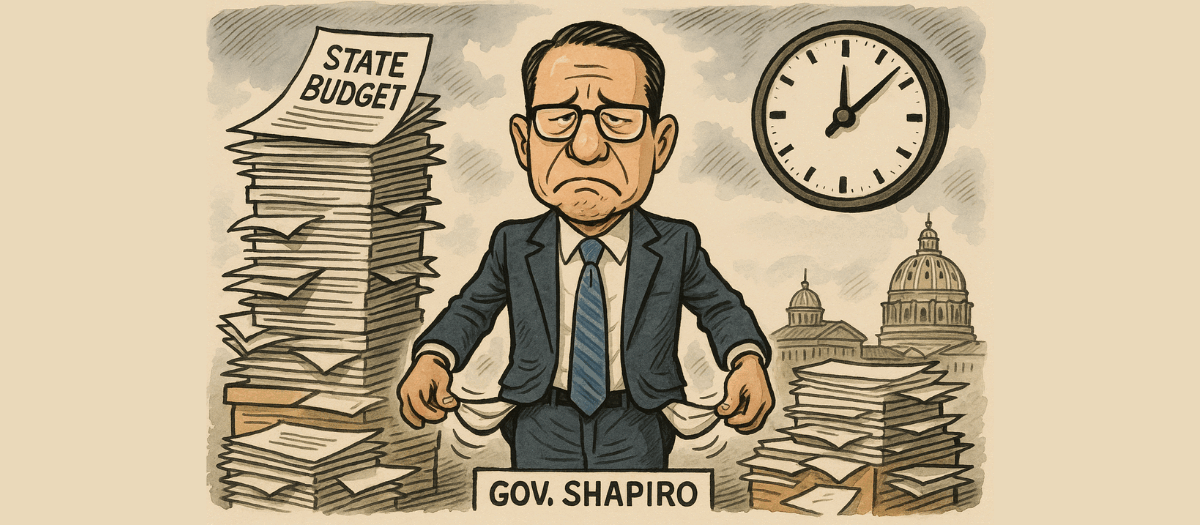
But the bigger issue is spending. Governor Shapiro continues to increase spending well beyond revenue projections. His latest budget, as I understand it, runs billions over revenue and relies on projected taxes that may never materialize.
That approach sets Pennsylvania up for future tax increases.
We’re already seeing the effects at the local level, where property taxes continue to rise because there’s no discipline in Harrisburg.
What we would do is look for efficiencies — cut unnecessary regulation, streamline government operations, and manage it more like a business.
At the same time, we need to control new spending. Our goal is not to raise taxes — it’s to reduce them. And the bulk of that relief would come from the new revenue generated through expanded energy production.
Seth Higgins: Staying on revenue — two ideas that have gained traction are legalizing and taxing marijuana and increasing taxes on so-called skill games.
Do you support either of those approaches?
Jason Richey: On skill games, some of the proposed taxes are excessive. If you overtax that industry, you push it out entirely. There is a role for taxation there, but it has to be reasonable and aligned with what the industry can sustain.
As for marijuana — we do not support full legalization. Pennsylvania already has medical marijuana, which is taxed, and that system could potentially be adjusted.
We are considering decriminalization as part of a broader policy rollout, but full legalization is not something we support. It can serve as a gateway drug, and that’s not the direction we want the Commonwealth to go.
This interview continues in Part 2, to be published on Monday, April 13.