 Photo by Thomas Hawk via Flickr
Ben Mannes: Democratic filibuster leaves TSA, Coast Guard funding strained amid immigration fight
Democratic leaders in Congress are facing mounting criticism for allowing a funding lapse at the Department of Homeland Security that has left airport screeners and Coast Guard personnel working without pay, even as they insist their standoff with President Donald Trump is a necessary response to deadly immigration enforcement shootings in Minnesota.
The latest partial shutdown began when funding for DHS expired in mid-February amid a stalemate over immigration enforcement changes demanded by Democrats. The lapse has affected large swathes of the department, including the Transportation Security Administration, the Coast Guard, FEMA and cyberdefense staff at CISA, while most Immigration and Customs Enforcement and Customs and Border Protection operations have continued as “excepted” law enforcement activities.
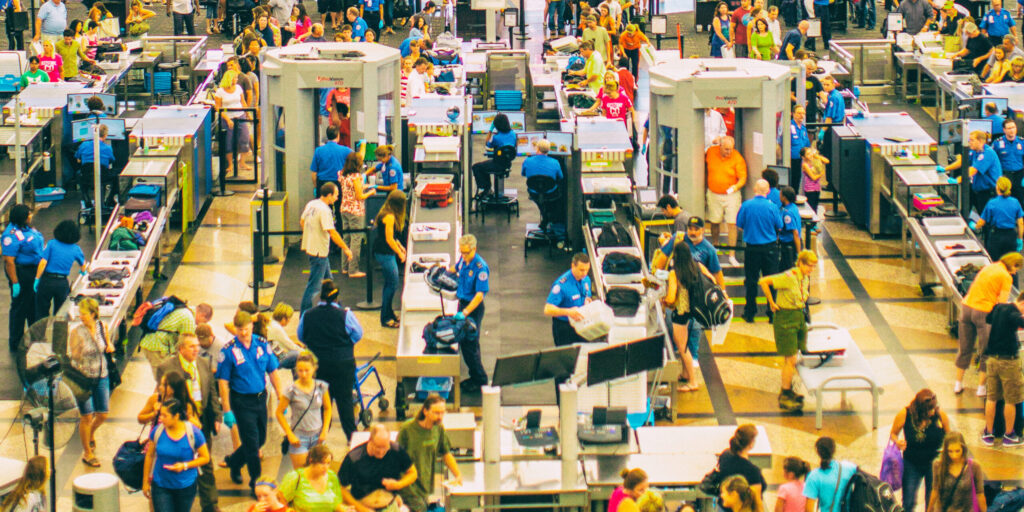
More than 50,000 TSA officers have been ordered to report to airport checkpoints without pay, leading to higher call-out rates, checkpoint closures, and warnings that some airports could be forced to suspend operations completely if staffing continues to erode. At major hubs, airline executives say screening lines have grown longer just as the spring travel season begins and the U.S. prepares to host matches for the 2026 FIFA World Cup.
Coast Guard members, who are also required to work during the shutdown, have similarly gone without pay, raising concerns about morale and readiness as the service continues counter-narcotics patrols and maritime security operations.
Political fight rooted in Minnesota shootings
Democrats in Congress, led by Senate Majority Leader Chuck Schumer and House Minority Leader Hakeem Jeffries, have tied their refusal to advance a full-year DHS funding bill to demands for new limits and transparency rules on immigration enforcement following political pressure from their far-left flank over two fatal shootings by federal agents in Minneapolis earlier this year. In those incidents, Alex Pretti and Renee Good, both U.S. citizens, were killed by federal immigration officers while engaged in illicit protests during operations that sparked weeks of protests and national scrutiny of ICE tactics.
Schumer has said Democrats will not support a DHS spending package that does not include requirements such as bans on masked agents, mandates for visible identification, and tighter warrant rules for arrests on private property. Progressive commentators have framed the blockade as a long-overdue effort to rein in ICE after the Minnesota killings, arguing that Congress should not “reward” the agency with a larger budget until new safeguards are in place.
Republicans, however, accuse Democrats of effectively holding TSA, the Coast Guard and other non-immigration components of DHS hostage in order to score political points over immigration policy. They argue that the same appropriations bills Democrats oppose already provide funding for ICE and CBP, and that blocking the broader DHS package does little to halt immigration enforcement while inflicting maximum pain on some of the department’s lowest-paid workers.
The standoff has raised fresh ethical questions over whether it is appropriate — or even consistent with lawmakers’ oversight responsibilities — for Congress to allow frontline security agencies to go unfunded as leverage in an unrelated policy dispute. Legal experts note that Congress has broad constitutional power over appropriations and may decline to fund an agency or department, but good-government advocates argue that allowing essential security functions to grind toward collapse in order to force changes at a separate branch of DHS risks undermining public safety and eroding trust.
Democrats have floated proposals to pass narrow, stand-alone bills that would fund TSA, FEMA, the Coast Guard and other units not associated with ICE, while continuing to block money for immigration enforcement. Republicans have rejected that approach, insisting DHS should be funded as a whole, and accusing Democrats of trying to rewire immigration policy through the appropriations process rather than regular authorizing legislation.
Critics say the practical effect is that workers with the least political clout — airport screeners, Coast Guard enlisted members, and support staff — are bearing the brunt of a fight centered on ICE, whose core enforcement activities have largely continued under shutdown contingency plans. Union leaders and airline CEOs warn that the tactic is particularly risky at a time when national security officials have cited elevated threats, including tensions with Iran and increased concern over potential attacks on aviation and critical infrastructure.
Human toll on low-wage DHS employees
For TSA officers, who are among the lowest-paid employees at DHS, the loss of paychecks has immediate consequences. During previous shutdowns, the agency saw spikes in resignations and difficulty recruiting replacements, and early data from the current lapse suggests similar patterns, with hundreds of officers leaving and double‑digit call-out rates at some airports. Worker advocates say many screeners live paycheck to paycheck, and that being told to report to work without pay for weeks at a time amounts to coercion that may skirt the edge of labor protections, even if it complies with federal shutdown protocols.
Coast Guard families, some of whom are still recovering from the financial strain of earlier funding gaps, also face uncertainty about mortgage payments, food and child care. Advocacy groups have organized food banks and emergency relief funds, while service leaders warn that prolonged instability could damage retention in key specialties like aviation and engineering. Airline executives, who rarely weigh in on internal government disputes, have joined the chorus urging Congress to restore full DHS funding and then debate immigration policy separately.
Political calculations and future stakes
The Minnesota shootings have reshaped the political landscape around immigration enforcement, with polls showing surging public concern about the conduct of federal agents and stronger support for body cameras, identification requirements and other accountability measures. Strategists in both parties acknowledge that the events — and the protests that followed — have become central to Democrats’ messaging as they seek to portray themselves as defenders of civil liberties in the face of Trump’s hard-line deportation push.
Republicans counter that Democrats are exploiting the killings to justify a broader attempt to constrain the administration’s immigration agenda, and say the DHS shutdown is designed to force concessions that could limit deportations and interior enforcement. As the shutdown drags on, both parties appear to be calculating the potential electoral fallout: whether voters will blame Democrats for tying DHS funding to immigration conditions, or fault Republicans for refusing to accept new guardrails after two high‑profile deaths.
For now, negotiations continue on Capitol Hill, with bipartisan groups searching for a compromise that could restore pay for TSA officers, Coast Guard members and other DHS employees while addressing at least some concerns about immigration enforcement practices. Airline leaders and security experts warn that absent a deal, the country could soon see shuttered airport checkpoints, degraded maritime patrols and strained cyberdefenses — all while the agencies at the center of the dispute continue much of their work under emergency authorities.