 Photo by Anthony Hennen
Proposed 52% tax on skill games praised and slammed at hearing
(The Center Square) – The biggest proposed new moneymaker in Pennsylvania government may also launch one of the sharpest debates of the 2026 budget process, and that is setting the appropriate tax rate for tens of thousands of unregulated “skill games” that are raking in cash around the state.
Revenue Secretary Pat Browne told lawmakers on Tuesday he thought the 52 percent tax rate proposed by his boss, Democratic Gov. Josh Shapiro, was “consistent and fair tax policy” because other very similar machines already get taxed at that rate. Pushback came from state Rep. Jamie Barton, a Schuylkill County Republican, who told Browne the proposal reminded him of the saying “Pigs get fat and hogs go to slaughter.”
A high tax rate, Barton indicated, would likely dampen the activity rather than set up the state to make money from it.
The back-and-forth came during the third week of budget hearings in the state Capitol. The hearings that follow the governor’s early February budget address end the opening phase of the budget process, and the deadline for an approved budget is June 30.
Shapiro’s proposal to spend $53.3 billion in 2026-27 has drawn flak from Republicans in part because revenues far exceed expenditures, and it gets one-time help by drawing $4.5 billion from the state’s Rainy Day Fund, the name for its de facto emergency savings account.
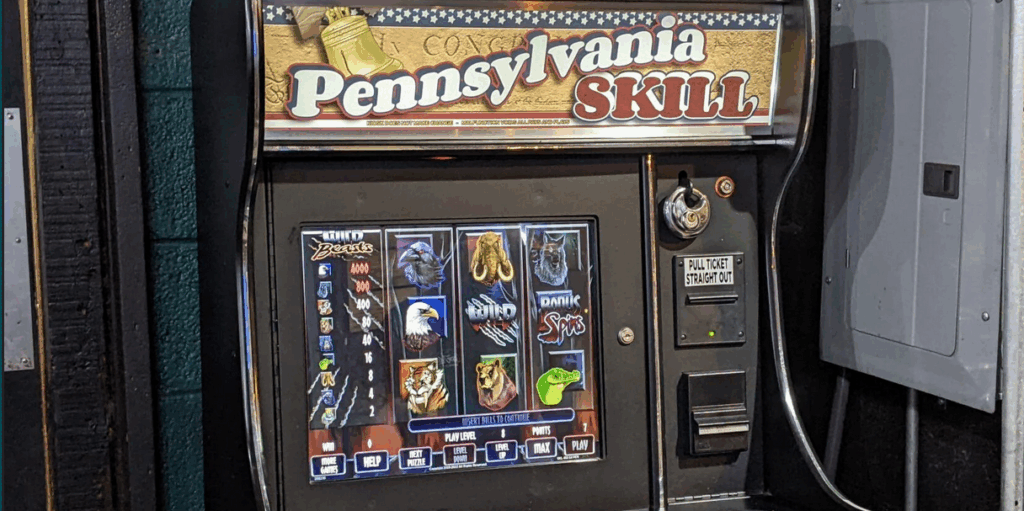
Tens of thousands of skill games have popped up in convenience stores, bars, clubs and other venues in recent years. The extent to which actual “skill” is involved in their play has been tied up in the courts, with opponents arguing they are no different than gambling devices already regulated by the state.
Shapiro’s proposed spending plan anticipates pulling nearly $766 million in revenue from regulating and taxing the machines. Another proposal that is expected to get a lot of talk in Harrisburg – legalizing recreational marijuana – is penciled in by Shapiro to generate $729 million in new revenue in 2026-2027.
Both debates have been going on for years. With skill games, various proposals have set the tax rate at 16 percent or 35 percent, or dispensed with a straight-up tax and instead used a flat $500 per-machine, per-month fee.
Small organizations have grown accustomed to taking in a certain amount of money from the machines and the larger the tax bite, the less they might collect in the future. Barton said his district, with parts of Berks and Schuylkill counties, is very rural.
“Skill games are a part of the revenue of a lot of businesses. Small family businesses. Fire companies. VFW’s. Restaurants. American Legions,” said Barton. He asked Browne whether the state had studied what a tax rate of 52 percent – the same one levied on “video gaming terminals” found in truck stops – would do to the market.
Browne said there was no such study. The feeling was, he said, that the market could “sustain” the proposed 52 percent tax rate.
The Revenue Department and its roughly 1,800 employees accounts for a relatively small, $232 million chunk of the proposed budget. But it has an outsized role in the budget process because it is a clearinghouse for collected taxes.
Lawmakers of both parties for years have worried that the state’s tax profile scares away people and companies. Browne on Tuesday said the state is now in a good place in that regard with its three main taxes: A 3.07 percent personal income tax that Browne called “one of the lowest”; a sales tax rate that is “in the middle” in comparison with other states; and a corporate net income tax that is being steadily reduced.
“Right now this government is doing what it needs to do” to attract people to the state, Browne said.
This article was republished with permission from The Center Square.