Howard Lurie: The Editors are wrong — and right — about separation of powers
In a recent column, the editors of Broad + Liberty expressed serious concern over the attempt by the Trump administration to “prosecute six members of Congress because of a video they made reminding active duty soldiers to follow the law.” The editors viewed “Trump’s attempt to jail members of Congress” as “a gross violation of the [Constitution’s] separation of powers.”
While I agree with the editors’ condemnation of Trump’s attack on members of Congress, I don’t see it as a separation of powers issue. The “separation of powers” doctrine essentially provides that no branch of government can exercise the power vested in a different branch. Trump’s attempt to jail members of Congress is not an attempt to exercise the authority of Congress.
The authority of each branch of the government is spelled out in the Constitution: Article I, Section 1 of the US Constitution vests all legislative authority in the Congress. That means that the Congress has the power to make law. Article II, Section 1 vests the executive power in the President, and the President is required by Section 3 to take care that the laws be faithfully executed. Article III, Section 1 vests the judicial power in the courts.
In my opinion, the erosion of the freedom that the separation of powers was meant to ensure is due to the increasing use by Trump of Executive Orders. Nowhere in the US Constitution is there any provision for “Executive Orders.” Yet every President has issued them.
In 2025, President Trump issued 225 Executive Orders. A lot of these are probably noncontroversial in that they merely aid in the execution of the laws enacted by Congress. But many of them are not specifically authorized by the Constitution or statute, and do violate the separation of powers.
The editors are right in asserting that “a strict separation of powers . . . is, itself, a way we guarantee our liberties.” When a President issues Executive Orders that are not authorized by the Constitution or statute, the President is violating the separation of powers by usurping the power of Congress to make law. Also, when the Congress delegates unlimited authority to the President to make law, it is also violating the separation of powers since it is giving away its authority. When Congress does so, it is violating the non-delegation doctrine.
The non-delegation doctrine is rooted in the separation of powers doctrine.
Essentially, it is a constitutional principle that Congress cannot delegate its legislative authority to another branch of government. Each branch of government is to exercise only its Constitutional authority and cannot delegate that authority to another branch. Nor can one branch of government usurp the authority of another branch.
In a 1935 decision, the Supreme Court said that “Congress is not permitted to abdicate or transfer to others the essential legislative functions with which it is thus vested.” Congress can, of course, delegate regulatory authority so long as it provides an “intelligible principle” to guide the exercise of that authority. Unfortunately, Congress has frequently delegated lawmaking authority to the President and to independent regulatory agencies without clear guidance. That has allowed them to do what Congress itself could not do.
Consider the fact that once Congress enacts a statute, it must follow the Constitutional procedure to repeal or amend that statute. If Congress delegates lawmaking authority to the President, however, the President can issue an Executive Order, amend that Executive Order, or even repeal it without following any procedure akin to what Congress must do if it made that very same law.
Almost immediately after assuming office, President Trump issued Executive Orders undoing a number of Executive Orders issued by President Biden. All he had to do was sign his name. When he did so, laws changed. That is clearly an exercise of legislative authority.
Sometimes, we can tell that there is no Constitutional or statutory authority for an Executive Order merely by looking at what the President says is his authority in issuing the Order. If, for example, it begins: “By the authority vested in me as President by the Constitution and the laws of the United States of America, it is hereby ordered:” as does Trump’s Executive Order 14351 of September 19, 2025, you can tell that there is no Constitutional provision or statutory basis authorizing the Order.
Contrast that with, for example, President Nixon’s Executive Order 11615 in August of 1971 freezing wages and prices: “Now, THEREFORE, by virtue of the authority vested in me by the Constitution and statutes of the United States, including the Economic Stabilization Act of 1970 (P.L. 91-379, 84 Stat. 799), as amended, it is hereby ordered as follows:”.
Nixon’s wage-price freeze was political, ridiculous, and unworkable, but clearly authorized by statute. Many of Trump’s Executive Orders are not.
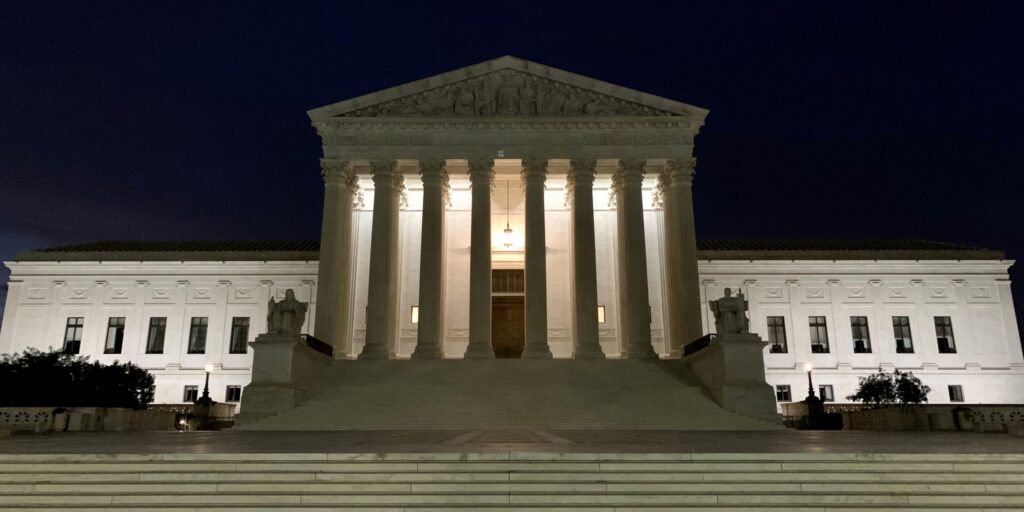
The Supreme Court’s decision on February 20, 2026, invalidating some of Trump’s tariffs illustrates what I have just said. In its opinion, the Court said: “Against this backdrop of clear and limited delegations, the Government reads IEEPA to give the President power to unilaterally impose unbounded tariffs. On this reading, moreover, the President is unconstrained by the significant procedural limitations in other tariff statutes and free to issue a dizzying array of modifications at will. All it takes to unlock that extraordinary power is a Presidential declaration of emergency, which the Government asserts is unreviewable. And the only way of restraining the exercise of that power is a veto-proof majority in Congress.”
Our system of government and our freedom requires a strict adherence to the separation of powers.
Howard Lurie is Emeritus Professor of Law, Charles Widger School of Law, Villanova University