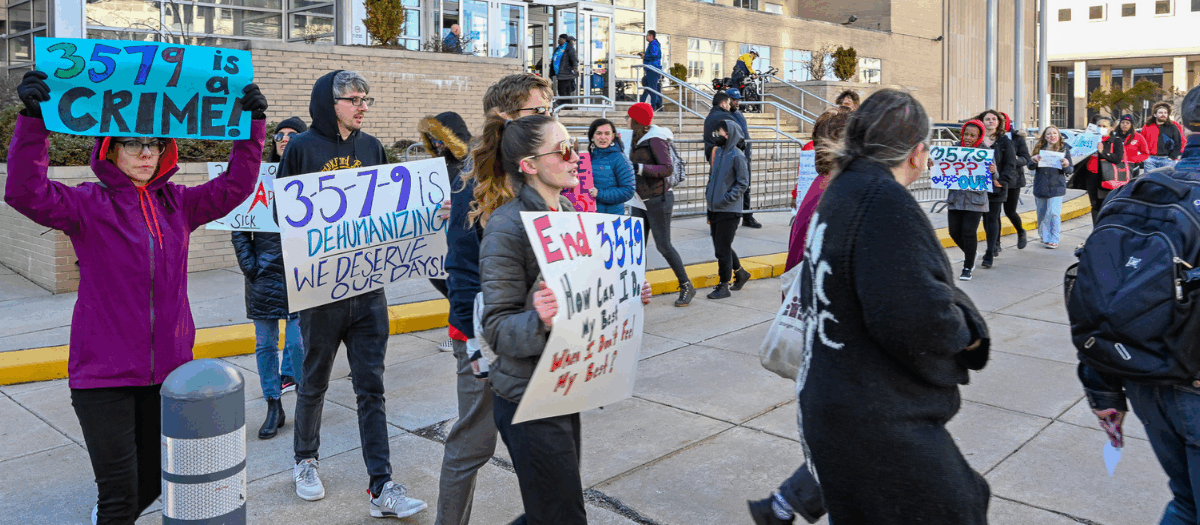
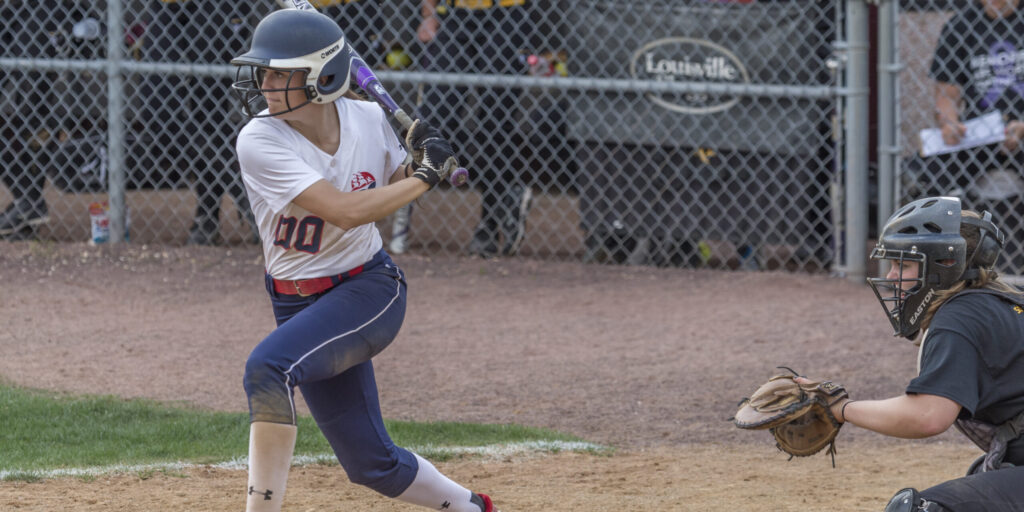
 Photo by Bill Slattery Jr. via Flickr (flickr.comphotosbillslatteryjr16976114717)
Jen Henkel: On the front lines of school policy, we’re asking the Supreme Court for clarity
As a local school board member, my job is simple in theory and enormously complex in practice: Protect students, uphold the law, and ensure every child in our district can learn in a safe, respectful environment. Yet in recent years, that responsibility has been turned into a legal maze.
Though the legality of separating sports based on sex has been clear for the past 50 years, activists in and out of government have sought to disrupt that clarity. Policies we pass to comply with common sense and decades of precedent are met with loud threats of lawsuits. Guidance from agencies changes with new administrations. And all the while, parents look to us for stability and clarity.
This January, the U.S. Supreme Court will hear Hecox v. Little and B.P.J. v. West Virginia, two cases that could finally bring the clarity school districts desperately need. That is why I joined 54 fellow Pennsylvania school board directors in filing an amicus brief urging the court to reaffirm what Title IX and the Constitution have always recognized: In certain narrow but important circumstances, separating students by sex is not only lawful, it is necessary.
For decades, federal law has understood that privacy facilities and athletics are unique settings where sex-based separation protects important interests: bodily privacy, safety, and fair athletic opportunity. As the brief explains, “Separation by sex ensures fairness and safety in sports, and it protects the fundamental right to bodily privacy in intimate settings such as locker rooms, showers, and restrooms.”
These longstanding principles do not change in our schools simply because gender ideology has become part of national debate. “Attempts to conflate gender identity with sex cannot change the analysis, because the important interests in separation only apply to sex.”
Our school policy is not separating students in sports or privacy facilities to make a statement about identity. Every student is welcome on the team or in the facility designated for their biological sex. No one is “banned” from sports, and no one is denied access to a restroom. The claim that these policies “target” certain students is built on a false premise — one that activists often repeat but the law and reason does not support.
Much of the confusion stems from the Supreme Court’s Bostock decision, which held that firing an employee for being transgender violates Title VII. But as our brief notes, Bostock explicitly said it was not deciding issues involving “bathrooms, locker rooms, or anything else of the kind.”
The decision also relied on a “but-for” test that applies only where sex distinctions are already unlawful. In athletics and privacy facilities, sex distinctions are expressly permitted and often required by Title IX. As the brief explains, “when the underlying sex-based distinction is legal, the Bostock ‘but-for’ test does not work.”
We serve all students — students who have thousands of different personalities — by ensuring they are treated with dignity, offered reasonable accommodations, and protected from harassment. What we cannot do is place girls in environments where they would find themselves undressed in front of biologically male students or force female athletes to surrender opportunities Title IX was written to secure.
As one Pennsylvania student testified, “Any biological girl, no matter what they believe about gender, is more than welcome on our girls’ teams…. That preserves fairness and opportunities for everyone.” This is not animus. It is common sense.
Much of the distress we see among students comes directly from slanderous rhetoric that tells them they are being “banned” or “hated”. The brief warns that “activists… are the ones harming children” when they push these false claims.
Every student can participate in athletics. Every student can use a restroom of their sex or single-user options. But no student should be lied to by adults who tell them that their peers’ privacy rights or rights to all-female teams imply hatred toward them.
Pennsylvania school districts have been “forced to navigate changing and sometimes conflicting guidance in an artificially complicated area of the law.”
I am not a cultural commentator. I am a local official tasked with protecting our students, educating them. The Supreme Court now has the opportunity to put an end to the threats of lawfare nationwide, and “confirming that sex-based distinctions are not only lawful but essential.”
Our students deserve that clarity. Our communities deserve it. And school boards need it so we can do what we are elected to do: protect every child entrusted to our care.
Jen Henkel has served as a Southern York County School District (SYCSD) Board Director since 2023 and currently chairs the board’s Education Committee. She holds a bachelor of science in psychology. She is the mother of three children; two daughters, ages nineteen and eighteen, and a son, age sixteen. Her oldest daughter was a senior at Susquehannock High School when the district adopted its first policy addressing fairness in girls’ sports.