
Ben Mannes: Trump’s crackdown defies critics as crime rates drop
Despite a concerted media campaign to portray President Trump’s immigration enforcement and approach to crime in Washington, D.C., as inhumane, the latest crime statistics suggest his administration’s tough stance is making communities safer, especially in urban centers and swing states.
Recent data show violent crime in Washington, D.C. dropped significantly in 2024.
According to USAFacts, murders decreased by 34 percent, rapes by 15 percent, and robberies by nearly 21 percent from the previous year, even as overall violent crime rates in D.C. remain among the highest in the country at 1,006 offenses per 100,000 people.
City officials attribute much of the decline to increased police presence and stricter law enforcement, notably under new federal directives tied to immigration enforcement since Trump’s re-election. Official White House figures confirm nearly 1,600 violent crimes have been reported so far in 2025, suggesting continued pressure on criminal activity.
Critics have accused Trump’s approach of being novel or excessively harsh, but the underlying immigration laws have historical roots stretching back more than a century. The Immigration Act of 1917 established strict regulations and a foundation for enforcement that persists to this day. Other landmark laws, including the Illegal Immigration Reform and Immigrant Responsibility Act of 1996, were signed by Democratic President Bill Clinton. Both Republican and Democratic administrations have enforced these statutes over generations, targeting illegal entry, visa misuse, and criminal activity — demonstrating a bipartisan tradition of upholding immigration standards.
Recent enforcement efforts under Trump have not created new laws but rather intensified the application of existing ones. Federal arrests for immigration offenses surged 87 percent from 2017 to 2018 after Trump took office, with illegal entry and reentry prosecutions more than doubling. Executive orders from the administration prioritized removal of all undocumented migrants, expanding the scope beyond previous policies that focused on serious criminal offenders.
The controversy over immigration reached new heights during the Biden administration, which attempted to address post-pandemic demographic shifts by relaxing enforcement and allowing more migrants into the country. Conservative commentators and some data analysts argue that millions of illegal immigrants were strategically relocated to battleground and swing states, with estimates showing Biden moved millions of illegal immigrants into such states and hundreds of thousands into Texas alone, where redistricting battles have intensified.
While Biden emphasized the use of “parole” vs. deportation, shifting enforcement priorities away from illegal border crossers, Trump’s renewed focus on broad-based enforcement reversed many of Biden’s policies when he resumed office. Congressional battles over immigration spiked as federal and state governments clashed over legal and political implications, adding to partisan tension in states that changed political orientation due to Covid-era migration from blue to red regions.
Under Trump, ICE encountered over one million individuals and made hundreds of thousands of arrests during its intensified enforcement push. Increased removal proceedings and stricter prioritization led not only to higher deportation numbers but also correlated with reported reductions in property and violent crime in immigrant-heavy urban areas. Crime rates declined in several cities following major Trump-era ICE raids, with specific public data showing notable drops in violent and property crimes during and after heightened federal enforcement periods. For example, after a surge in ICE operations in Washington, D.C., in August 2025, violent crime fell by around 17 percent and property crimes by approximately 19 percent within just one week of federal and immigration authorities ramping up arrests and patrols.
In Chicago, a similar initiative called Operation Midway Blitz showed substantial reductions: shootings declined by 35 percent, robberies by 41 percent, and carjackings by nearly 50 percent after the start of large-scale ICE actions targeting individuals with criminal records. National White House reports have emphasized that ICE arrests more than doubled or tripled in key states, frequently correlating with simultaneous declines in reported crime. Philadelphia, Buffalo, and Phoenix saw the largest increases in at-large arrests, contributing to stabilization or decline in local crime rates.
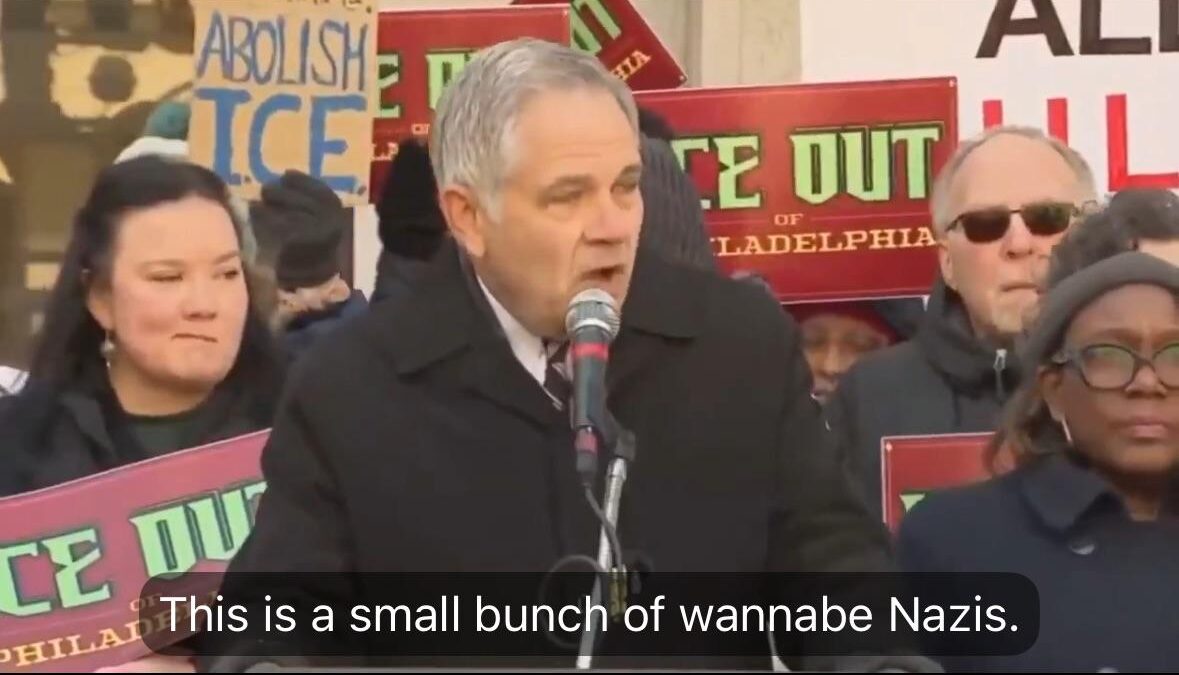
These enforcement efforts at the Philadelphia Criminal Justice Center have stirred controversy, but the fact that these arrests are being made at a criminal courthouse pursuant to the illegal migrants’ lawful arrests for local crimes negates left-wing talking points of ICE deporting immigrants with no probable cause. Under longstanding federal law, an arrest for a local crime is often the trigger that brings an undocumented immigrant, or any other removable noncitizen, to the attention of federal immigration authorities, and it can lead to deportation. While deportation is not automatic depending on federal manpower priorities, the probable cause for arrest and deportation is legally met when someone is booked into a local jail, their fingerprints are checked against national criminal and immigration databases.
Therefore, if you’re an illegal immigrant and meet the probable cause for arrest by local police for a local crime, your being in custody alerts authorities that you are potentially removable, so immigration officers can request that you be transferred into federal custody and placed in removal proceedings.
Under federal law, noncitizens who are convicted of a wide range of crimes, from serious violent offenses to some nonviolent felonies and certain misdemeanors, can be deported, especially if they also have prior immigration violations or a past removal order, and most interior deportations in recent years have involved people who first came into contact with the criminal justice system. At the same time, cities like Philadelphia have adopted so‑called “sanctuary policies” that limit how far police and sheriffs will go in honoring federal hold requests or sharing extra information, so in practice an arrest may lead directly to deportation in some jurisdictions, while in others the person serves their local sentence or is released and then faces a separate immigration case that can take years to resolve.
The laws underpinning current enforcement, such as entry restrictions, deportation protocols, and requirements for legal status, have long been integral to U.S. immigration policy. Early acts gave federal courts broad authority to oversee citizenship and immigration, and major reforms across decades demonstrate consistent national concern about border integrity and crime.
While the media narrative often centers on alleged cruelty, the historic application of these laws by both parties suggests a deep legal and social precedent. As crime statistics steadily improve in key cities, the latest wave of enforcement, far from being an unprecedented authoritarian overreach, reflects longstanding legal principles intended to safeguard American communities.
Based in Philadelphia, A. Benjamin Mannes is a consultant and subject matter expert in security and criminal justice reform based on his own experiences on both sides of the criminal justice system. He is a corporate compliance executive who has served as a federal and municipal law enforcement officer, and as the former Director, Office of Investigations with the American Board of Internal Medicine. @PublicSafetySME


Mr. Mannes:
Thanks for the clear and, hopefully, objective presentation relating to the illegal immigrant and crime fighting aspects of the Trump Administration. The existence of “sanctuary cities” demonstrates disrespect for American citizens. Most certainly, encouraging disrespect for Federal Law, dimimishes the effort and desire of legal immigrants to blend their talents with our culture.