
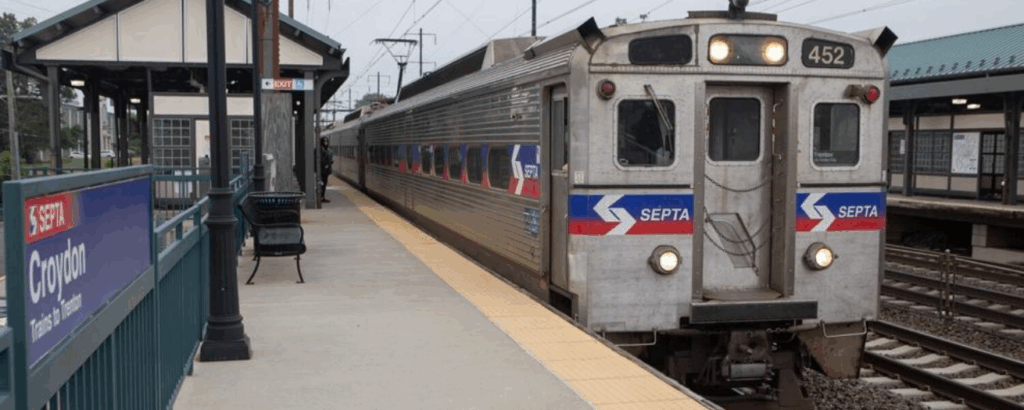
SEPTA, the American way, and free stuff
For some, the “whys” and “hows” of 1775 to 1787 with time have become muted and indistinct. From the SEPTA discussions, one might think those years were about forming a government to give us free stuff. That what happened in Philadelphia at the end of the 18th century was but a foreshadowing of A Charlie Brown Christmas, where Sally advises “I just want my fair share.”
Not so!
Last April 19th, we celebrated the 250th anniversary of a musket volley that still echoes. The values of those who revolted against the then greatest military power would find expression in the words of a Virginia slave owner fourteen months later. Jefferson and his fellows declared the ideas of the 17th-century physician, John Locke, that individuals intrinsically possessed natural rights, among them, life liberty and property. The Enlightenment idea of Locke was that these rights were inherent in our nature, not an allowance from a benign government or monarch. They wrote and believed these “rights are endowed by their Creator …”
In twelve years, these less than perfect men of the 18th century crafted a document founding America securing our rights. The Constitution, the oldest written governing agreement, would be both enduring and malleable. It would drive us to see the Declaration’s “all men” means simply “all”, independent of gender or race. The constitution has secured our rights. And simply, we have government to secure our rights.
We select those who hold office for a spectrum of reasons. Those who hold office may be called on to lead us in conflicts, to prioritize competing needs. In a world that is finite, we benefit when those we elect are wise and discerning, and on occasion brave.
We know that those we elect will speak for us. They will lead us in mourning. They will lead us in prayer. And they will lead us in celebration
Sadly, we have changed. We seem to think we have government to give us free stuff. We now elect people who will give us more free stuff.
Consider the Democratic candidate for mayor of New York City Zoran Mamdani. He won on a campaign of rent freeze, free bus rides, city-owned grocery stores, and free universal child care.
Not to be outdone, our Philadelphia political class weighs in.
Former Philadelphia mayor Jim Kenney opined on the SEPTA funding shortfall arguing “Don’t let the free SEPTA transit pass program die”. The SEPTA free transit program began under Kenney providing free rides to full and part-time city employees, those at or below the poverty line. Through the support of the Pennsylvania Lottery, those over 65 also ride free. Kenney noted the initial program was funded by the American Rescue Plan on a one-time basis and recommended the “We can not count on the state to rescue us”.
Be without fear. Governor Shapiro has already committed the Commonwealth to $318 million to support SEPT and its free transit pass program.
Pennsylvania generates about a third of its revenue through a six percent sales tax. Economists identify a sales tax as regressive tax in that the tax is the same whether you are rich or poor.
Speaking of poor, Frackville, Pennsylvania, has a population of around 3,600. At one time it produced 50,000 tons of coal daily. While Pennsylvania median family income is $76,081, Frackville’s is $47,553. Despite being poor, or perhaps because of it, the people of Frankville work. Frackville unemployment is two percent.
Nor is Frackville alone. Rural Pennsylvania is planted thick with similar towns and boroughs. Coudersport, Wellsboro, Clearfield, Ridgway, Warren are but a few of the many rural towns with low median family income and low unemployment with the citizens paying Pennsylvania sales tax …. and no SEPTA service.
Philadelphia unemployment in June 2025 was 5.4 percent. The median household income in Philadelphia was $60,698 in 2023.
A fair reading of Governor Shapiro’s actions is using the tax dollars of poor, hardworking rural Pennsylvanians to provide free SEPTA transit passes to Philadelphia city employees, full and part-time.
Is this why we established government? To give us free stuff?
What a theater of sock puppetry.
How about an old idea, also from 1776. Adam Smith’s The Wealth of Nations described the free market system where individual spending in the open market messaged the producers of goods and services what to produce more or less of. Let the market place decide winners and losers, or more exactly what transit lines to run at what fare.
Also, if you use something, you pay for it, not the person next to you paying. Milton Friedman’s classic Free to Choose explains the dysfunction inherent when the consumer of a good or service is different from the payer and selector of the good or service. For SEPTA, the riders would pay the cost of operating SEPTA. Too much for an individual rider? Then let the municipalities served by SEPTA contribute. Philadelphia and the collar counties benefit from SEPTA, they should contribute to offsetting the cost to a rider, not the citizens of Wellsboro.
Paying for what you use, while not the movement of the moment, tops the free stuff foppery of our times.
Frank Speidel, MD, is a retired emergency physician, US Navy Flight Surgeon and former hospital CEO. He was EMS Medical Director for the Commonwealth of Pennsylvania and Chester County. He is currently producer and host for The Doctor Is In on MLTV21.
The collar counties do pay in. Frankly, probably too much after recent tax increases. SEPTA is also carried by collar county commuters paying the full rate to get to the higher paying jobs in the city. Philadelphia claims SEPTA is needed to support the state’s economy. But those commuters aren’t IN Philadelphia. They pay taxes and pay for the ride in and out so the Philadelphia residents can get their subsidized local transportation. Philadelphia needs commuters and it was demonstrated after covid kept everyone from going in. Philadelphia needs the collar counties and the rest of the rural state to subsidize them and they have the arrogance to act like they provide something invaluable in return when everyone seems just fine avoiding that muddy puddle of poor governance, poor leadership, poor education, and failed way of life. Let them fall on their face and build back stronger in the end.
Frank, what you wrote couldn’t be further from the truth. Governor Shapiro is not using or advocating to use tax dollars from poor or rural Pennsylvanians to fund free transit passes for Philadelphia city employees. The City of Philadelphia is providing $9 million to SEPTA to cover that benefit for its employees. If you look at the city’s capital budget, you’ll see exactly where that money is allocated.
Tyrone, Shapiro has provided $318 million to SEPTA. I provided a link to but one of the sources for this statement.
Pennsylvania has a 6% sales tax. It is a regressive tax, the rate independent of the income or wealth of the taxed. It provides around 31% of PA revenue.
The residents of rural Pennsylvania, Wellsboro, Coudersport, pay sales tax and all other PA taxes. There is no SEPTA service in these communities. PA taxes should be used for services common throughout the state such as state police, Department of Motor Vehicles, professional licensing, etc.
Tyrone, could you provide a link to the “The City of Philadelphia is providing $9 million to SEPTA to cover that benefit for its employees. If you look at the city’s capital budget, you’ll see exactly where that money is allocated.” Does that $9 million cover the entire cost of the city employees;oyees use of SEPTA?
And what’s wrong with paying for what you use>
Thanks!
Here is a city press release that’s that city is paying for the Septa Key Advantage program.
https://www.phila.gov/2025-05-28-city-workers-still-ride-septa-for-free/
Tyrome, thanks for the link. But it doesn’t answer my request for a link citing the Philadelphia paying $9 million for city employees free rides and what percentage of the cost of the ride provided does the $9 million cover.
That city employees still ride free was never in question. Free stuff, once given, can never be taken away.
That quote — “If you use something, you pay for it, not the person next to you paying” — has to be one of the most willfully ignorant statements I’ve read in a while, or Frank applies that logic very selectively. I’d be curious to hear how the author feels about rural counties that rely on state police instead of funding their own departments, effectively being subsidized by the rest of the state. By that logic, we should also start charging the full cost of libraries, parks, rec centers, and pools to their users, since those who don’t use them “shouldn’t have to pay.
Tyrone,
Let me recommend you broaden your reading. Start with Adam Smith’s Wealth of Nations. Mr. Smith argues the legitimate role of government is to secure our property and the honest enforcement of contracts. He sees the role of government as limited in the market place.
State Police serve the entire Commonwealth, not just the collar counties and Philly as SEPTA does.
If a community, city borough, township wants a library, pool, car wash or whatever for its use, the comm unity should pay for it, not individuals of Frackville PA.
When people pay for what they use, they get what they want at a price they fell appropriate. I’d love to have a Lamborghini; I just have to find someone to pay for it.
Before we dive into this libertarian debate, I want to ask you first, Frank: do you believe in public goods, or do you think users should pay the full cost of every government-provided service—like libraries, parks, pools, streetlights, nature trails, rec centers, law enforcement, and sidewalks?
Im so confused. Public service or should people pay for every government service… who do you think pays for it, Tyrone?
Public services are acceptable, in my opinion, but when they inevitably become fat in administrative costs, its a reasonable request to ask for cuts and realignment. SEPTA spending has grown beyond all measurable inflation. SEPTA has grown beyond its means. Reigning its spending in is a normal Public fiduciary function.
“ who do you think pays for it, Tyrone? “ Right now, advertisers, riders and local, state, and federal subsidies cover the cost of service, just like almost every other transit system in the world. I don’t understand the republican idea that riders should shoulder the full cost of operating SEPTA, especially when, aside from some Japanese systems, transit networks everywhere rely on some type government subsidies because they see it as a public good.
Local, state and federal subsidies are tax dollars that we pay. We are paying for it. I dont think any republican is expecting the revenues from ridership to be what SEPTA is funded with, but collecting 16% ridership is pathetic. Further, this isn’t an issue of funding. Democrats are creating this problem to drive a wedge against Republicans. Republicans offered the funding plan with very little strings attached. SEPTA said this is great. Shapiro said it’s a terrible idea. Chairman Ken Lawrence said sure is a bad idea Gov. And all the democrats went along. Does any person opposed to the Republican funding plan have a reason why they feel it’s so bad.
What a waste of time on a non issue.
Tyrone, at our founding those 18th century wits provided the reason for the Us Constitution, one of which was “promote the general welfare, …”.
No argument from me. We have government to promote the general welfare.
As I wrote in my 12:50 PM post of 8/30, if a community, county, borough, city wants a resource for their community, say a library, located in their community, the community should pay for the library … or pool or park or nature trail.
When the consumer of a good or service, say a car, controls the selection of good or service and is responsible for paying for the good or service, the consumer will likely receive a good or service they find desirable at a price they find appropriate.
If someone else pays for the car, there would be a shortage of Bentleys. Same is true of libraries.
Just so I understand you, you feel that user of a library or public city park should pay for using the services of those facilities whether it be renting out a library book or using a walking path in a park? Do I have that correct?
I just want to comment on the state police aspect of the broader argument of pay for what you use. When I was a township supervisor at one of our conferences a supervisor from another (rural) township was bragging that his township had avoided having any local police at all and how much this was saving the township. His magic solution was to have the state police handle crime problems. (which his township was fortunate to have very little). What he neglected to state was the state police prioritize their calls by severity and location and covering local issues was at the bottom of the list unless it was a life/death call and even then, depending on where they are at the time could take half an hour or more to reach the scene. He also neglected to note that state police do not enforce local laws and ordinances, so they don’t get enforced. I can tell you that where I live the state police barracks are at the bottom end of the county. On a good day it could take up to 45 minutes to one hour to get to a scene at the furthest end of the county. It is somewhat disingenuous the assert the Commonwealth is universally served by “state” police. For those jurisdictions with their own force, state police have no presence unless asked or mobilized. Those without a force and rely on the state police get only the barest minimum of policing, and that only in dire circumstances.
Frank the reason why so many people are opposed to the idea is because it kicks the can down the road. We’ve had Act 89, Act 44 and now this. From what Ive read recently Gov Shapiro is for this as long as there are guarantees that there will be sustainable long term transit funding or else we will be in this situation again in two years.
Again Tyrone, what’s wrong with having those who use something pay for it?