

Chester County hires a “Chief Experience Officer” as taxes rise — corporate titles at public expense
Chester County is the most highly educated and the highest-earning county in Pennsylvania and sets itself apart from the vast majority of Commonwealth counties — but not necessarily in a good way.
Chester County recently moved its governance structure to a system that more closely resembles a corporation, not a local government. Last November, the county commissioners restructured roles to include a Chief Executive Officer and a Chief Operating Officer. While those titles are not unique to Chester County, a newly hired Chief Experience Officer is.
Guy Ciarrocchi wrote last week about how the county is paying the Chief Experience Officer an annual $164,000 salary, and further inquiries show the total compensation including benefits at $191,010.
An almost $200,000-per-year expense seems debatable when the county raised taxes by over thirteen percent this year, and perhaps more important is the question as to whether the county actually needs a Chief Experience Officer (CXO).
In the corporate world, a CXO focuses on customer service and employee engagement related to the company’s brand.
CX Lead, an organization dedicated to supporting leaders in the “chief experience” field lists twelve industries that typically employ a CXO, and notably, government entities were not on the list.
This group defines the CXO as “the executive responsible for shaping and aligning every customer and employee touchpoint with the company’s brand promise. This role oversees CX strategy across departments, drives cross-functional alignment, and ensures that experience isn’t just a metric, but a competitive advantage woven into the business model.”
Even if the county could afford it, does it really need a CXO? What is the “brand promise” that Chester County is trying to communicate to its customers — the taxpayers — at their expense?
Corporations that hire CXOs typically have a Board of Directors who are directly responsible to their shareholders. If the return on investment is not positive, then leaders in the company are terminated and roles eliminated.
In a loose analogy, the county commissioners could be considered a board that holds these executive positions accountable. However, it appears to be just another unnecessary layer of government at the taxpayer’s expense.
Chester County’s structure includes a myriad of elected officials who are paid including three County Commissioners, Coroner, Treasurer, Controller, Sheriff, District Attorney, Recorder of Deeds, Register of Wills, Clerk of Courts, and Prothonotary. In addition to the elected positions, there is the “Executive Team” consisting of the Chief Financial Officer, CEO, COO, and now CXO. Below the executive team, there are a significant number of department heads and a total of 2,600 employees.
The idea for the CXO position was recommended by Chester County CEO David Beyerman.
“When I was hired, the commissioners re-titled my role from ‘County Administrator’ to ‘Chief Executive Officer,’” Beyerman wrote in response to a request for comment. “The Deputy Administrator role that Erik Walschburger continued in was re-titled by the commissioners at the time as ‘Chief Operating Officer.’ The Commissioners advised me when I came on board that they wanted me to recommend to them how best to deploy a second Deputy County Administrator position…. And so I leaned into the business-sounding, entrepreneurial spirit the commissioners had embraced with the CEO and COO titles, and recommended to the commissioners the ‘Chief Experience Officer’ (CXO) title for the second Deputy position – a specialist in customer service delivery. This is a title that is increasingly used in the private sector. Having a CXO, I believe, communicates that we take Chester County taxpayer’s customer service experiences seriously and having good constituent engagement is an important priority.”
Beyerman also included a coverage chart showing the responsibilities of each member of the executive team.
The CXO role is more commonplace in the private sector, but no other county in the state appears to employ the same position.
This seems particularly controversial for a county that just increased taxes by 13.4 percent and continues to grow the annual budget and deficit.
The county 2025 budget that was approved by the two Democratic commissioners indicates that its tax revenue does not even cover its annual payroll costs. The budget includes $220 million in payroll costs, an increase of well over nine percent from 2024.
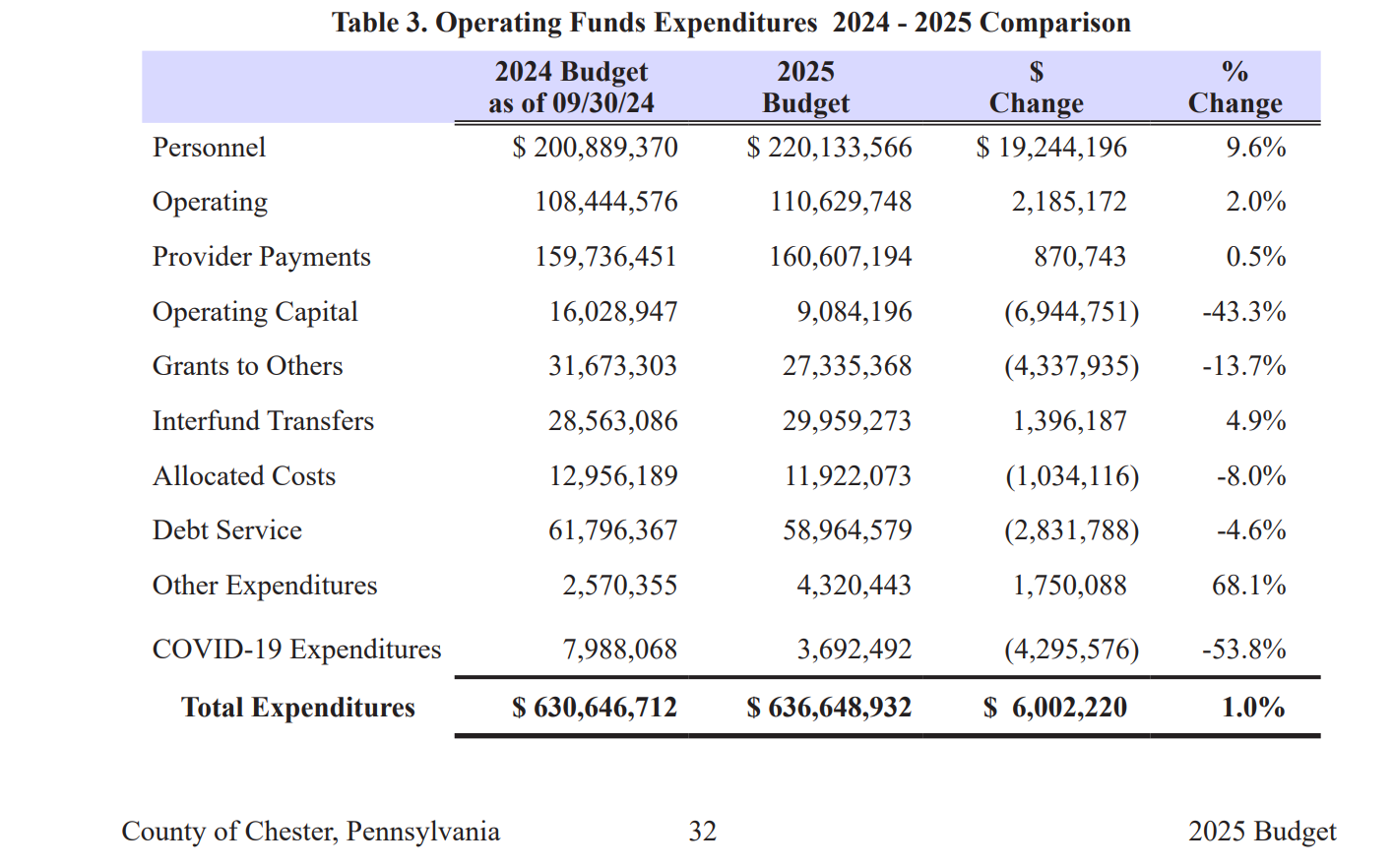
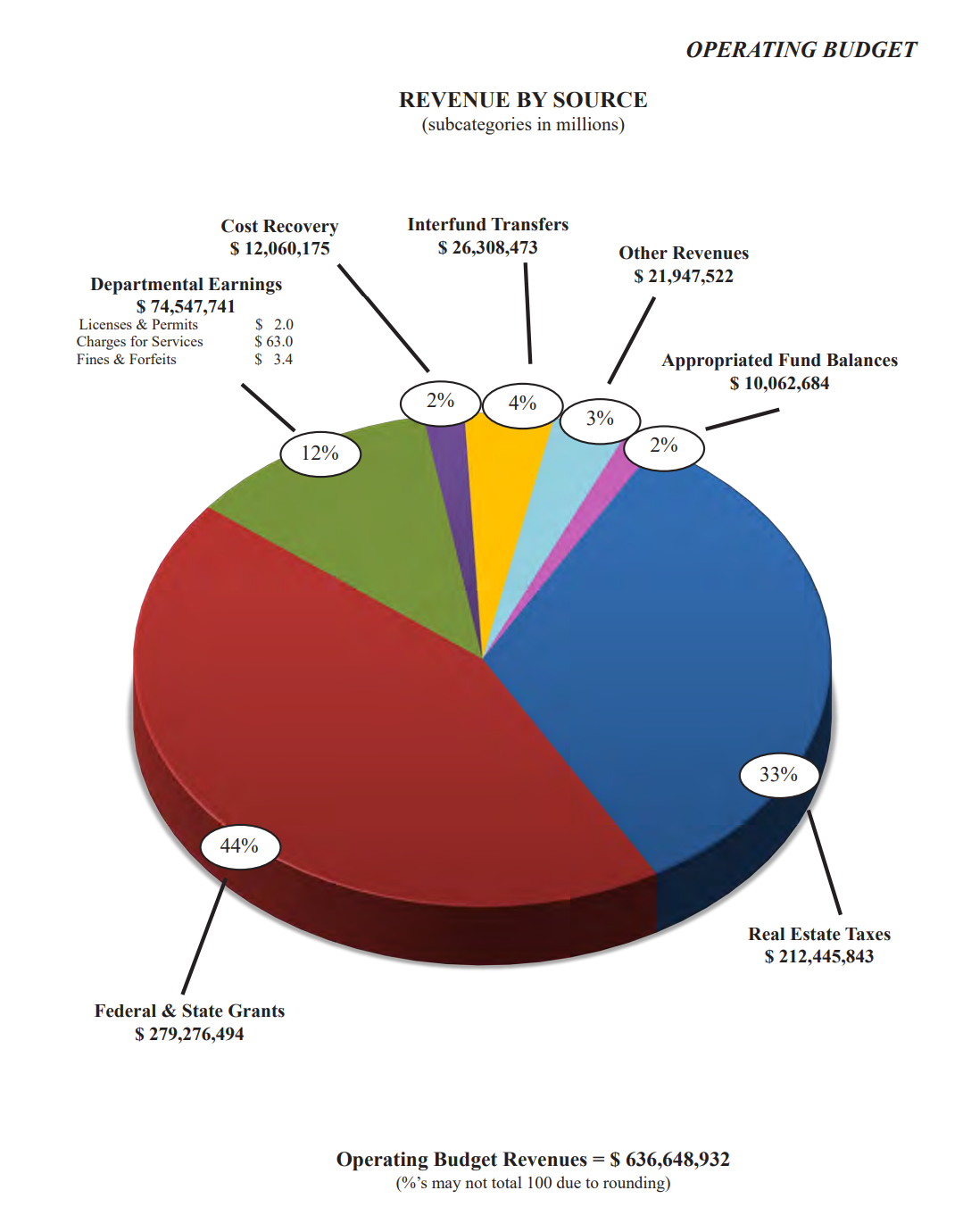
Even with the large increase, the $221 million in tax revenue falls short of covering the ballooning payroll costs. Additionally, 44 percent of the overall budget is based on federal and state grants, some of which will likely be cut.
The budget also includes $37.4 million in capital improvement expenditures, the majority of which are related to open spaces and parks. The county plans to borrow almost $79 million over the next five years to fund the projects.
Amid a growing budget, increased payroll costs, potentially declining grant revenue, and a significant tax increase, the justification for a CXO role seems questionable.
The county CEO disputes that notion.
“Chester County is a very large governmental entity, comprising 2600 employees scattered across well more than 50 worksites,” wrote Beyerman. “We are very mindful of being good stewards of taxpayer dollars. I believe the management structure we have developed is reflective of that philosophy.”
Beyerman’s full response is here.
While Beyerman appears sincere in his belief that the county is acting in the best interest of its residents, it is difficult to justify such a large expense and a role to focus on customer service. The CXO position is just the tip of the iceberg in terms of unnecessary expenses.
Chester County should be looking at cutting costs, not increasing them — ultimately, that is the best customer service a county can provide to its residents.
Beth Ann Rosica resides in West Chester, has a Ph.D. in Education, and has dedicated her career to advocating on behalf of at-risk children and families. She covers education issues for Broad + Liberty. Contact her at barosica@broadandliberty.com.

This is a good example of why it’s worth reading the linked email. Take a look at Byerman’s response. The job isn’t new, and it was already in the budget. It’s just a deputy administrator job with a focus in one area. Can you name another organization with over 2,500 employees that doesn’t have at least three people on its top leadership team? There are plenty of good examples of government wasting money. This ain’t one.
People in debates or conversations often “talk past each other” by assuming different interpretations of the same words without realizing it.
Peter Peppers,
QUESTION: How can Peter “pick” (harvest) peppers that are already “pickled” (preserved in brine or vinegar, a process that typically happens after harvesting)? This creates a chicken-and-egg paradox.
You suggested a good idea, and after reading Byerman’s response…
NOTE: “In appointing a Chief Experience Officer – possibly the first in the nation at the county level – we are sending a clear message that constituent experience is central to our mission,” Byerman stated.
QUESTION(s): Who was the actual person they hired? Did they previously work in the second deputy administrator role before Chester County decided to retitle that role and call it CXO? … or did they create an utterly new role, CXO, and hire an utterly new person that previously served as a Director of Customer Experience for the federal government’s General Services Administration’s Technology Transformation Services Centers of Excellence? Because that sure seems like… a new role and new job. Good luck to her, btw. But… you are utterly incorrect. It is indeed a new job.
ANSWER [“Can you name another organization with over 2,500 employees that doesn’t have at least three people on its top leadership team?”]: The Salvation Army is a global organization with over 100,000 employees that fits this description, as its top international leadership consists of just two primary roles: the General (who serves as the chief executive officer) and the Chief of the Staff (who acts as the second-in-command and administrative head.)
Someone should be auditing what this CEO spends. Chester County just takes takes take anymore
Imagine what $164k would buy that the county desperately needs. Molding experience with residents comes from established leadership protocols and should never be handed off to a single person. In the commercial space, this role has been eliminated over time precisely because it avoids the cultural change that should reside in every department. This is just another example of the profligate spending (and borrowing) in Chester County,